From our workshop: 12 milling strategies and machining methods, clearly explained and illustrated with manufacturing photographs.
Click an image to enlarge.
Years of practical experience
20
Customers
604
Projects
1092
CNC strategies & machining methods
2D milling
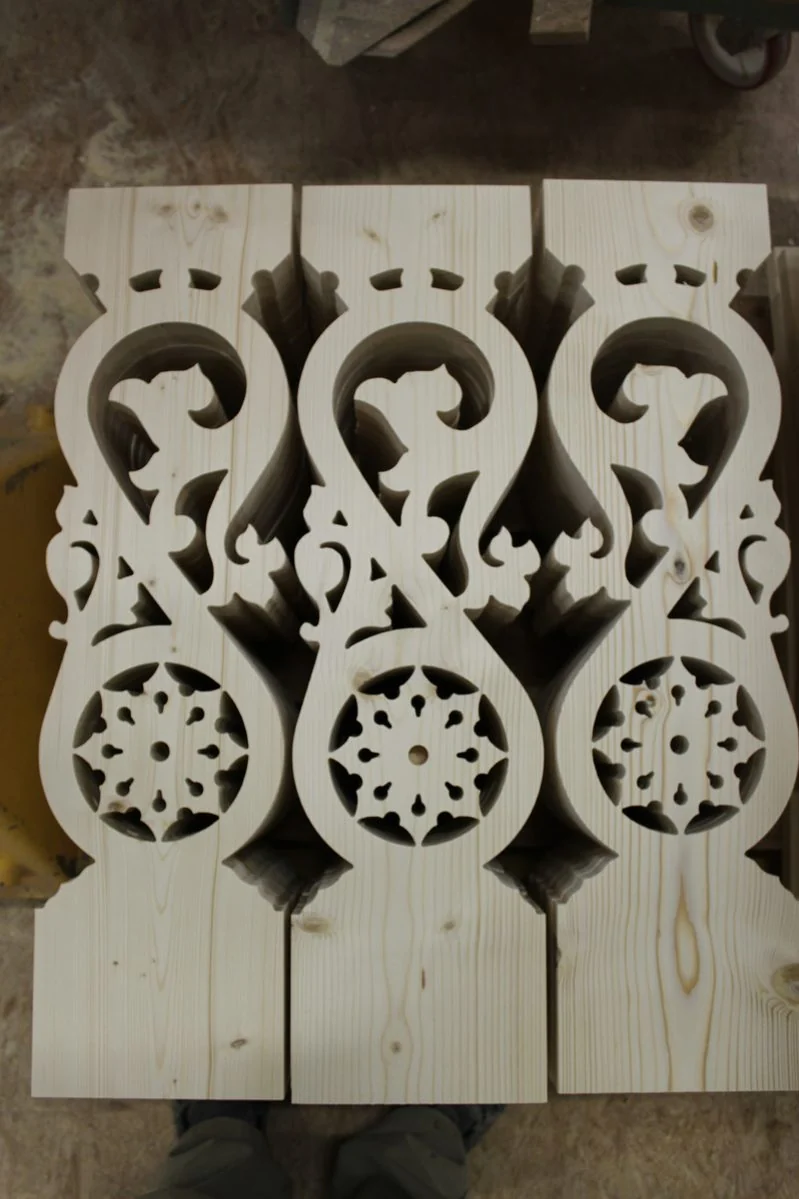
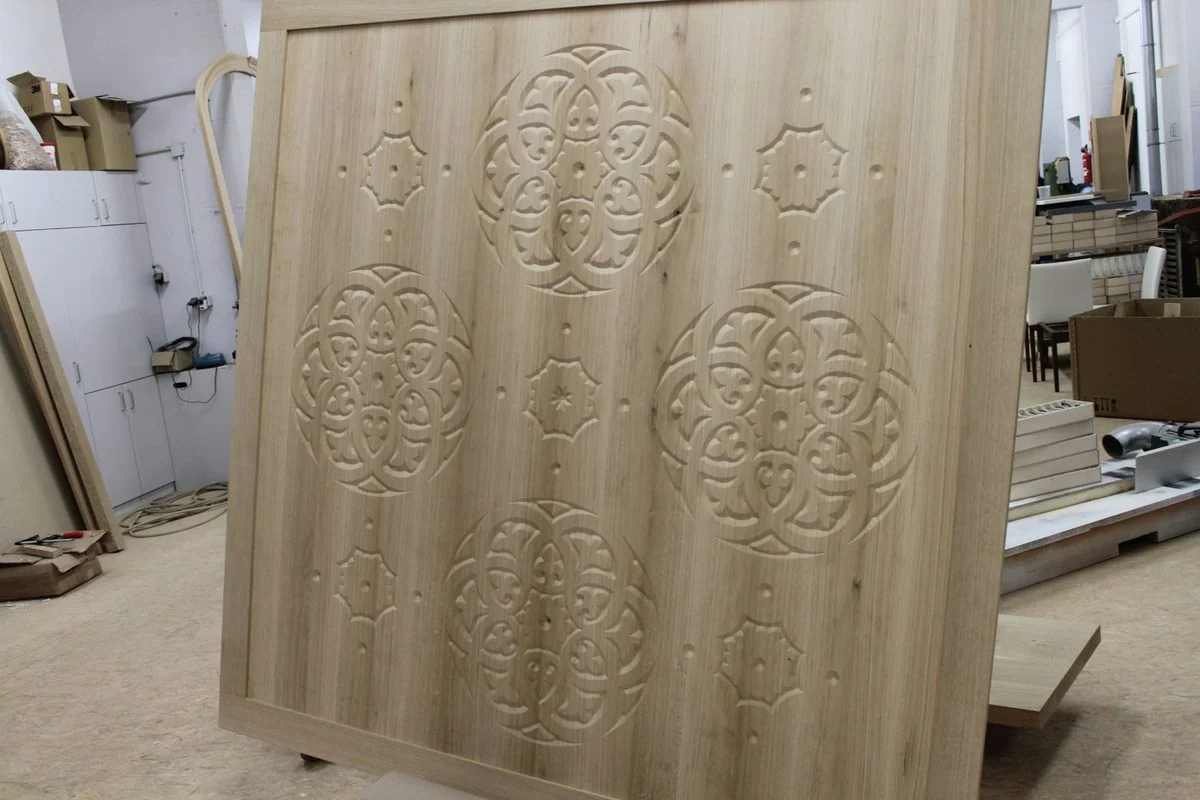
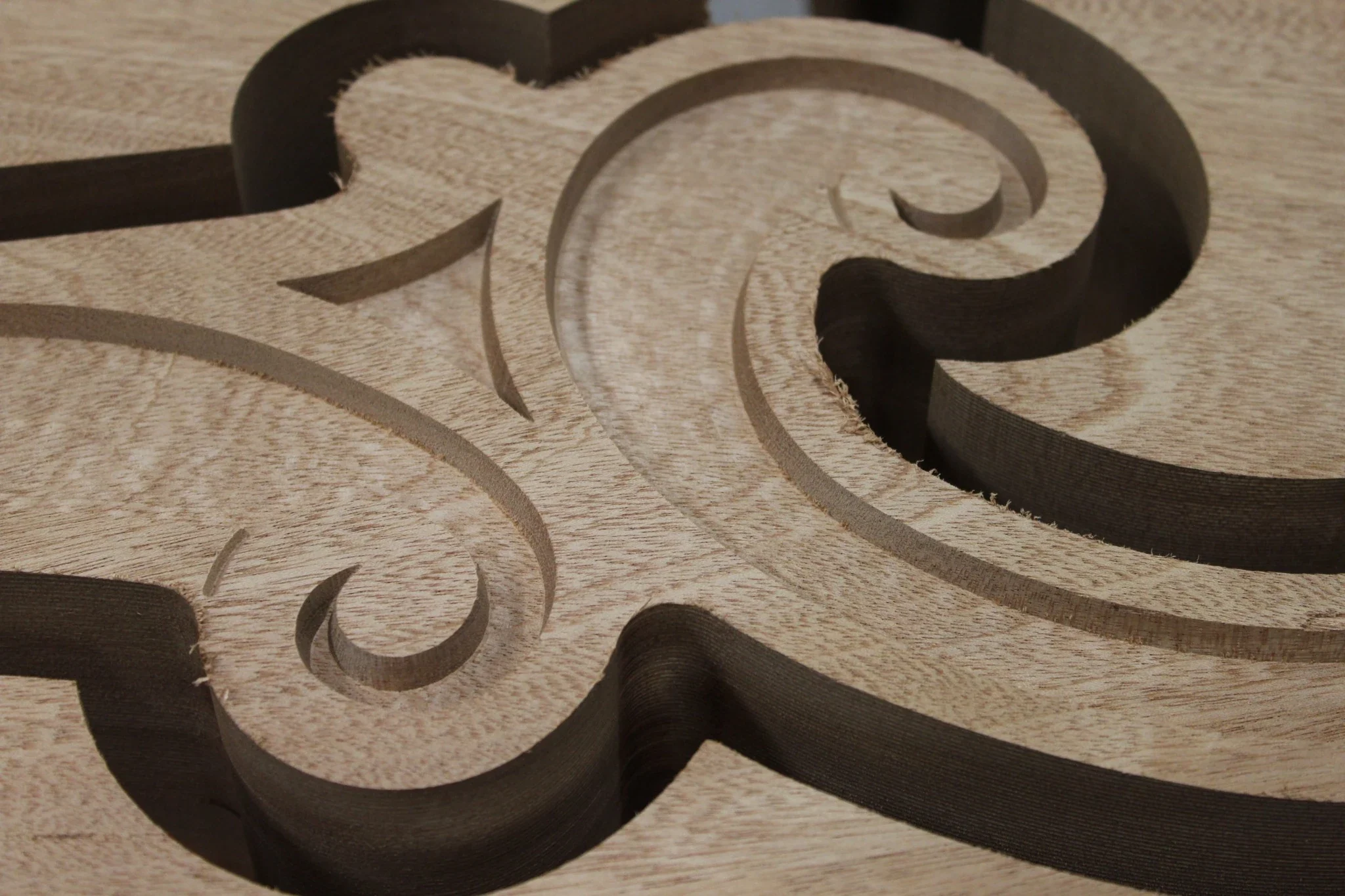
Contours are machined in a plane, for example when cutting an outline from a sheet. The cutter diameter limits the smallest internal radius.
Milling with a tracing aggregate
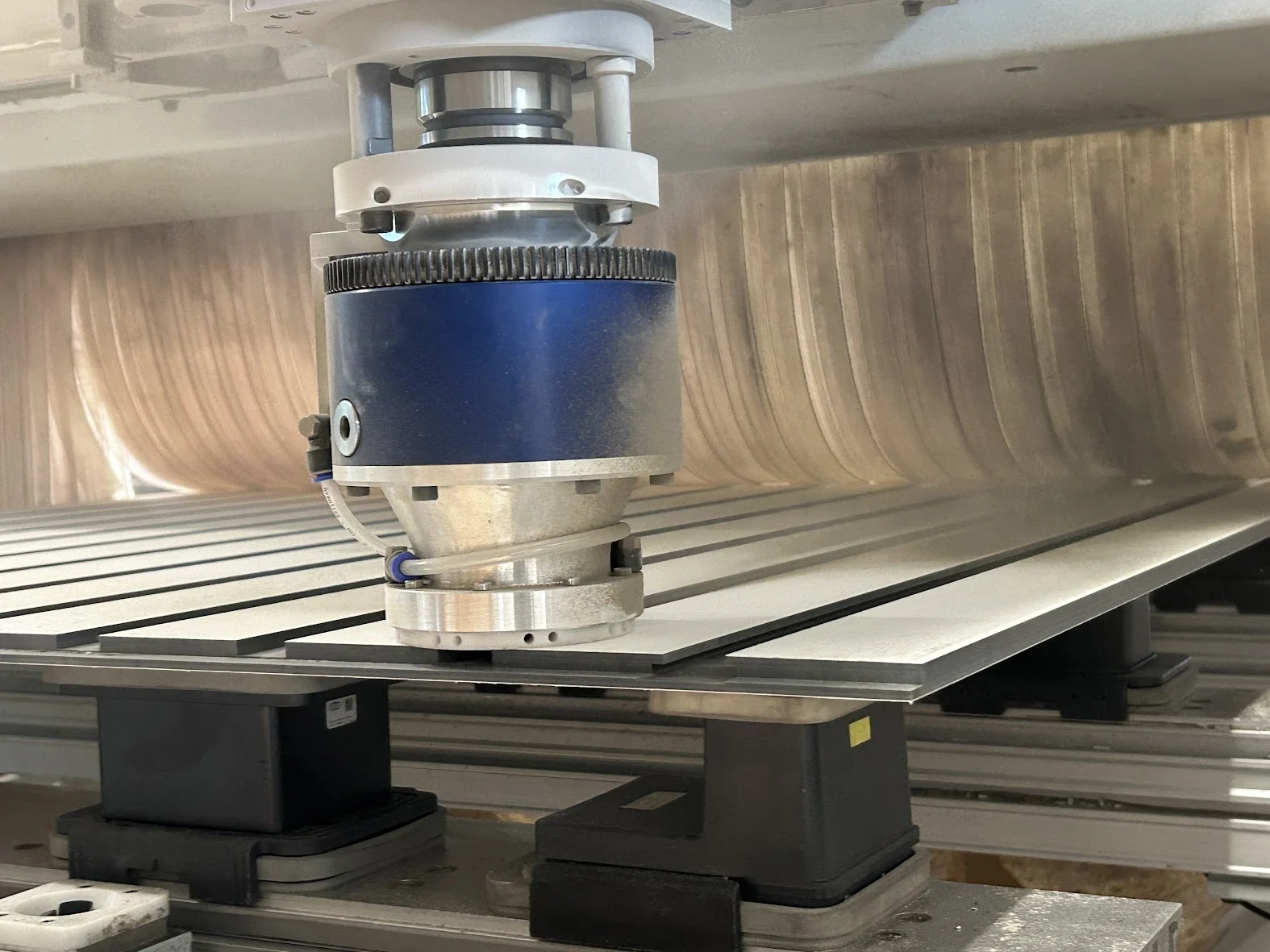
The first photograph shows milling with a tracing aggregate in our workshop.
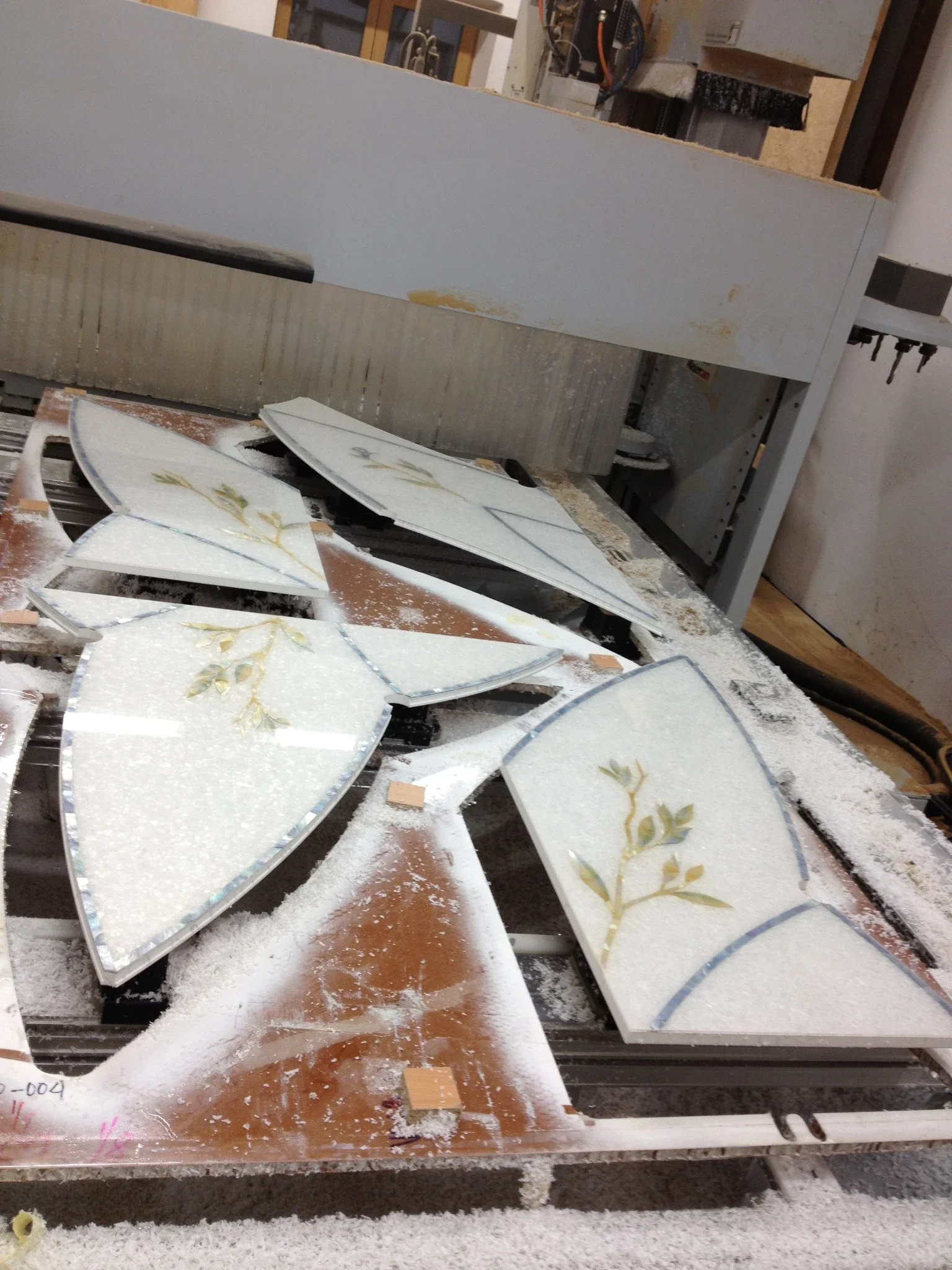
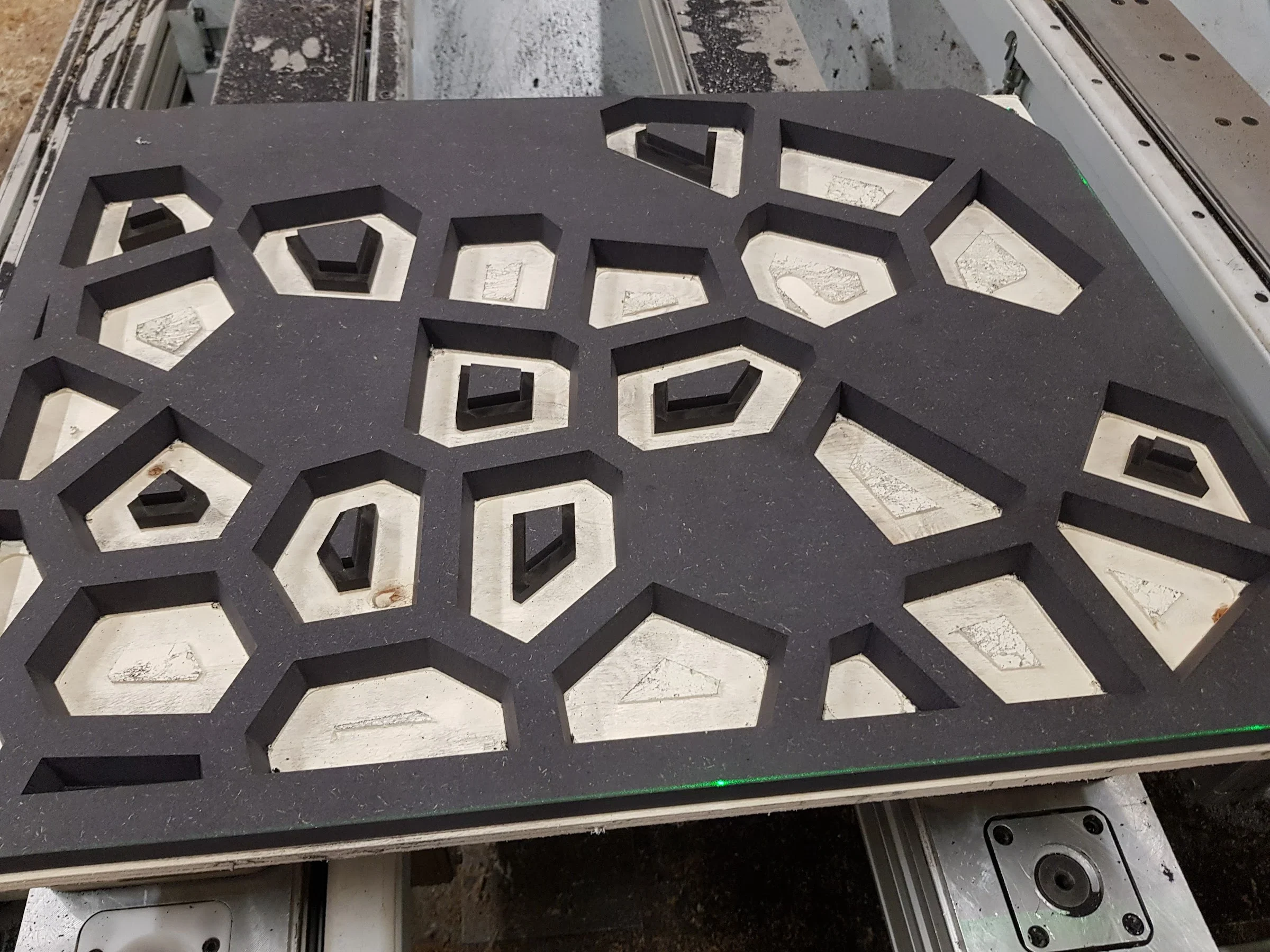
Tracer milling – milling with a tracing aggregate2D milling: trimming prefabricated mother-of-pearl panels to shapeGeometric contours machined in a panel
Show 2 more imagesCollapse image gallery
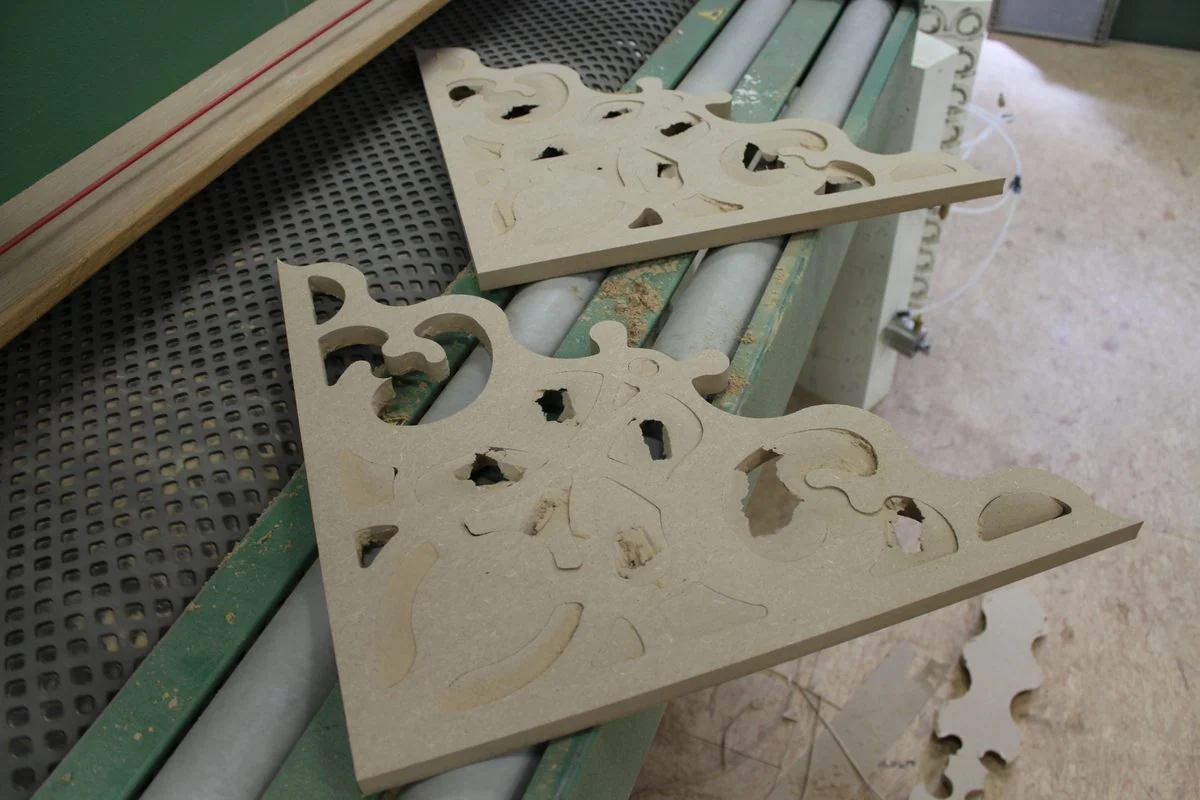
2D milling followed by external contour finishingBalcony boards made to a supplied sample
2.5D milling & holding tabs
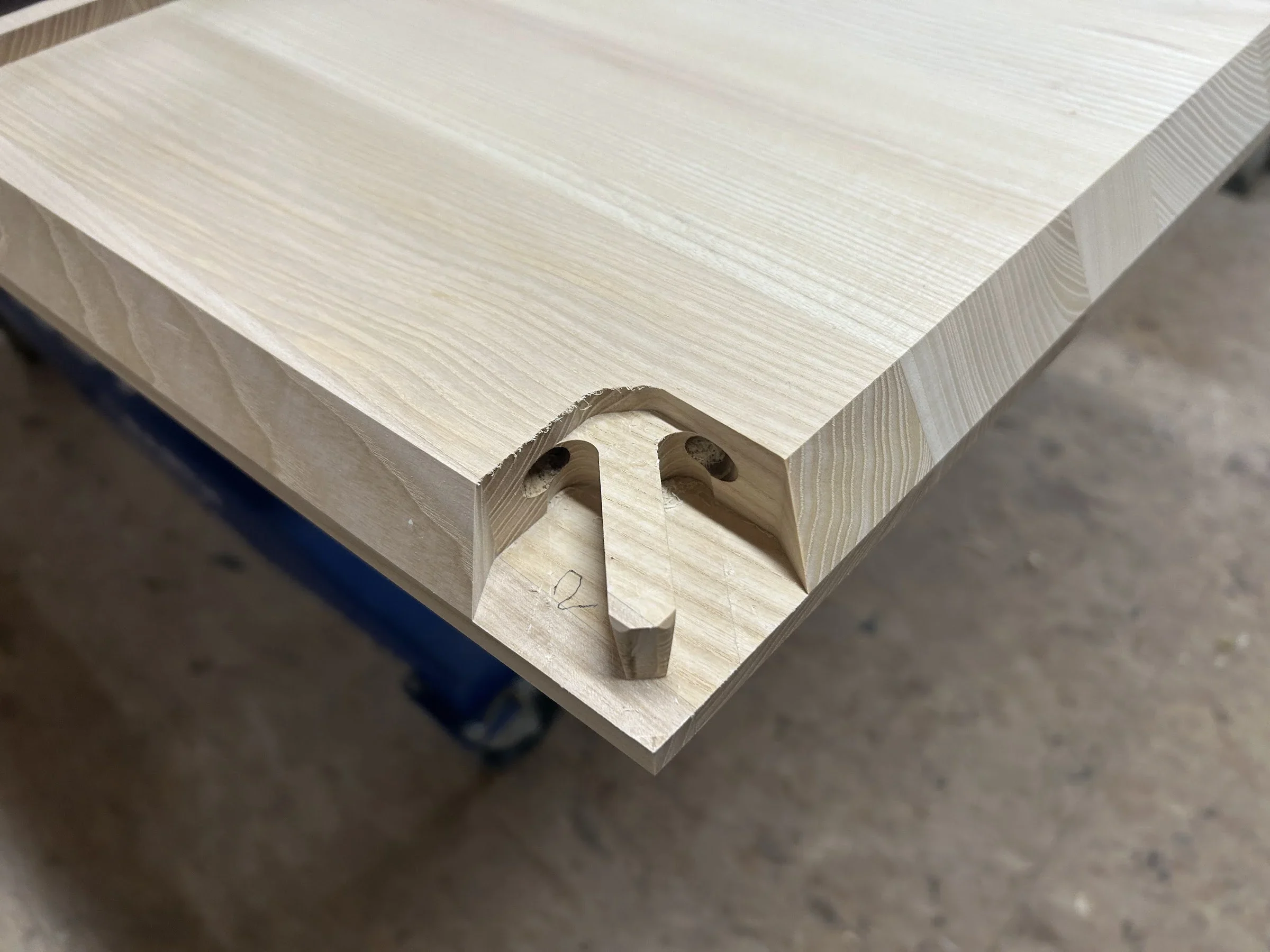
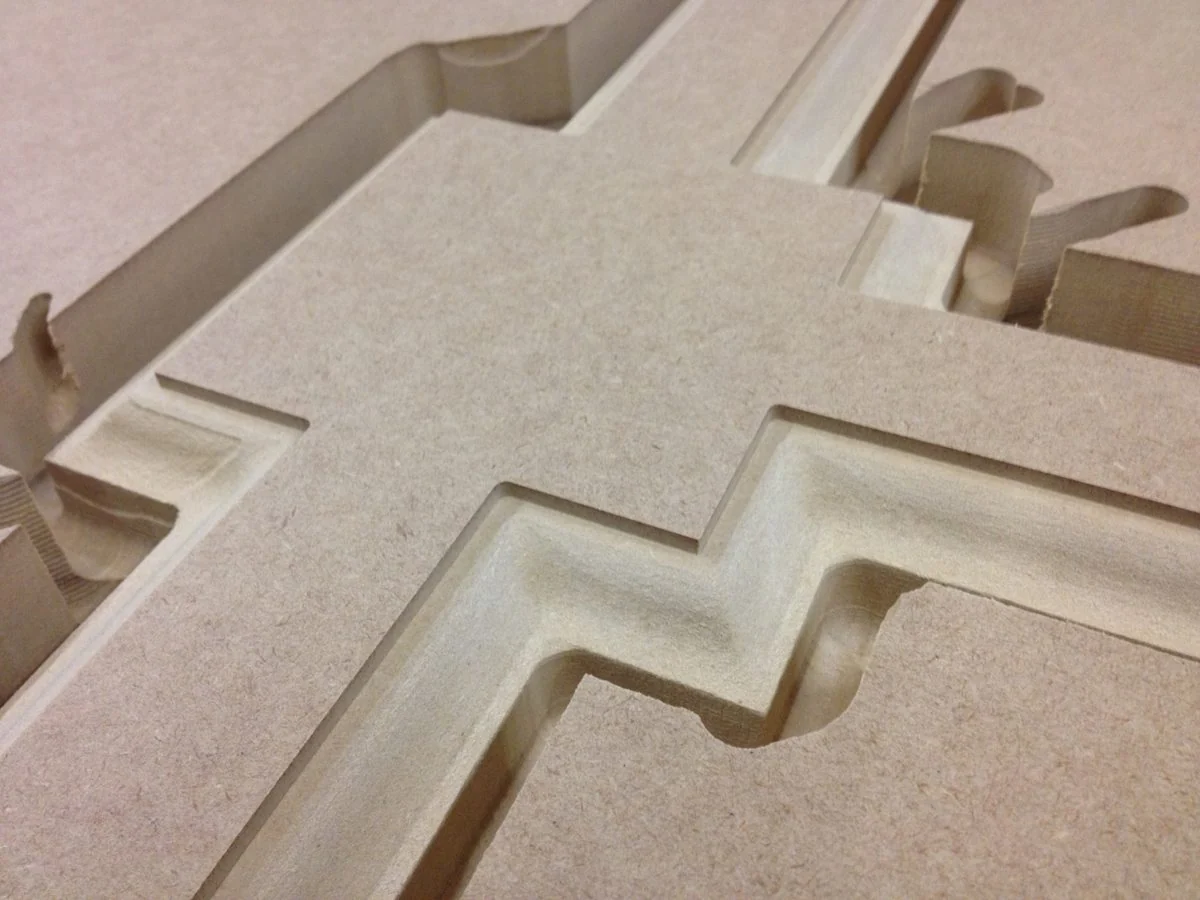
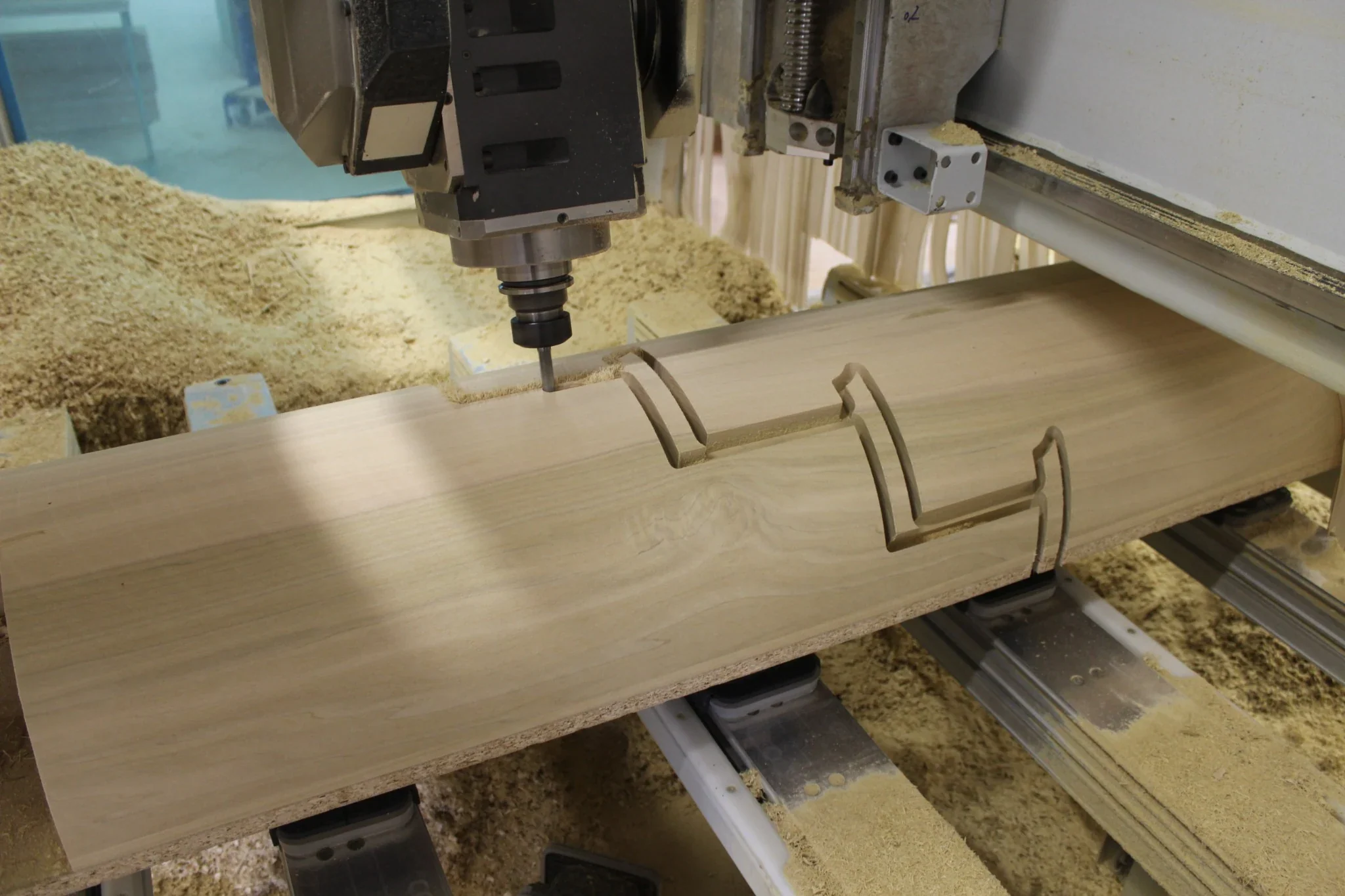
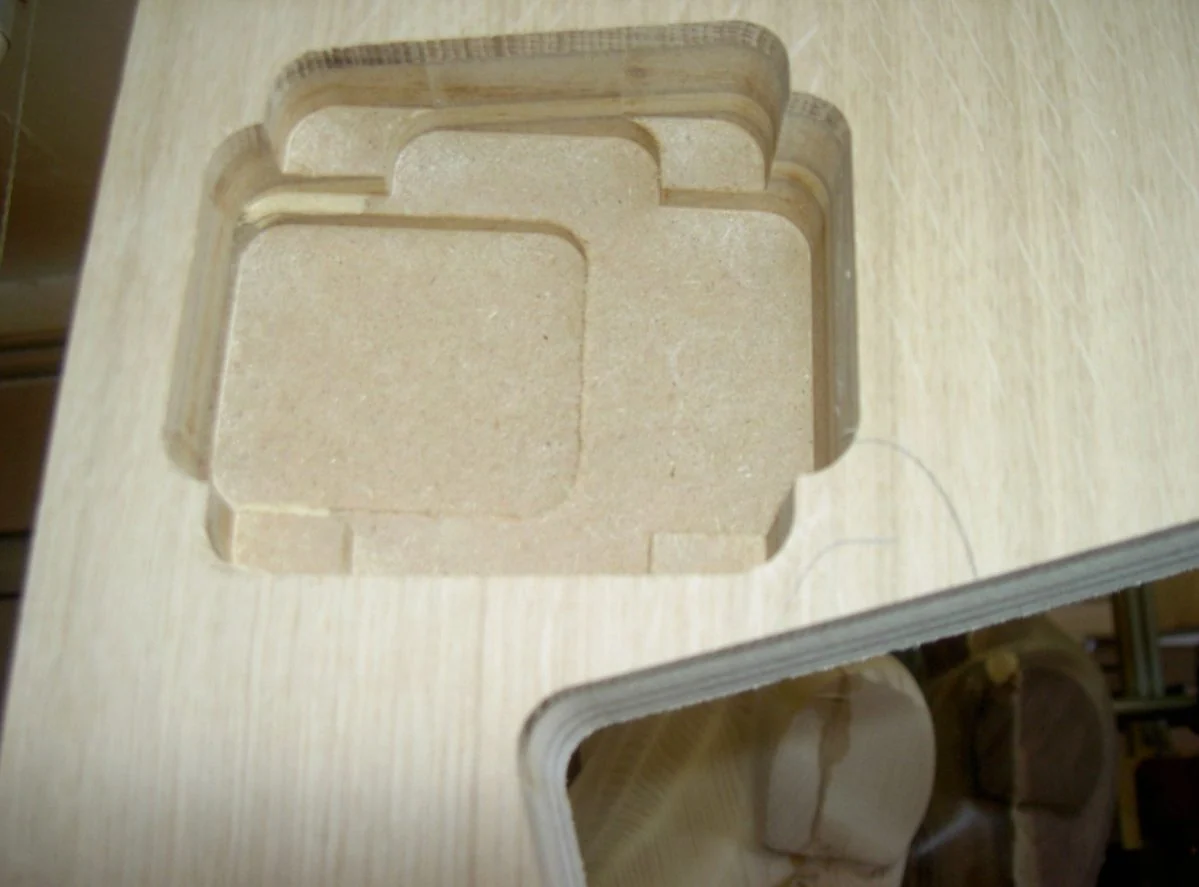
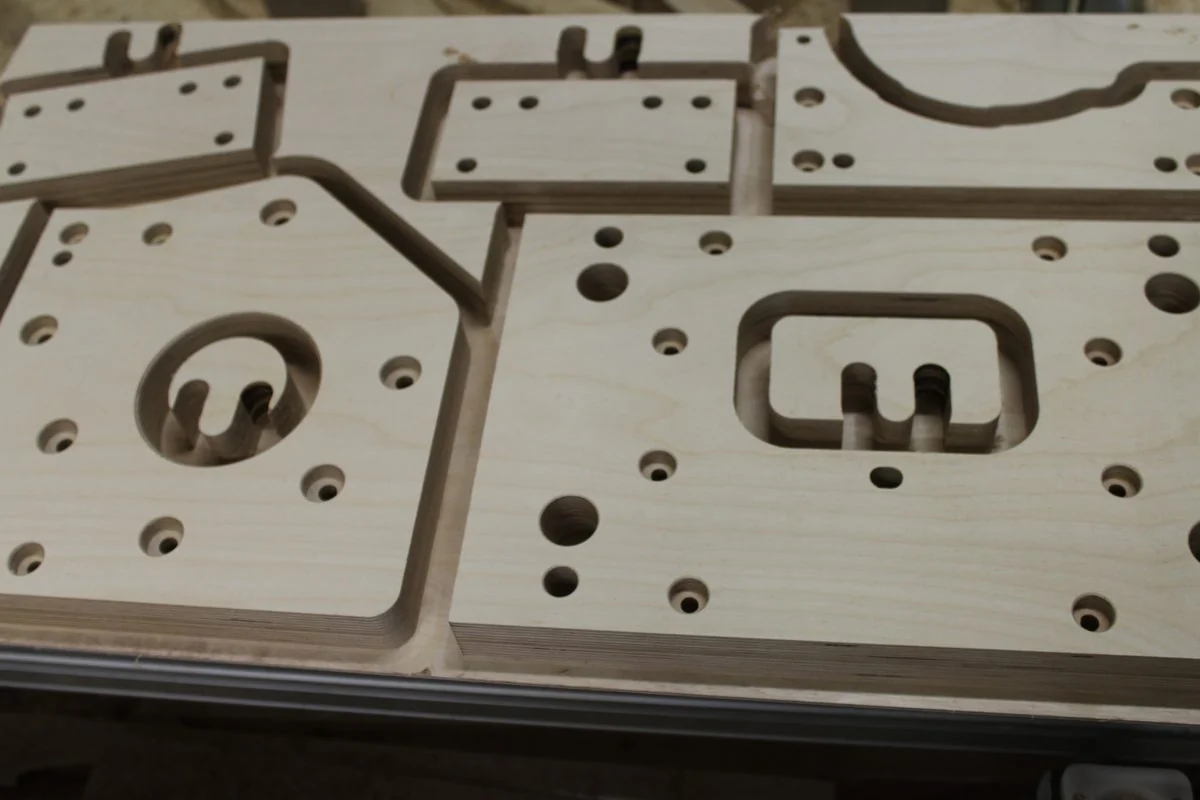
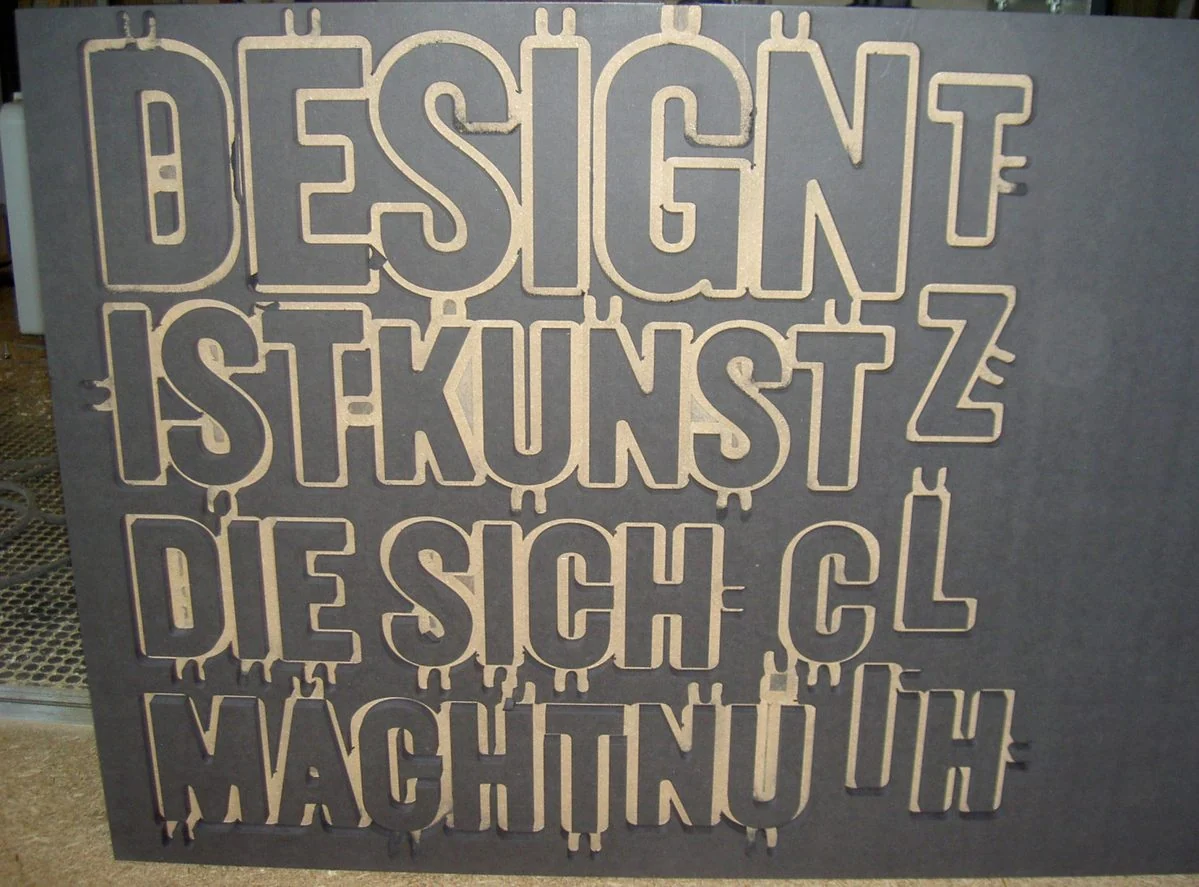
Pockets, holes and contours are machined at defined depths. Small holding tabs can keep cut-out parts attached to the sheet until machining is complete, then are removed.
More about the application
Holding tabs keep individual parts secured within the sheet during machining. They are removed and finished afterwards. Ramp or helical entries help suitable tools reach the required cutting depth.
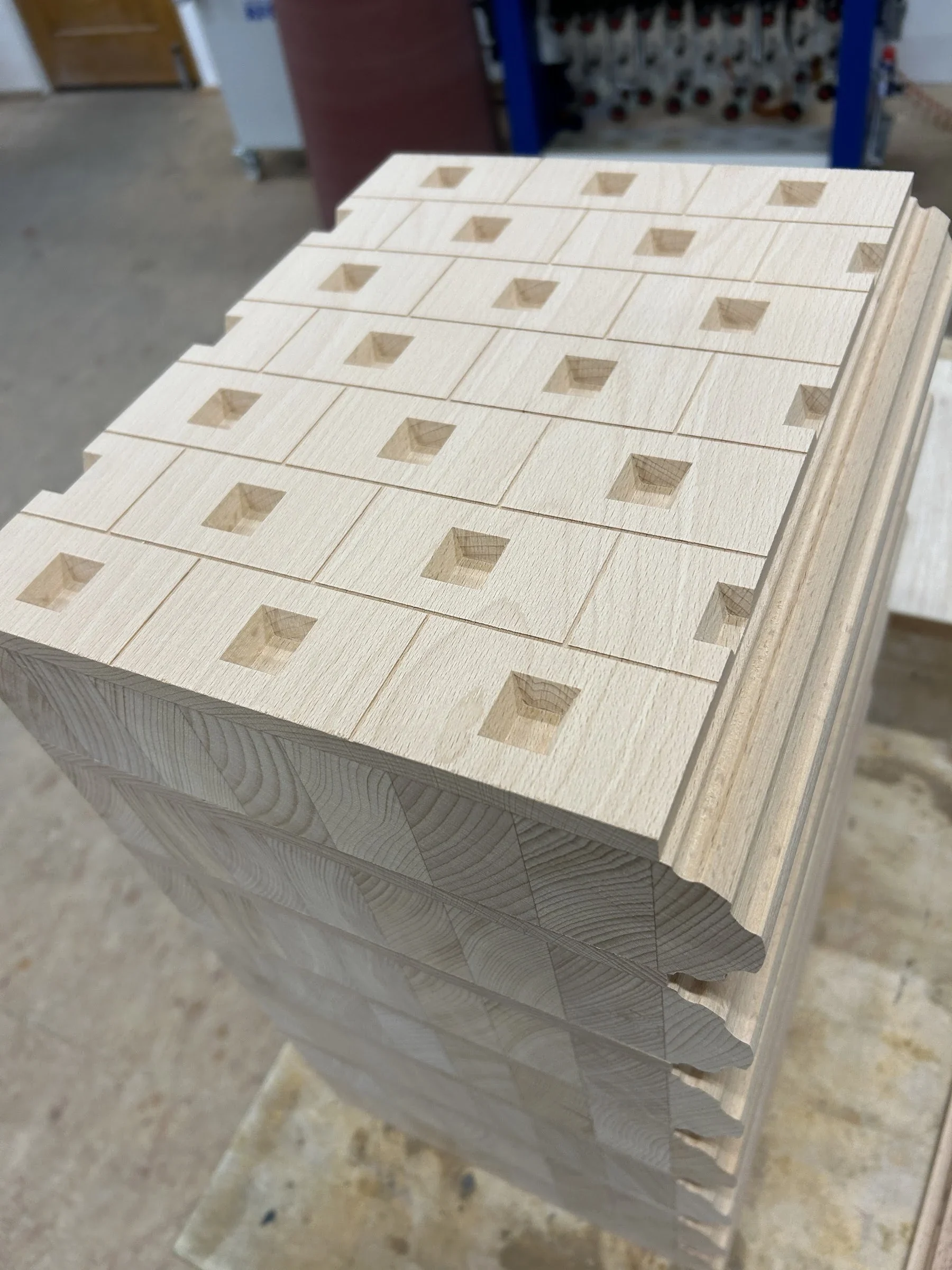
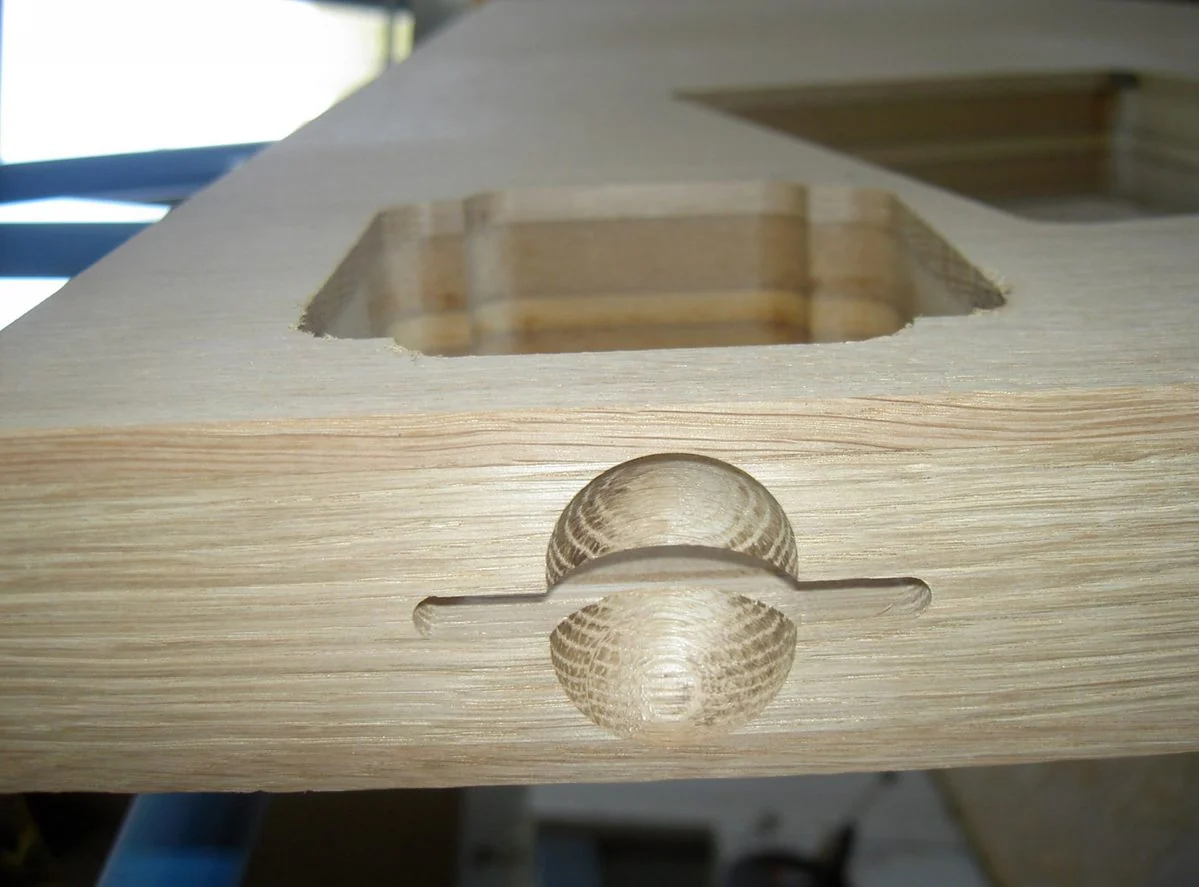
Milled interlocking joint geometry on a wooden componentRepeated milled features in a book-shaped workpieceSolid-wood inlay · finished motif
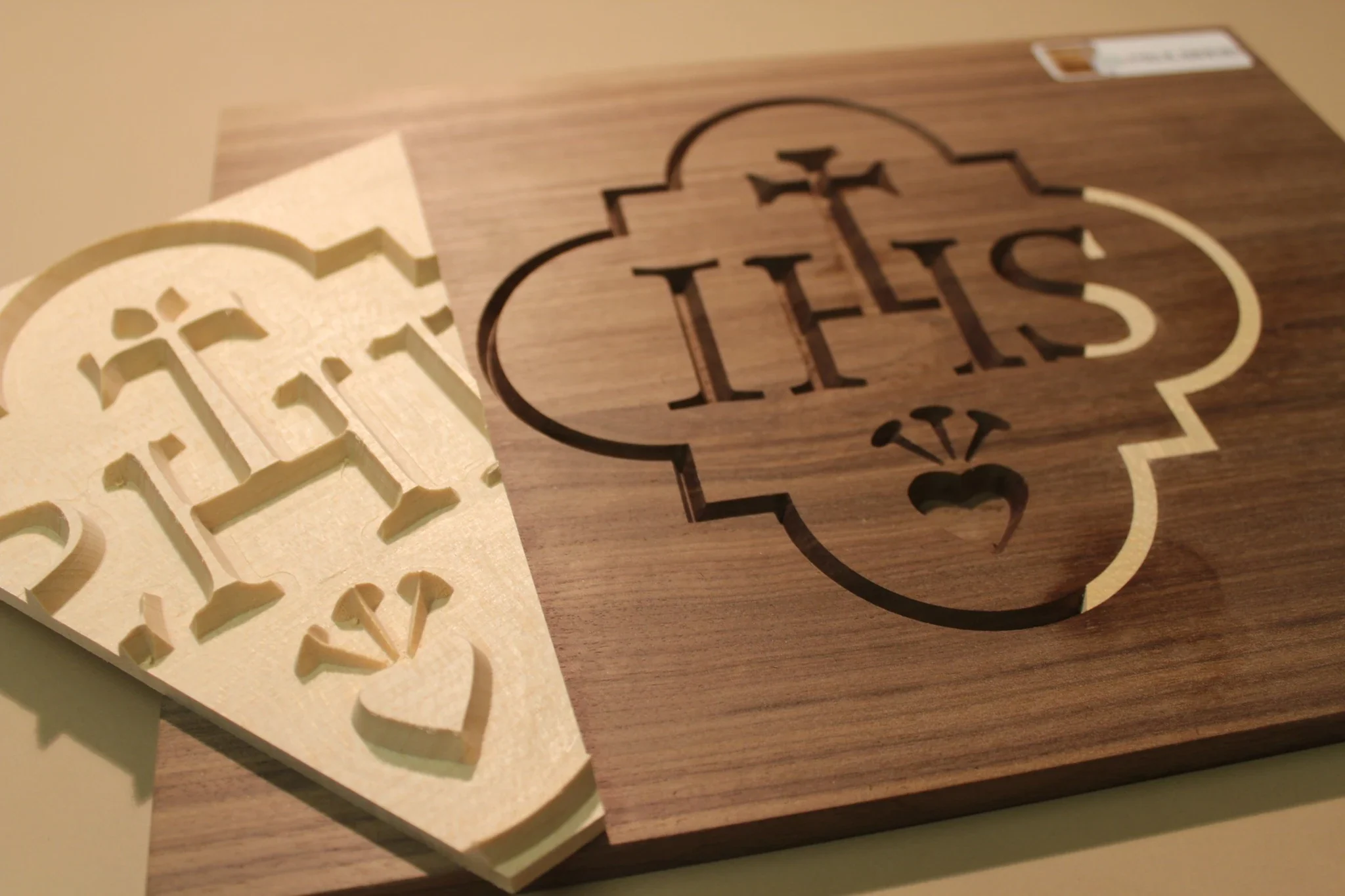
Solid-wood inlay · recess and insert
3D milling & surface finishing
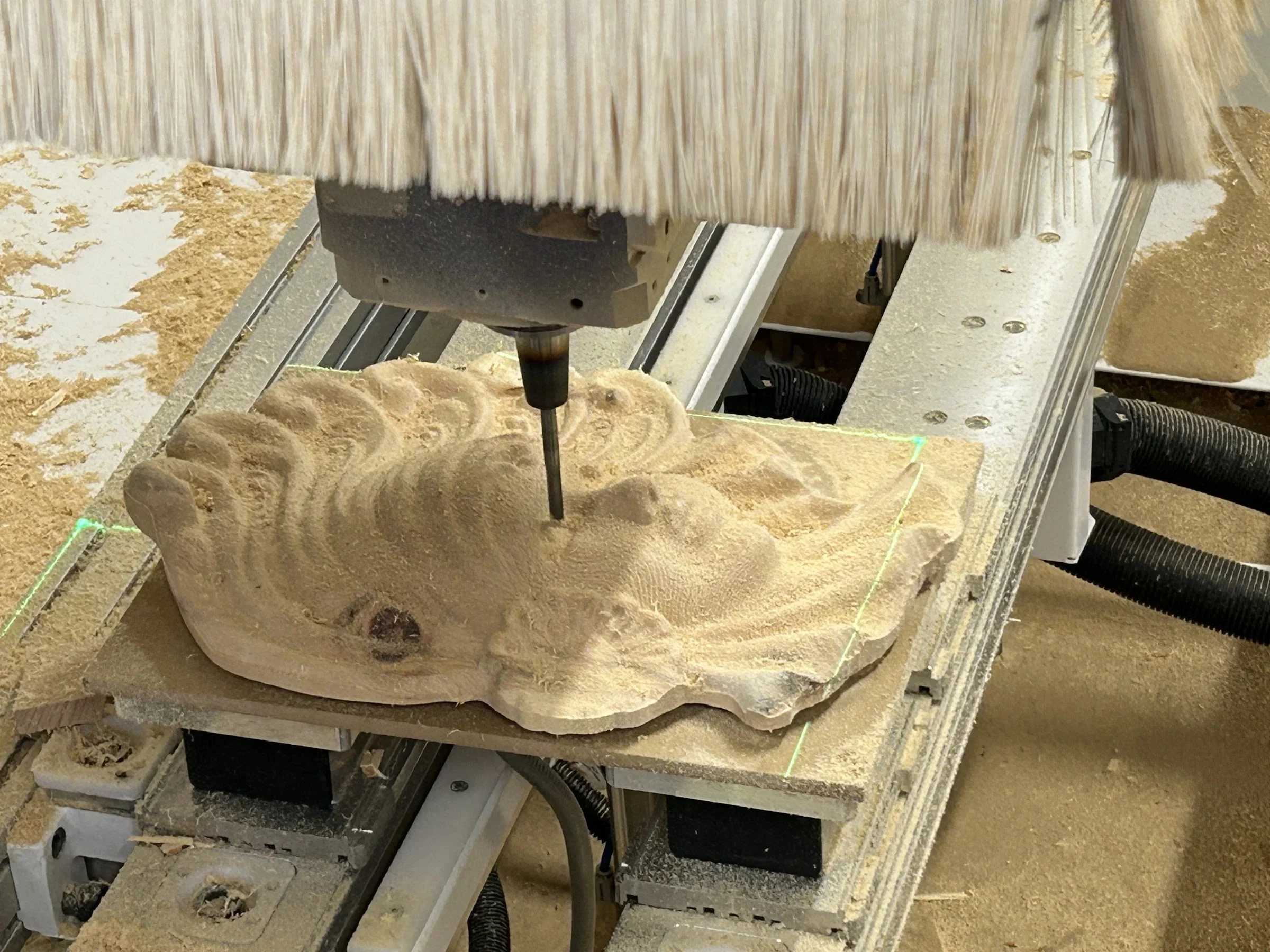
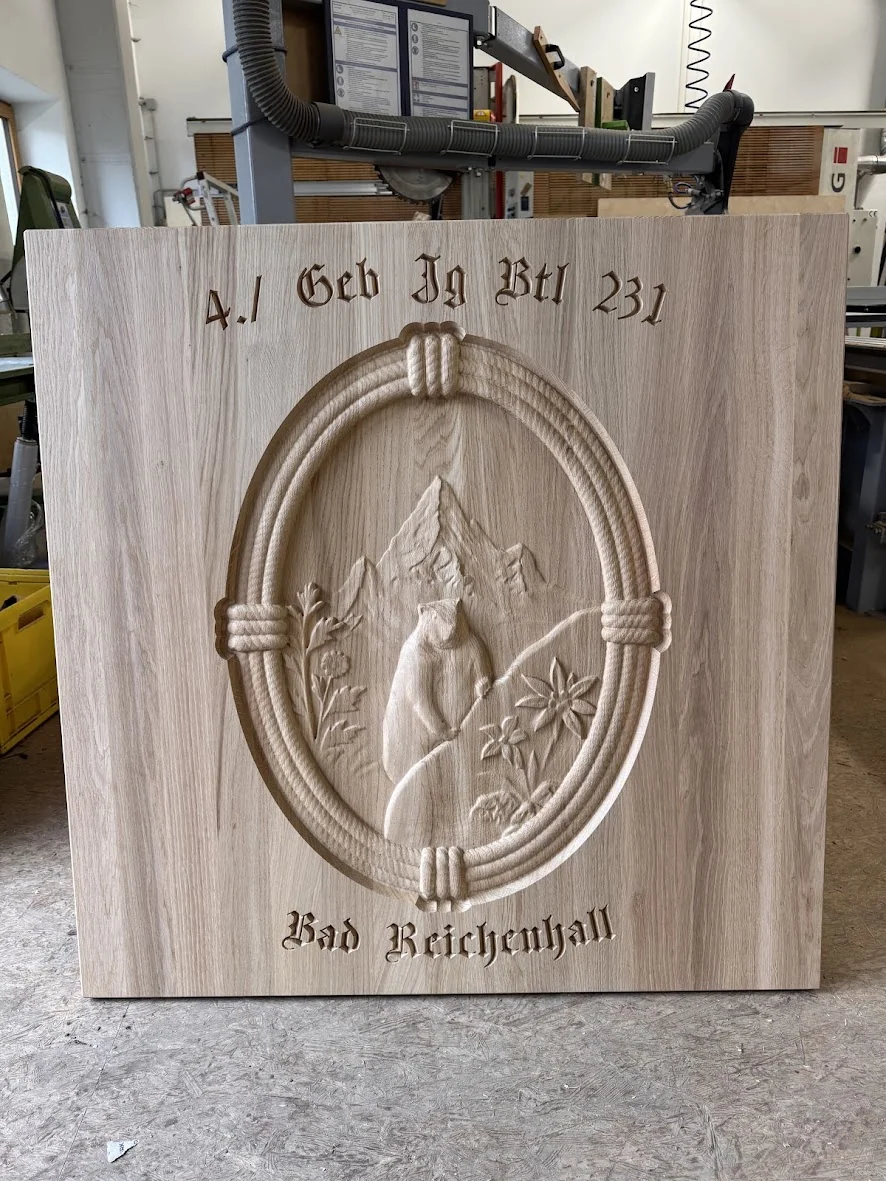
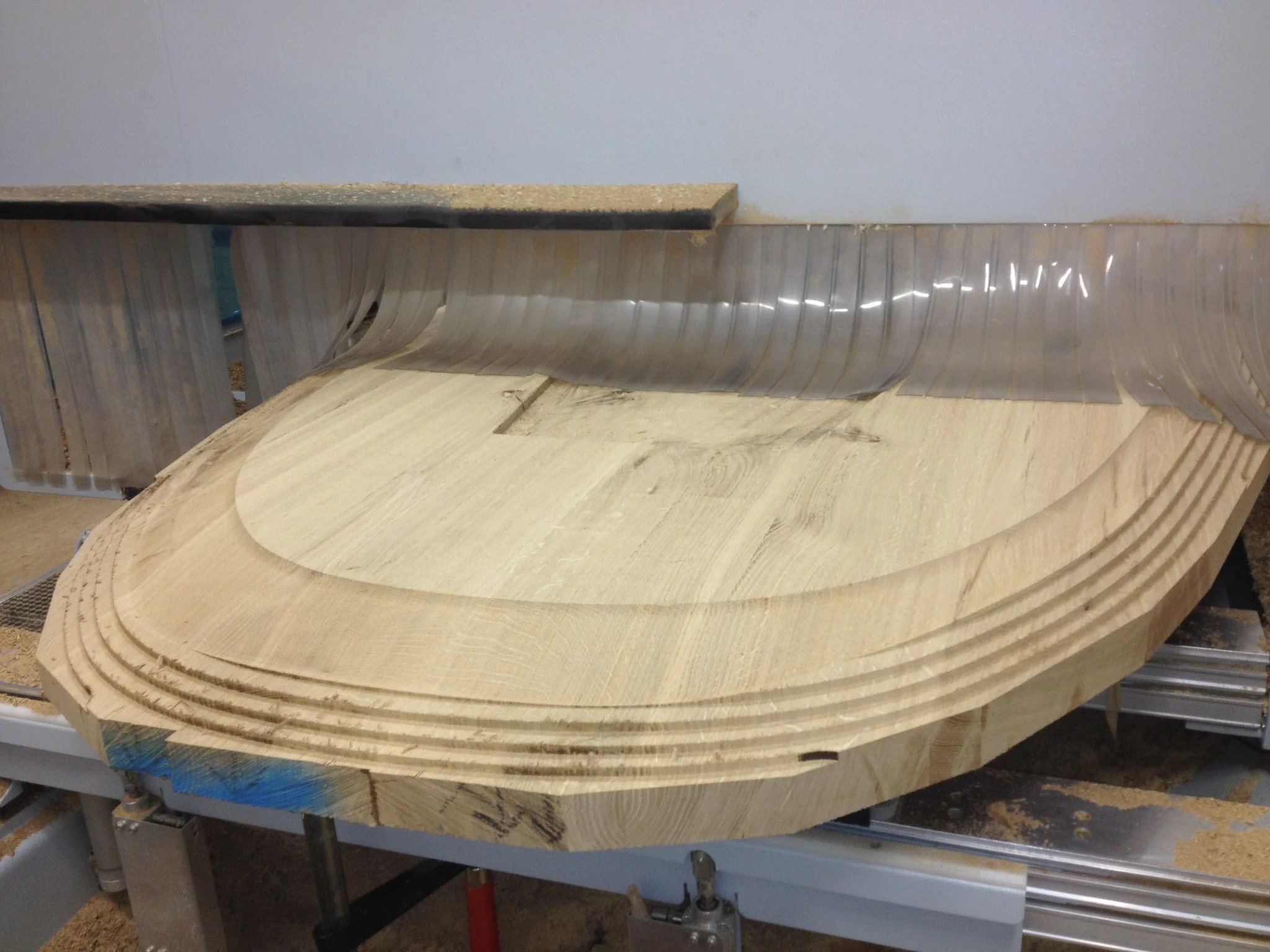
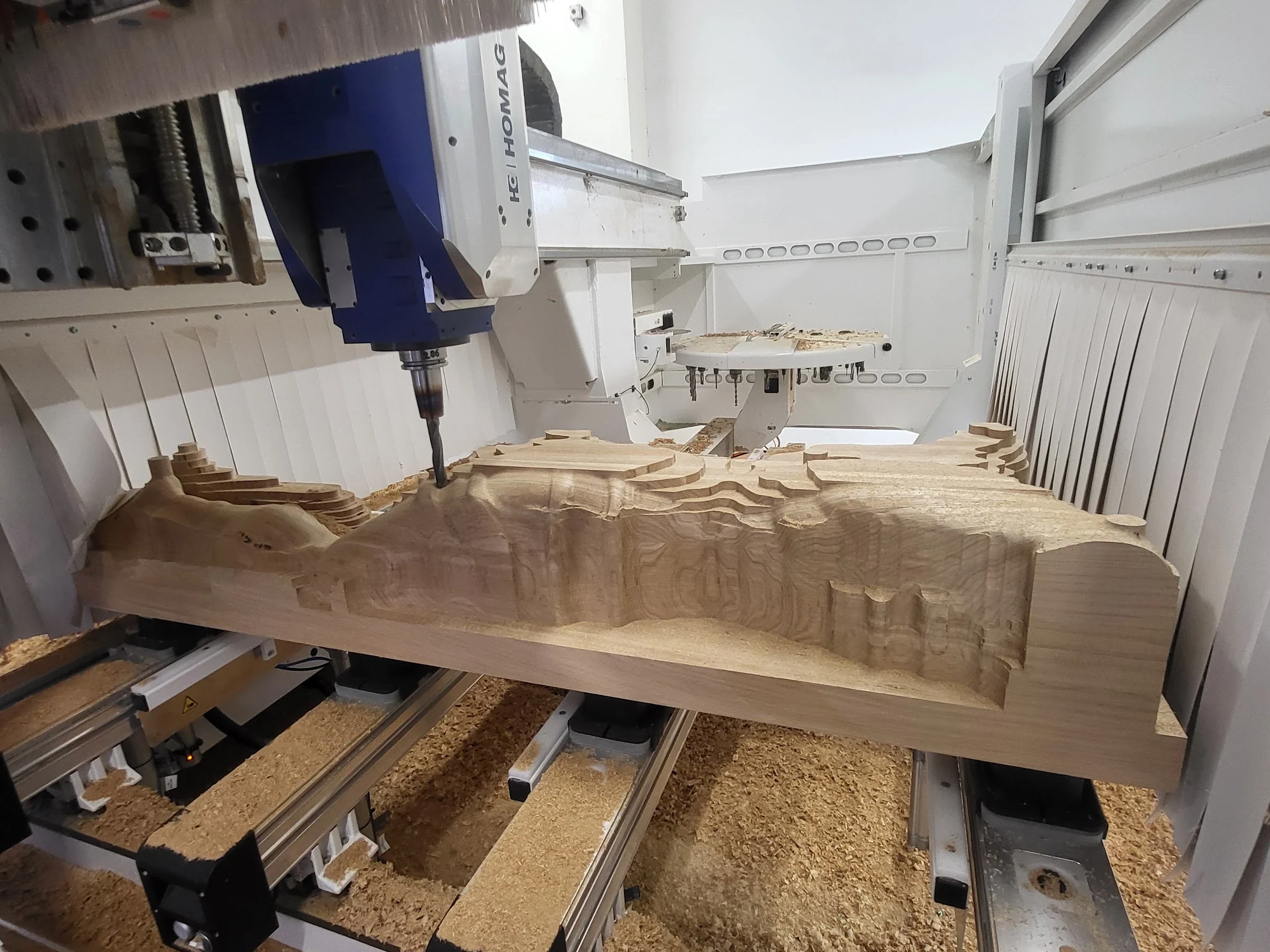
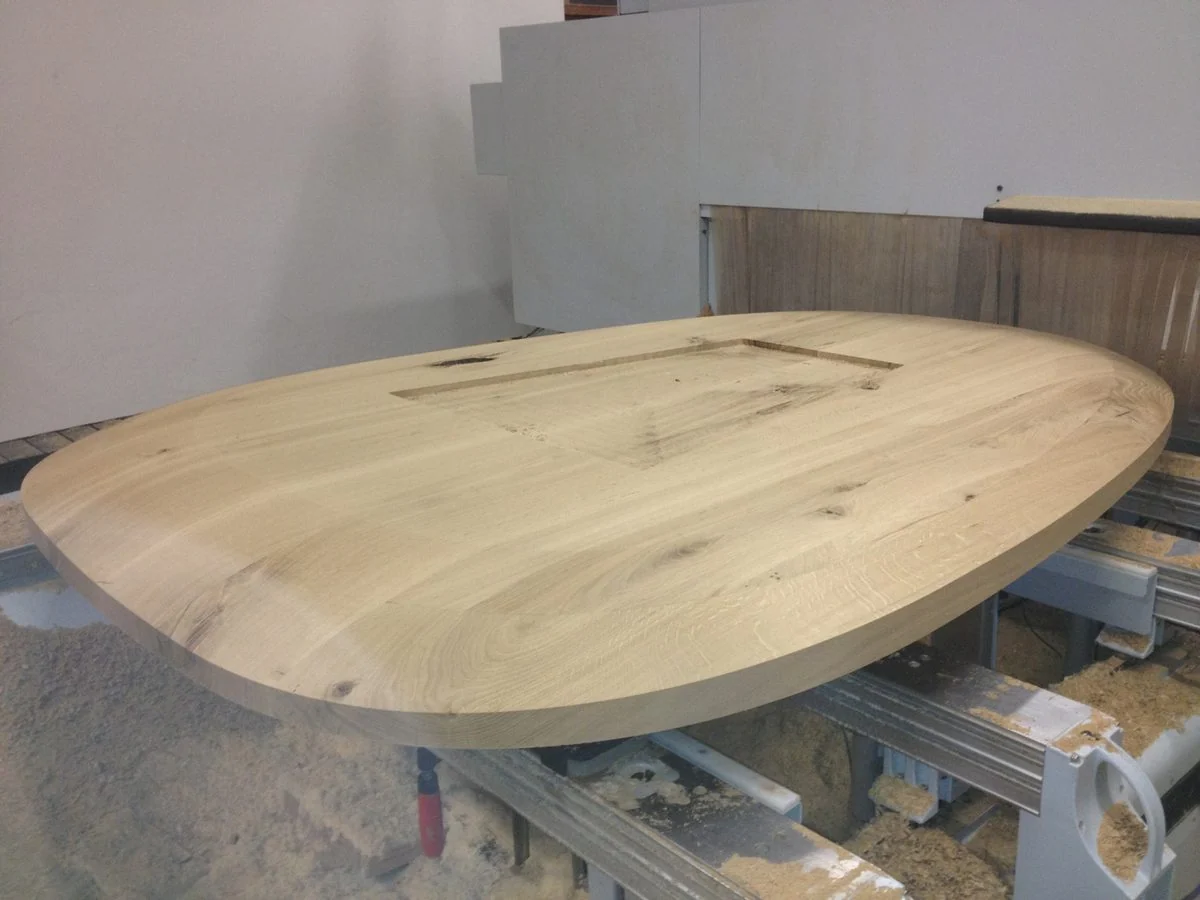
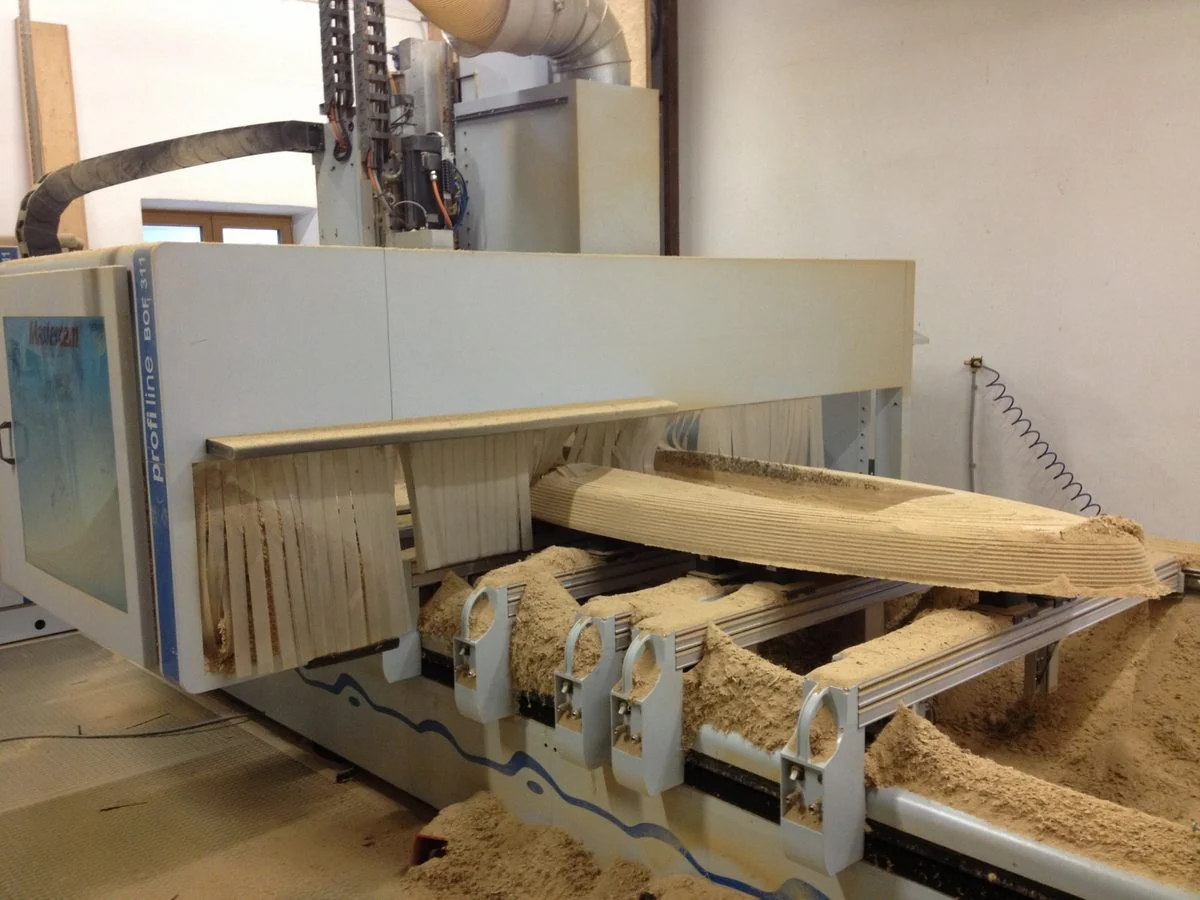
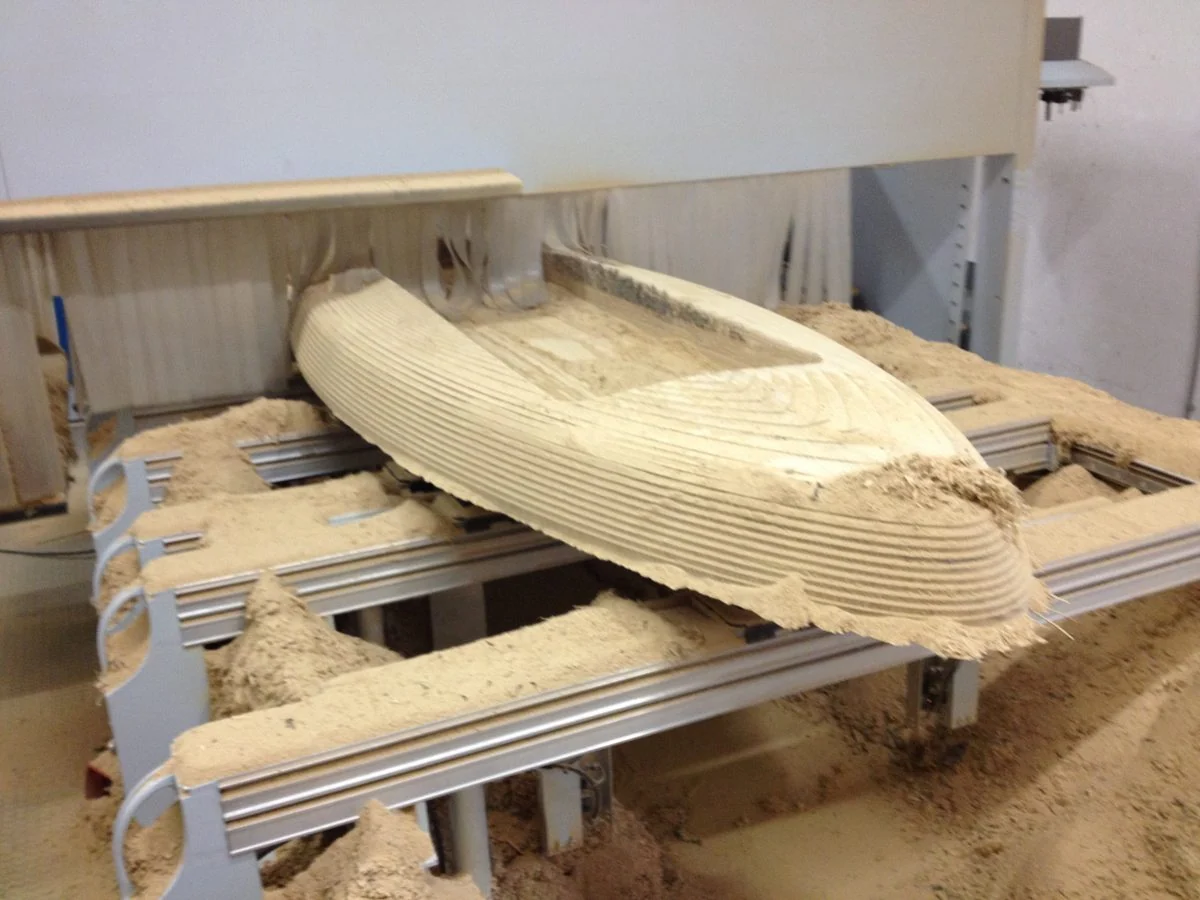
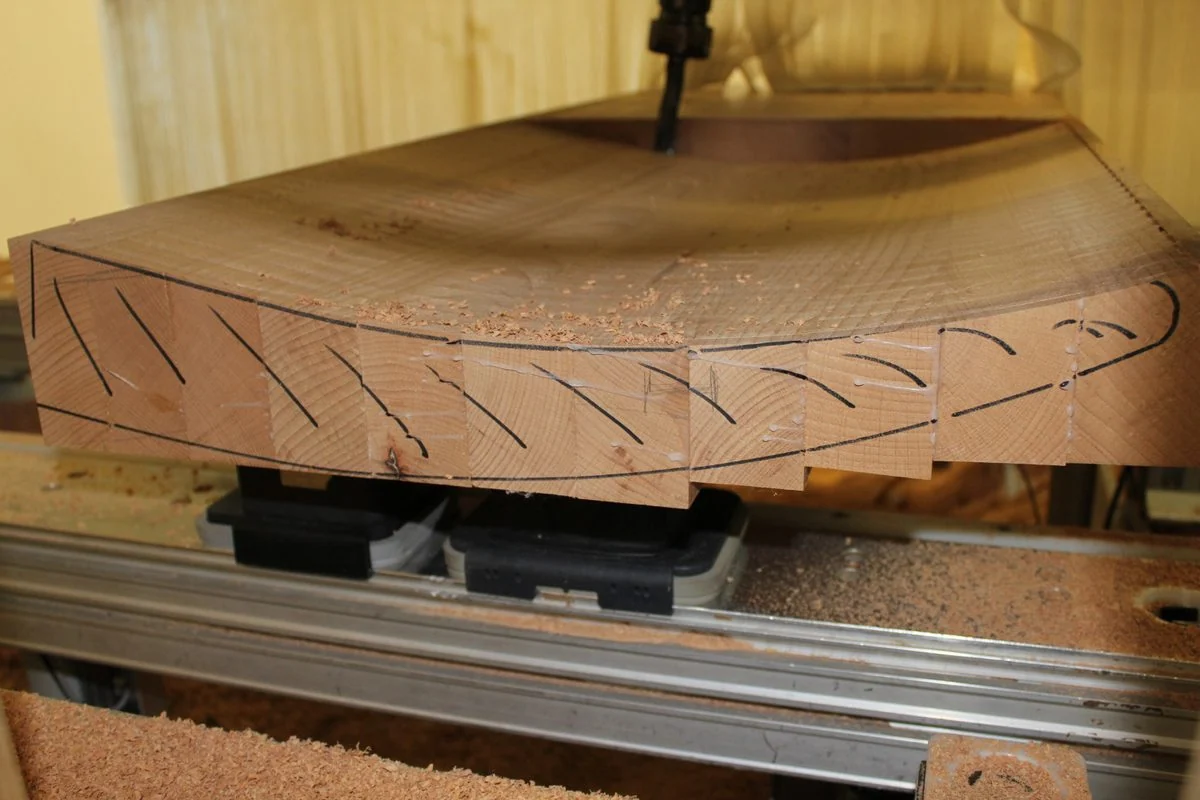
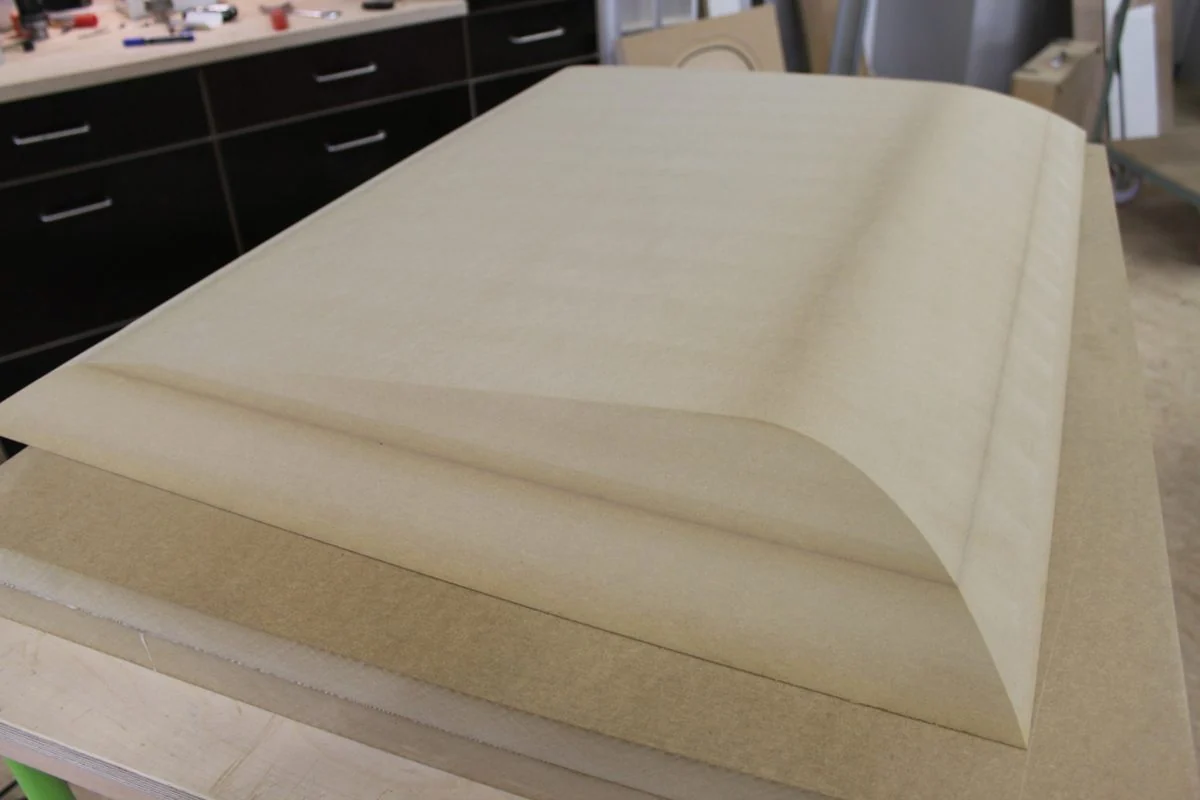
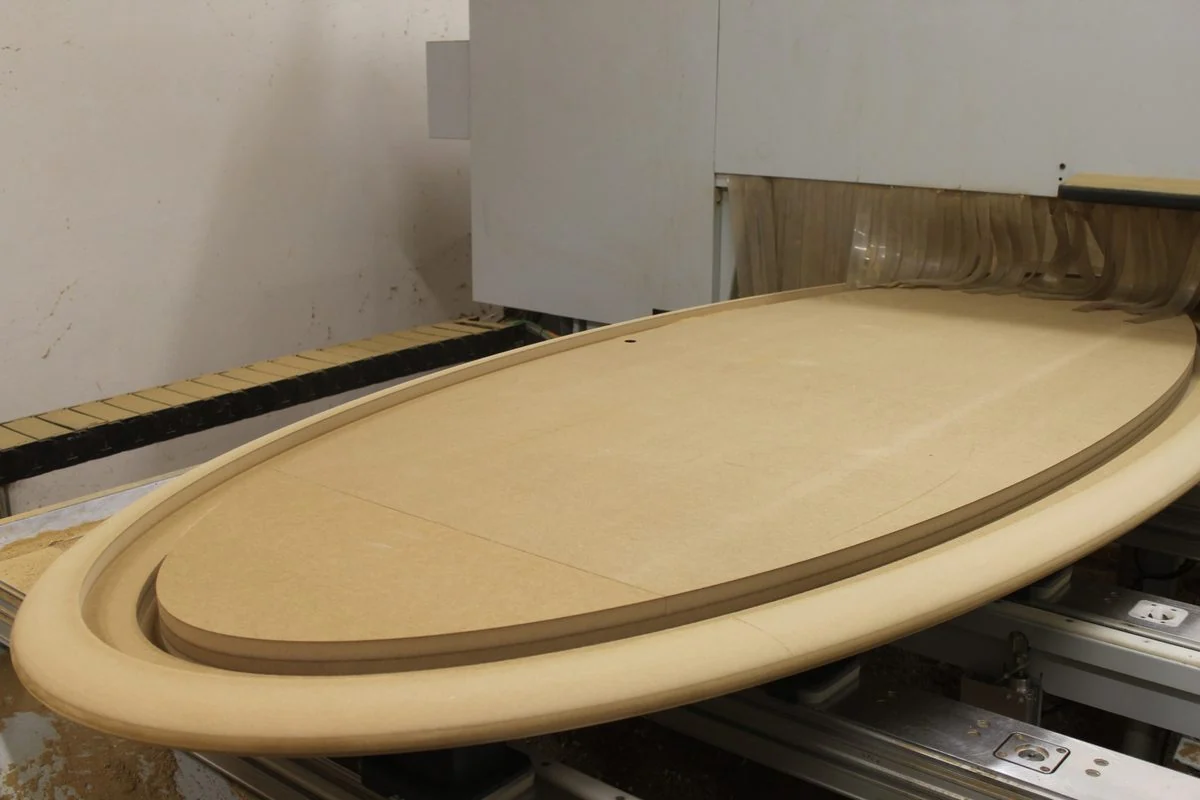
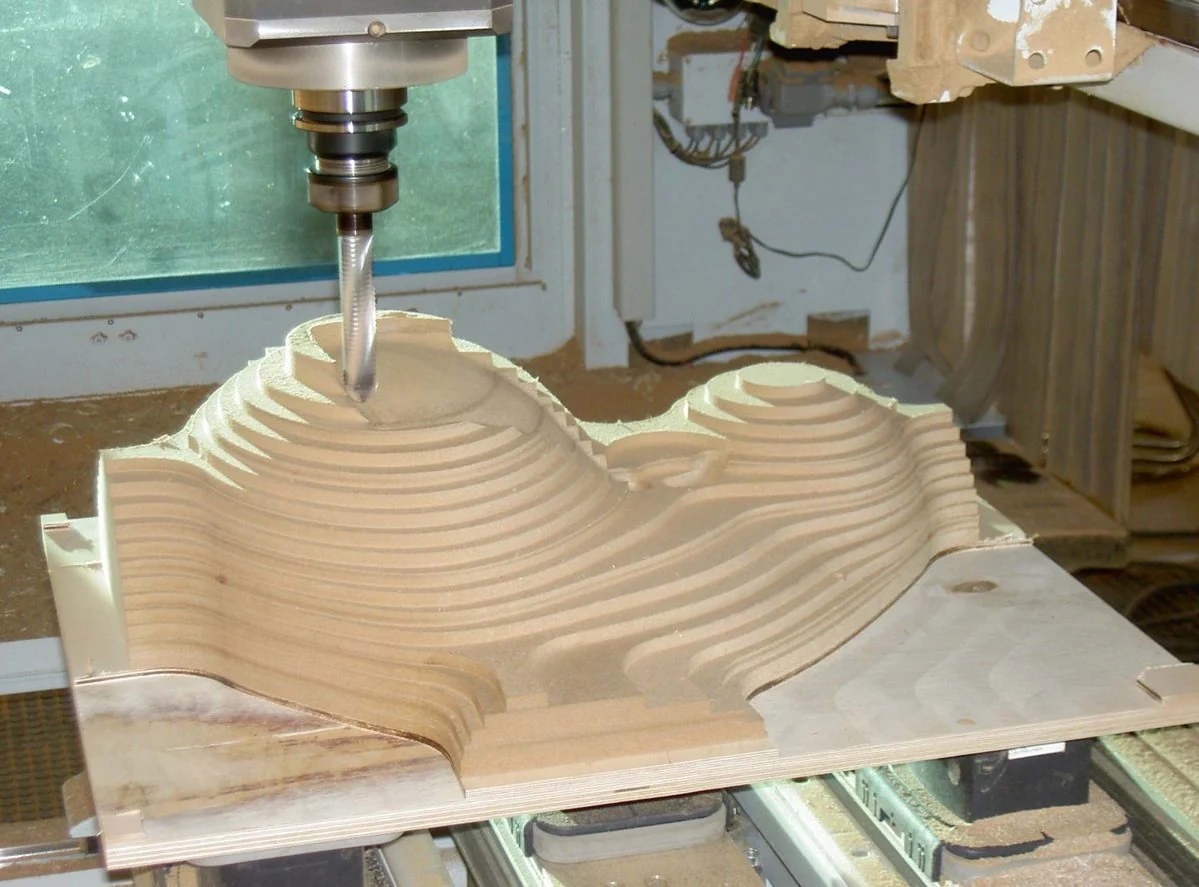
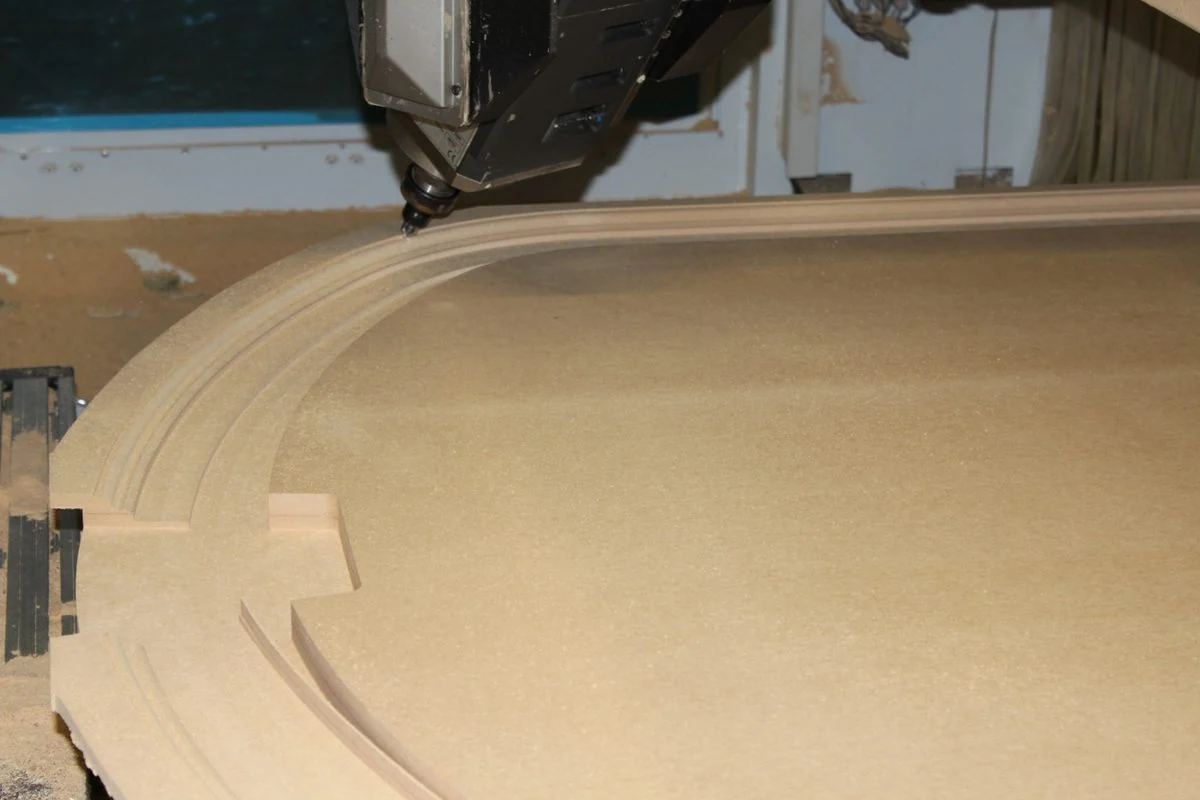
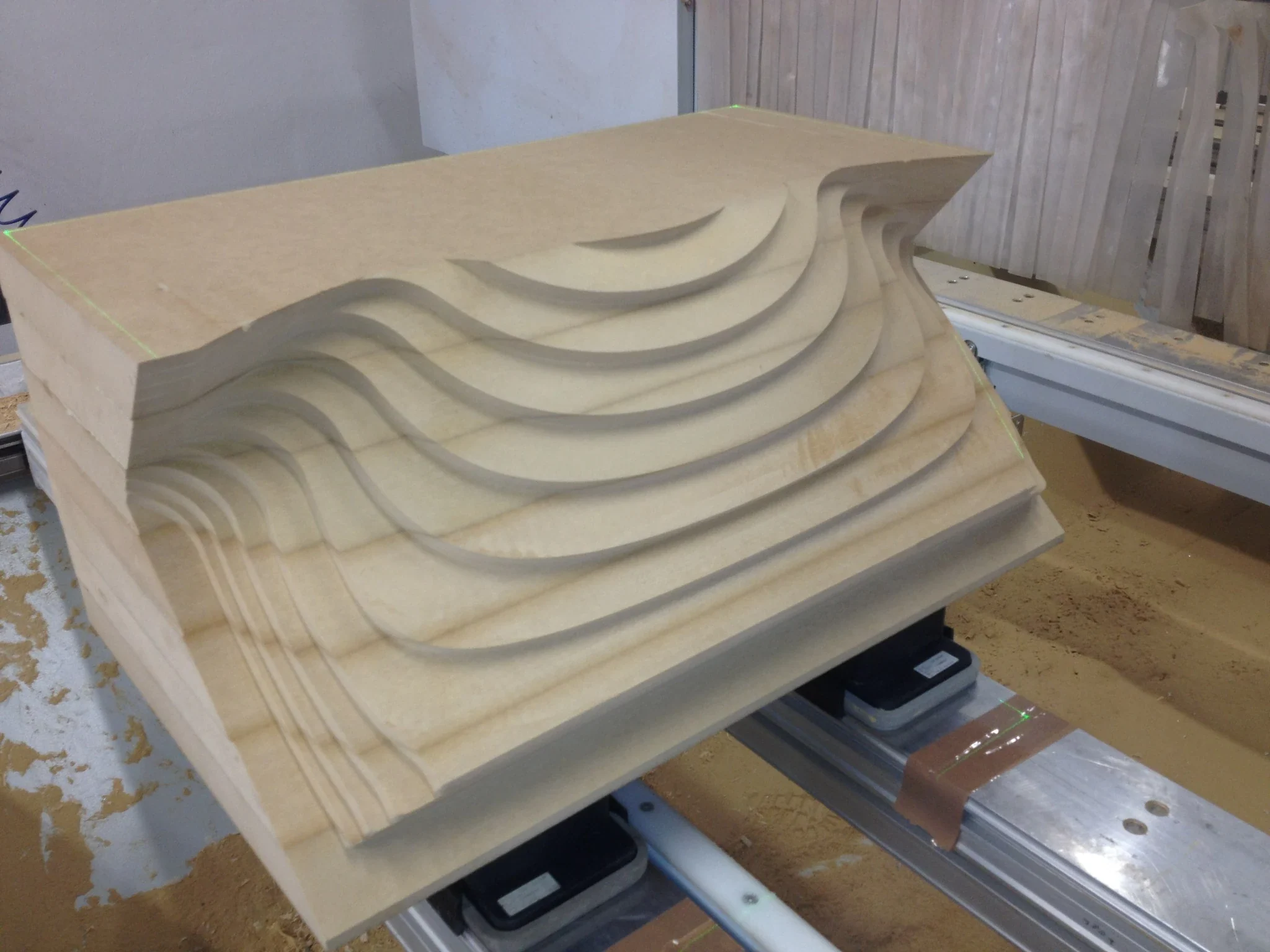
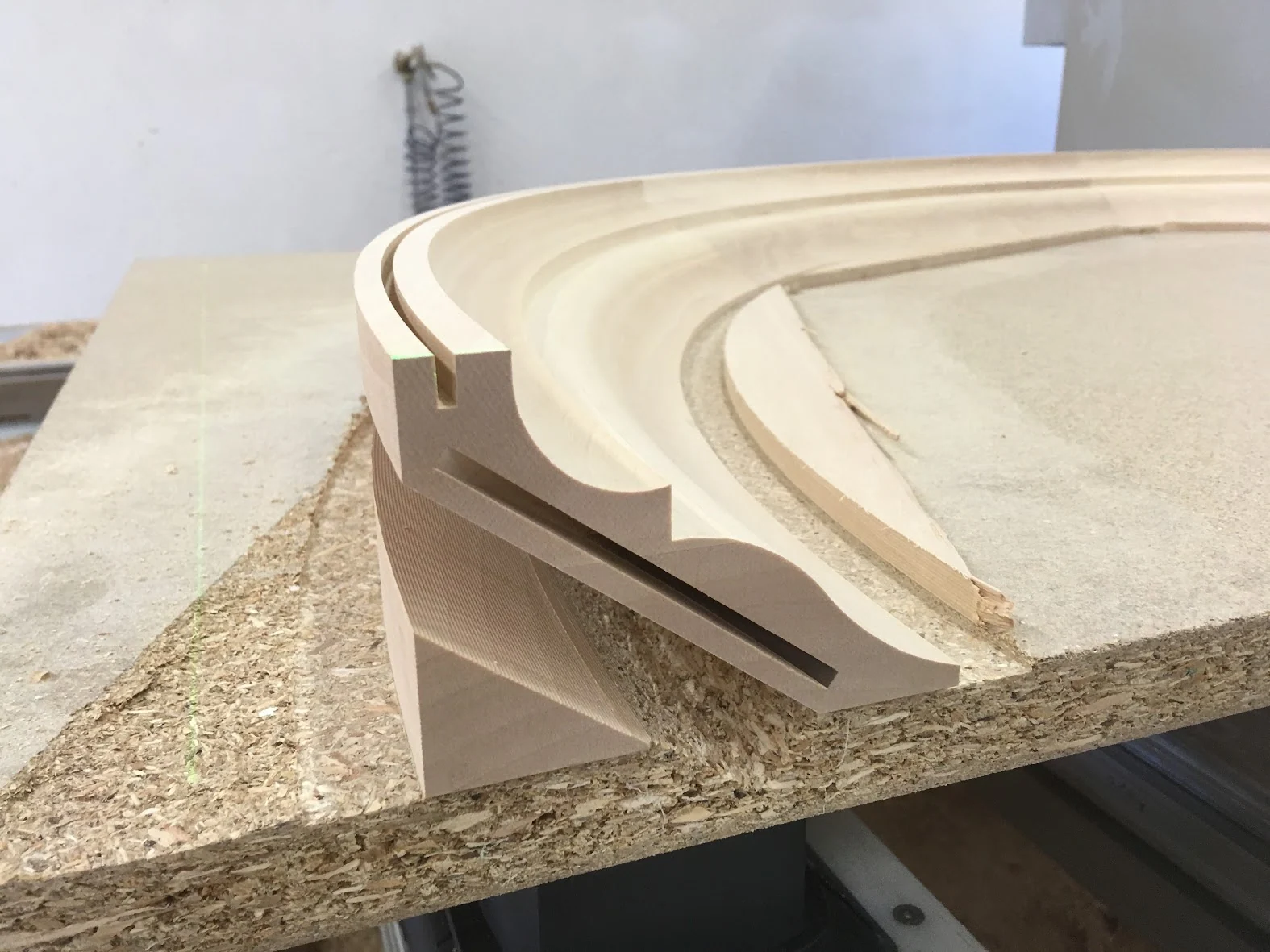
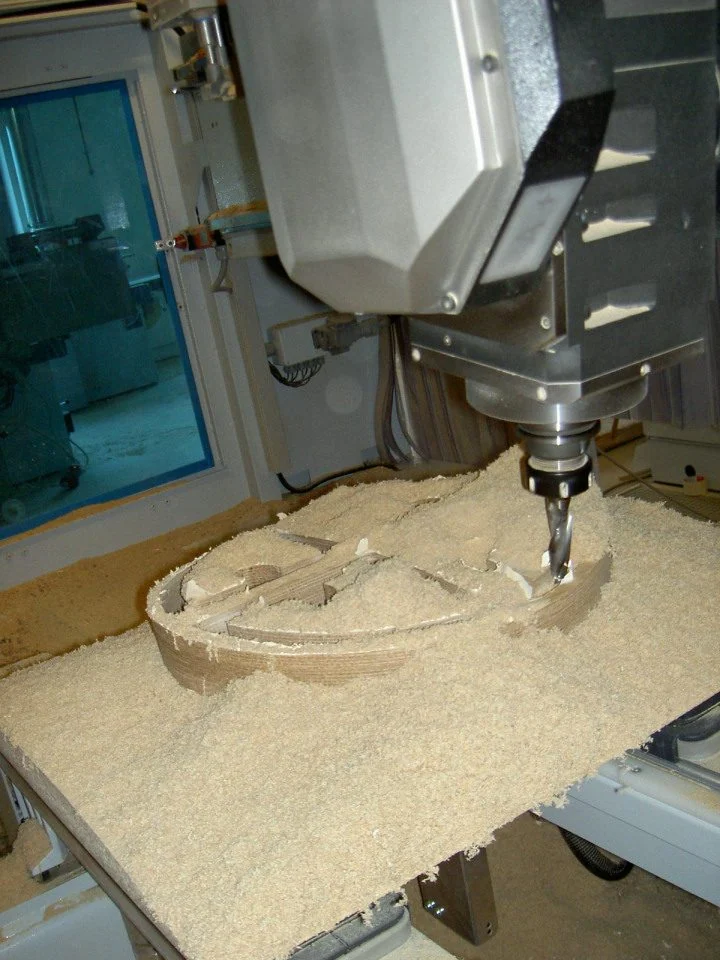
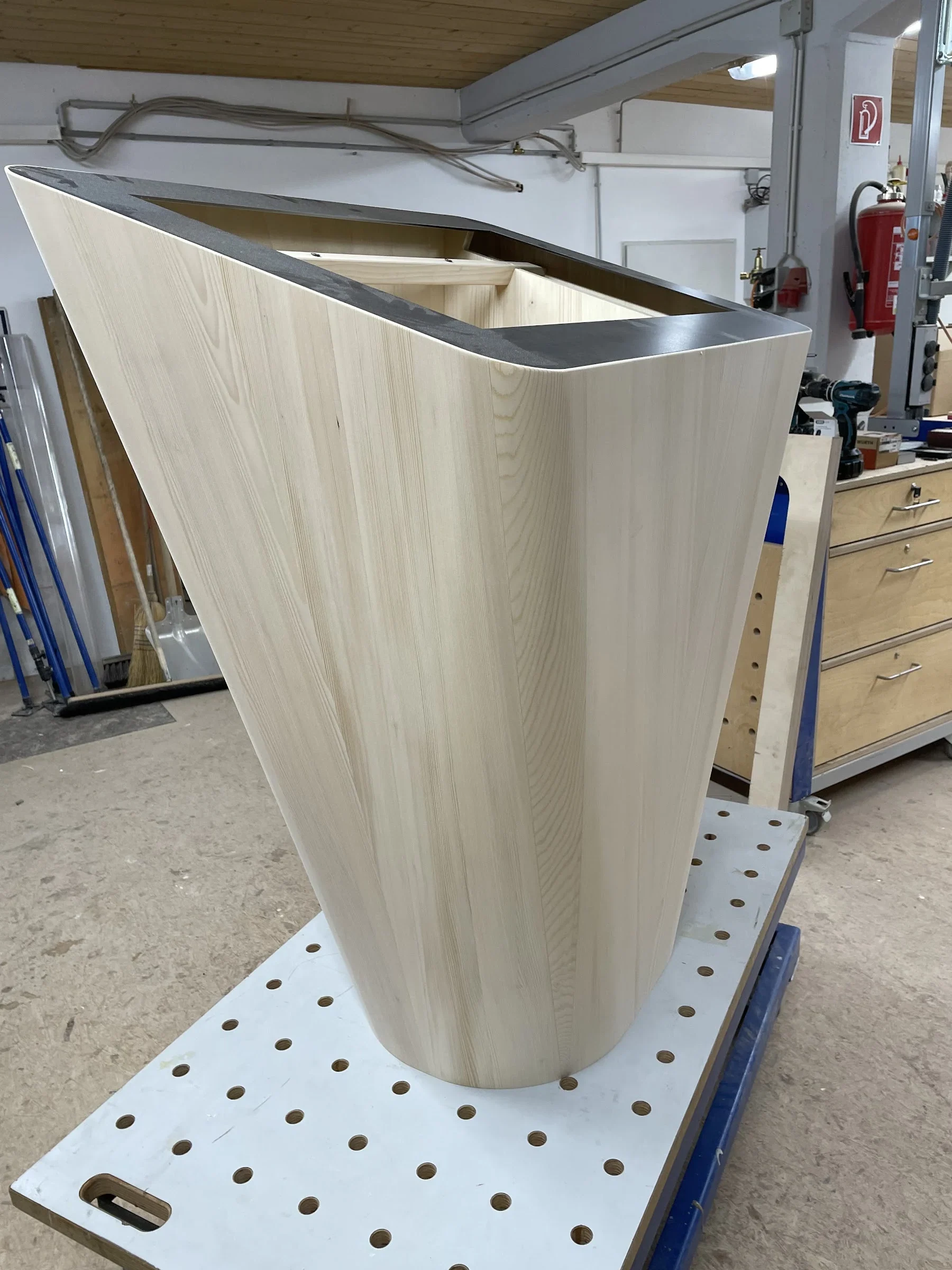
Free-form surfaces are machined along three-dimensional toolpaths. Roughing removes bulk material; finishing brings the surface closer to the intended geometry and quality. In surface finishing passes, the cutter follows closely spaced paths across the surface, building up the intended three-dimensional form. Examples from our workshop include a mirror frame machined from deep-routing MDF and a Viking-style bed headboard.
More about the application
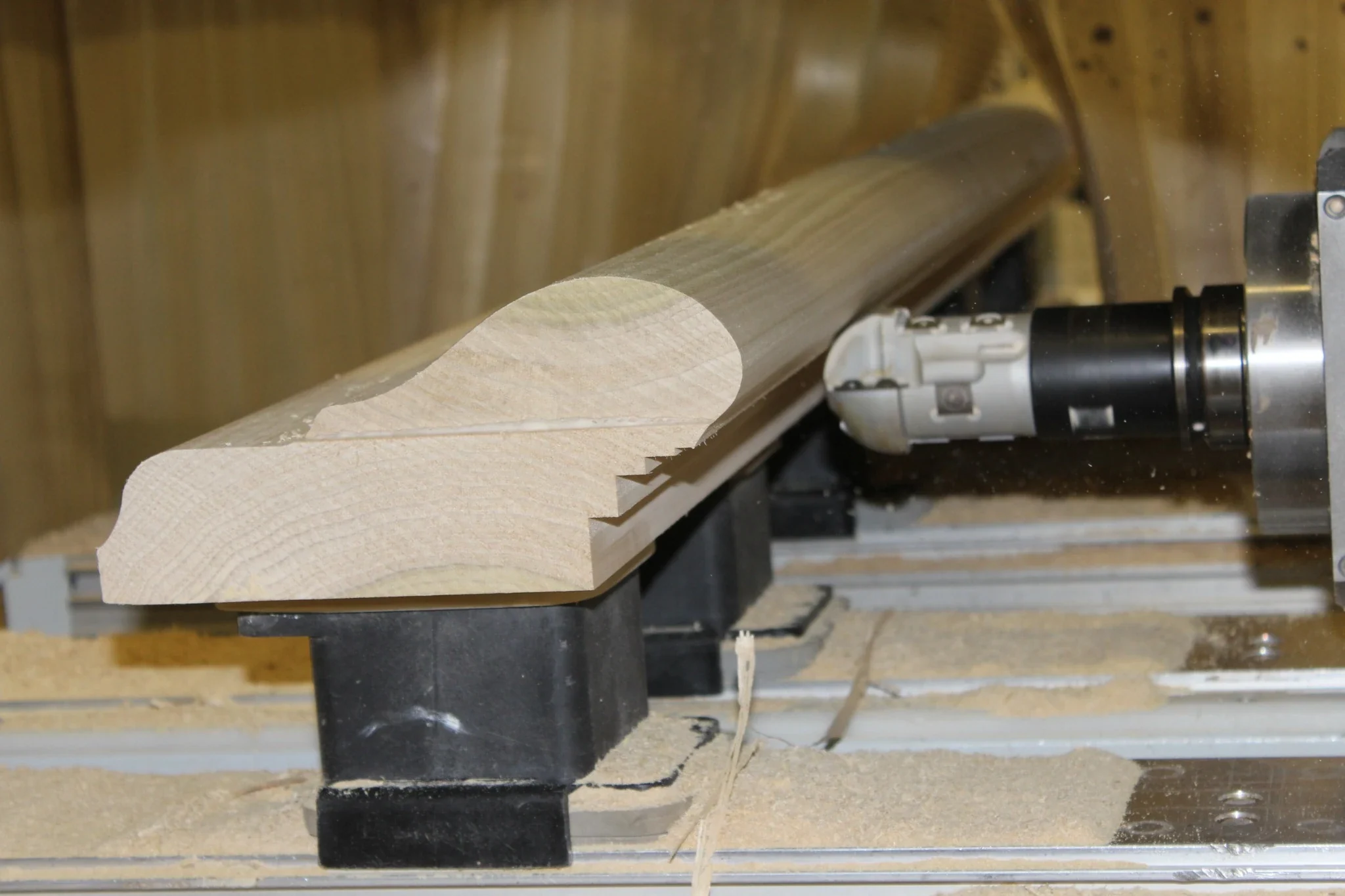
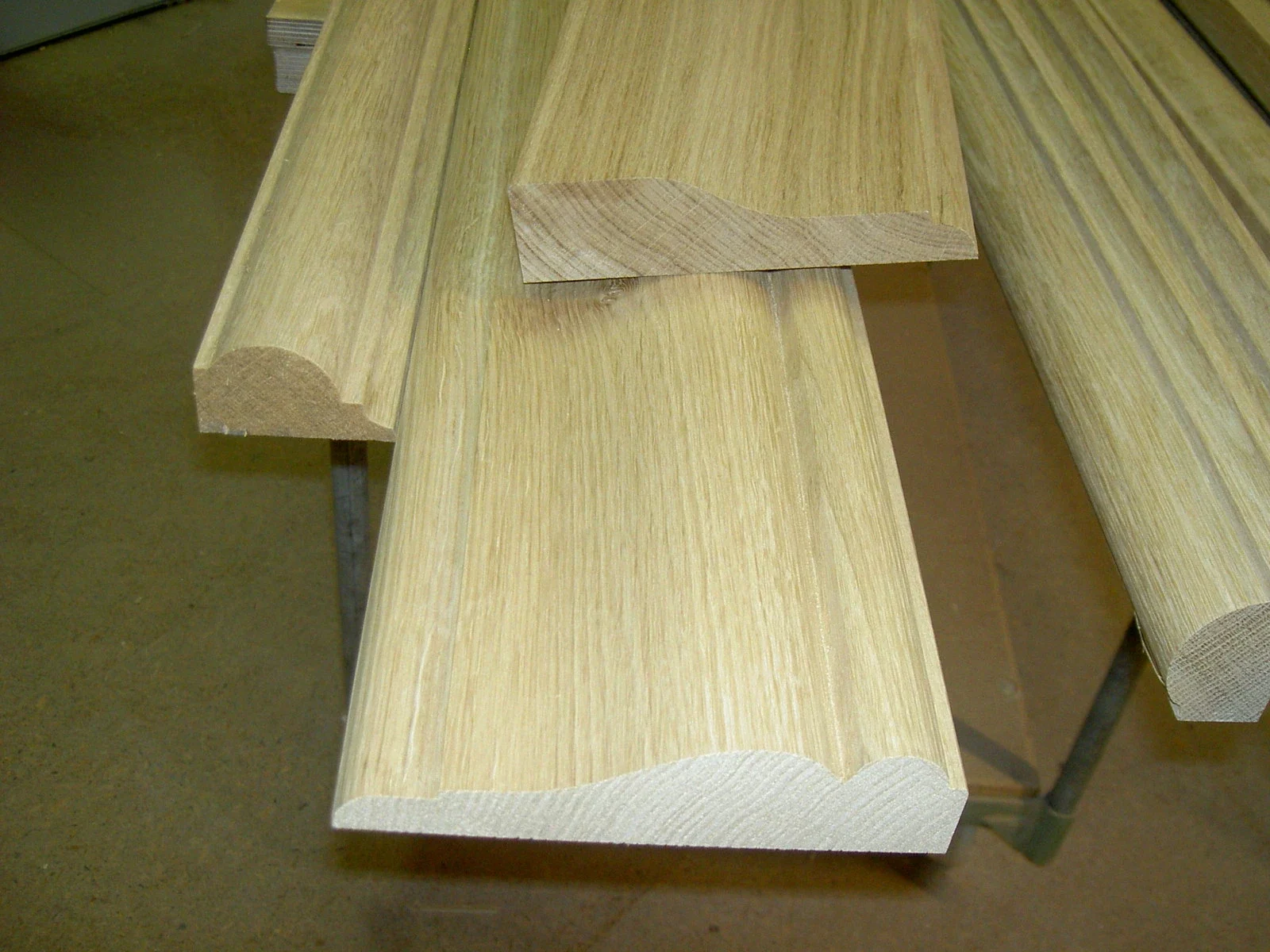
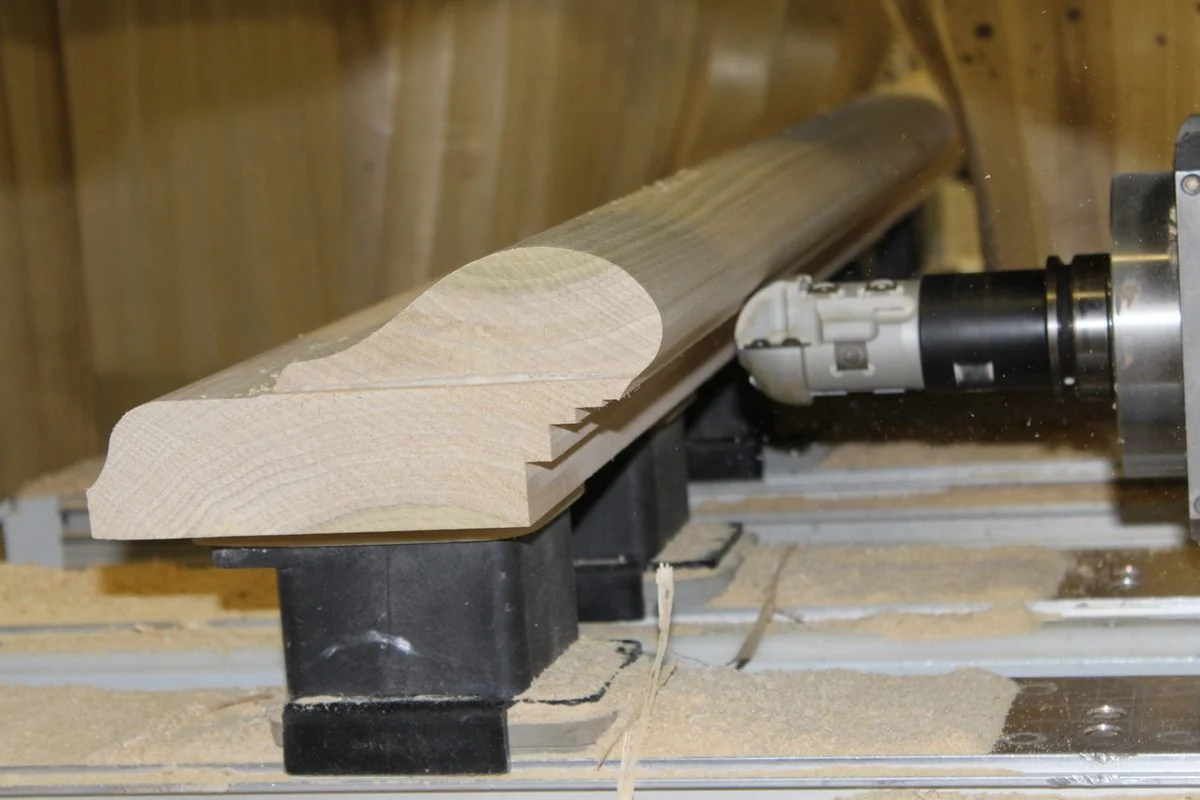
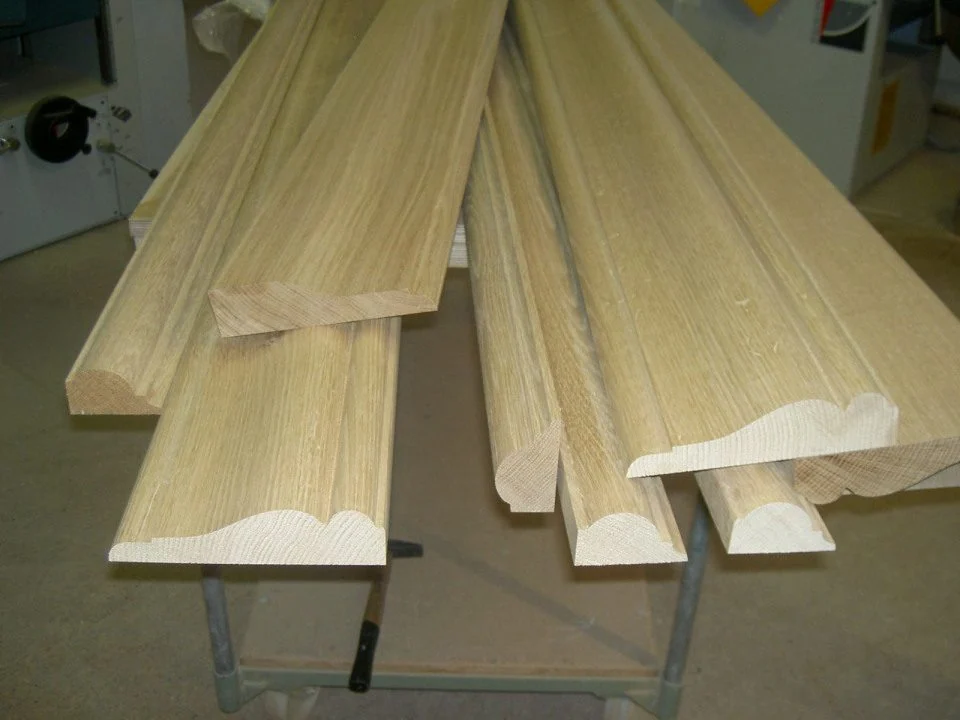
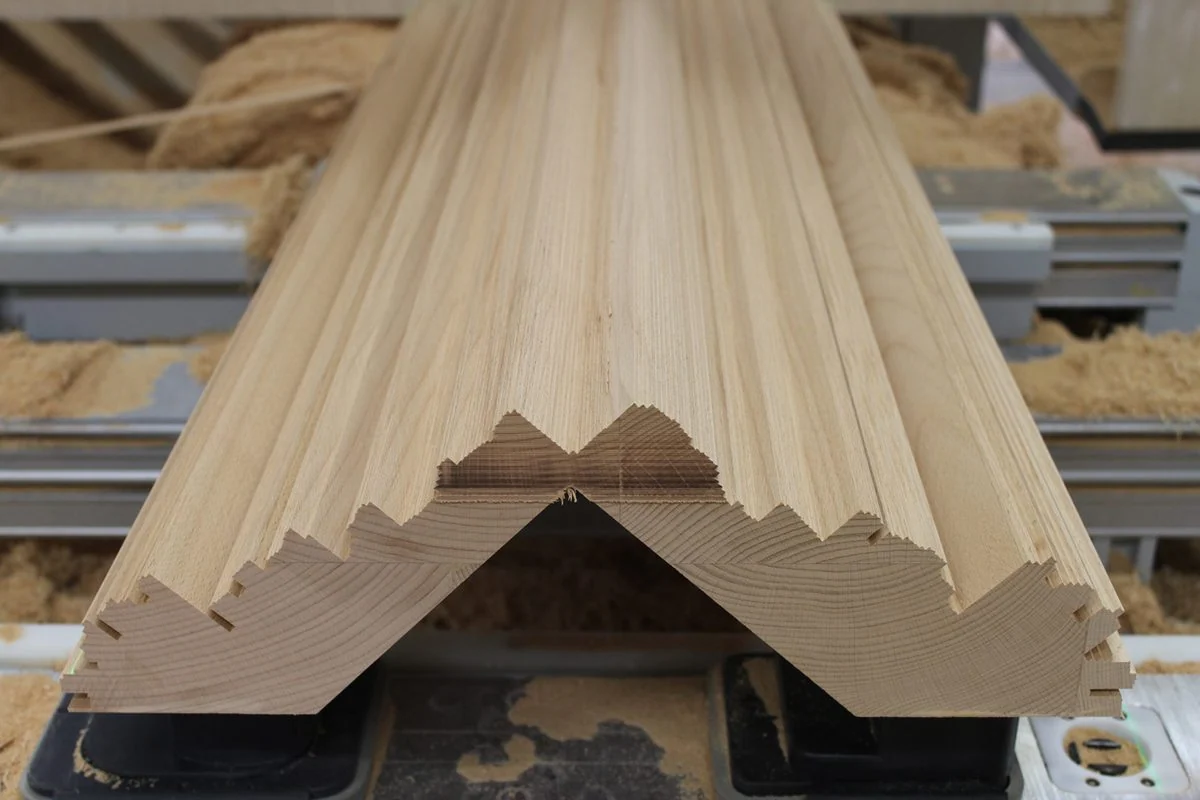
Free profile shaping with surface toolpaths: the profile is built up from many individual machining passes instead of a fixed profile cutter. This allows curved paths and custom profiles for historic components.
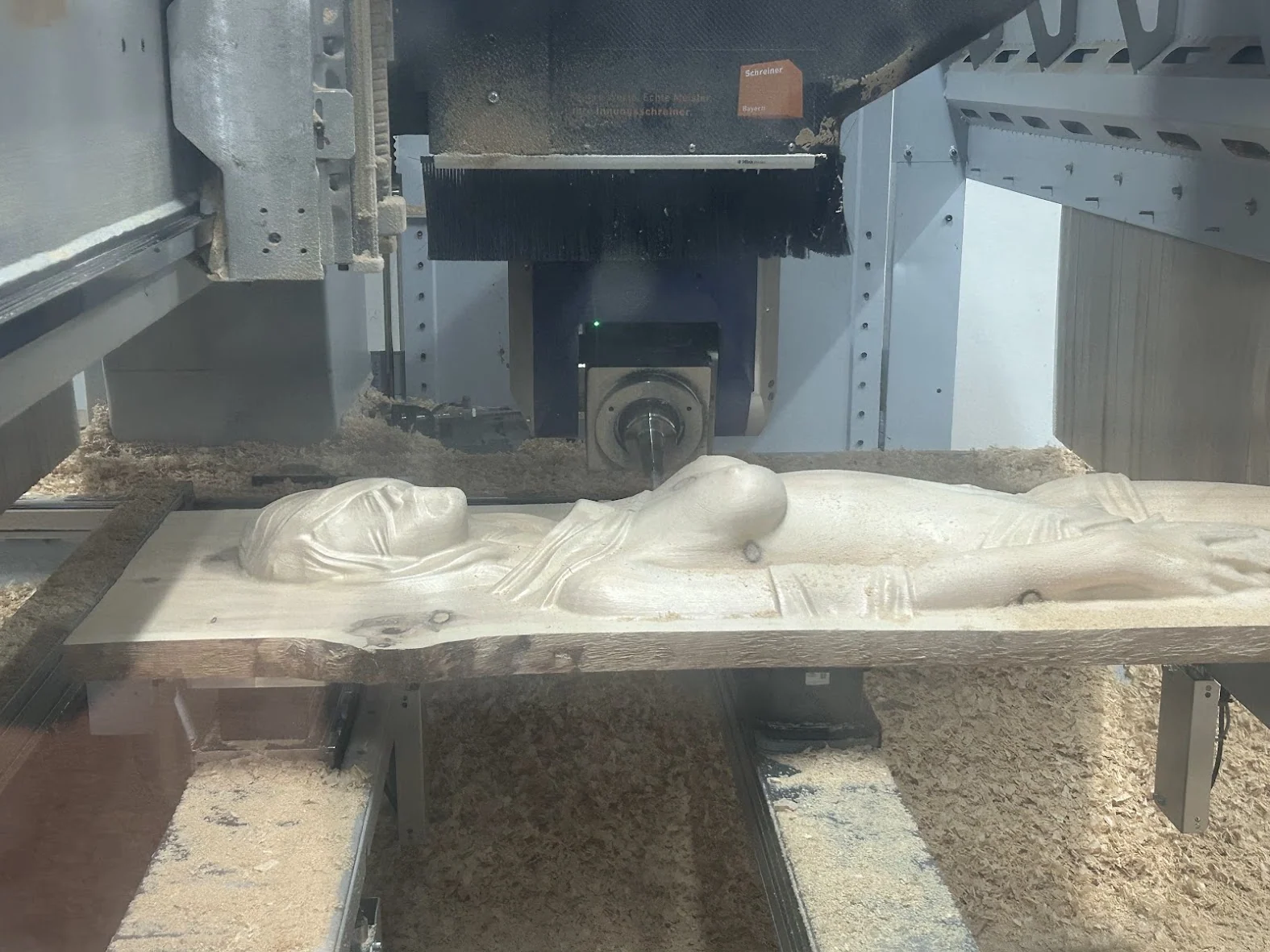
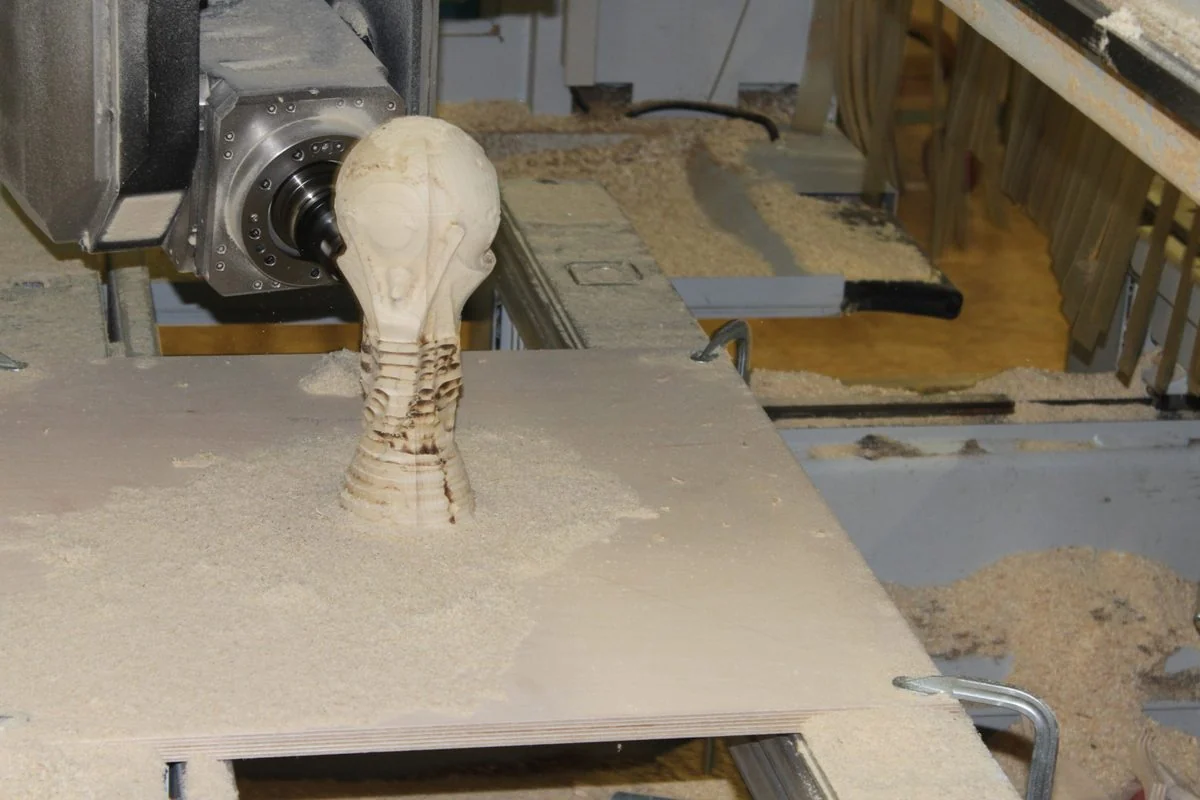
The gallery includes a Venetian mask in Swiss stone pine during three-axis machining, alongside custom profile shaping through closely spaced milling passes. Further photographs show different examples of our 3D machining. One example is Freialtar Fahrenberg: we scanned the 70-year-old original and recreated it in oak. The digital twin is retained for future manufacturing.
Venetian mask in Swiss stone pine – three-axis machining with closely spaced milling passesBad Reichenhall relief – three-dimensional shaping with closely spaced milling passesCustom profiles by surface milling – Profile cross-section during machining
Show 27 more imagesCollapse image gallery
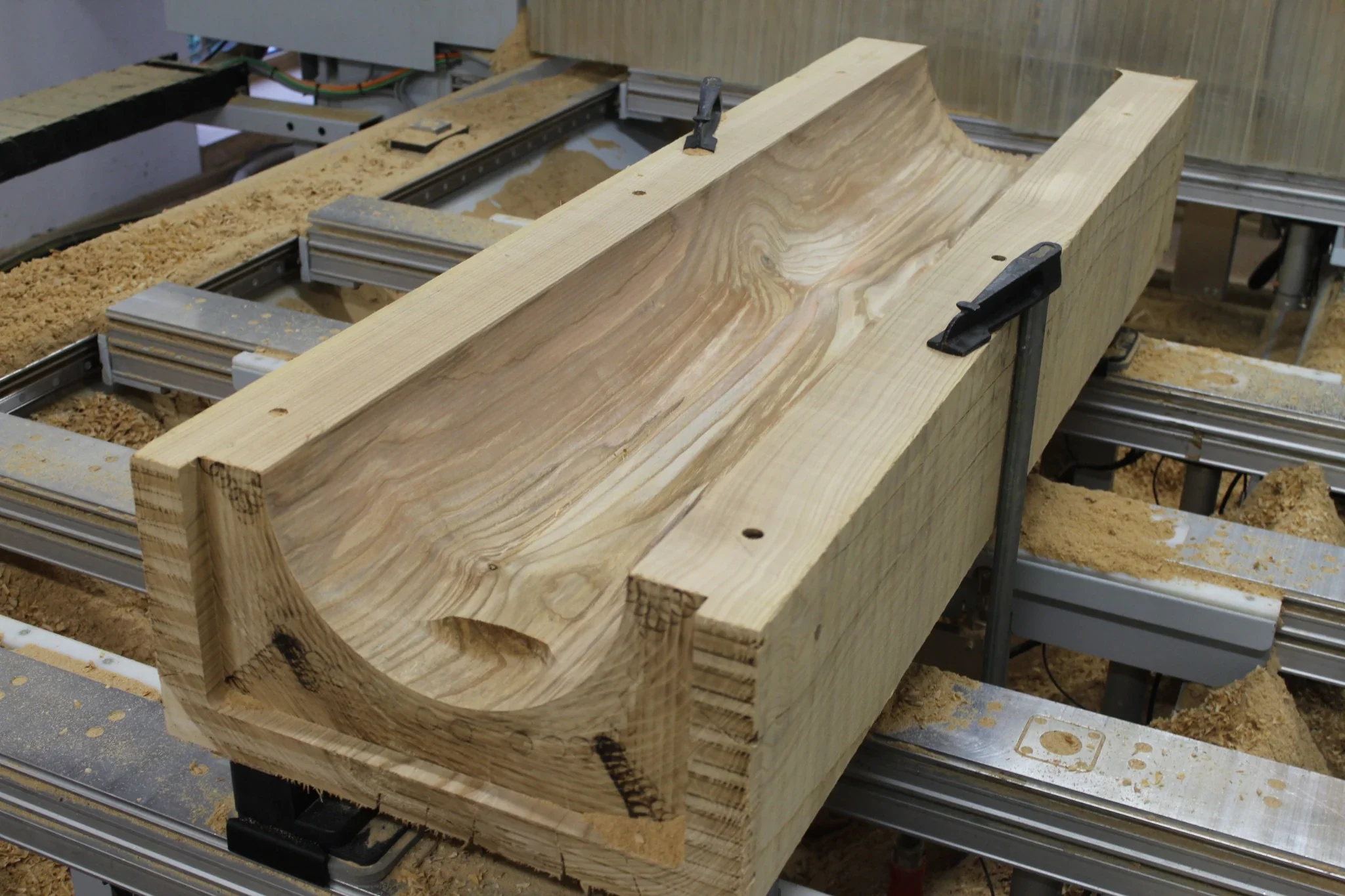
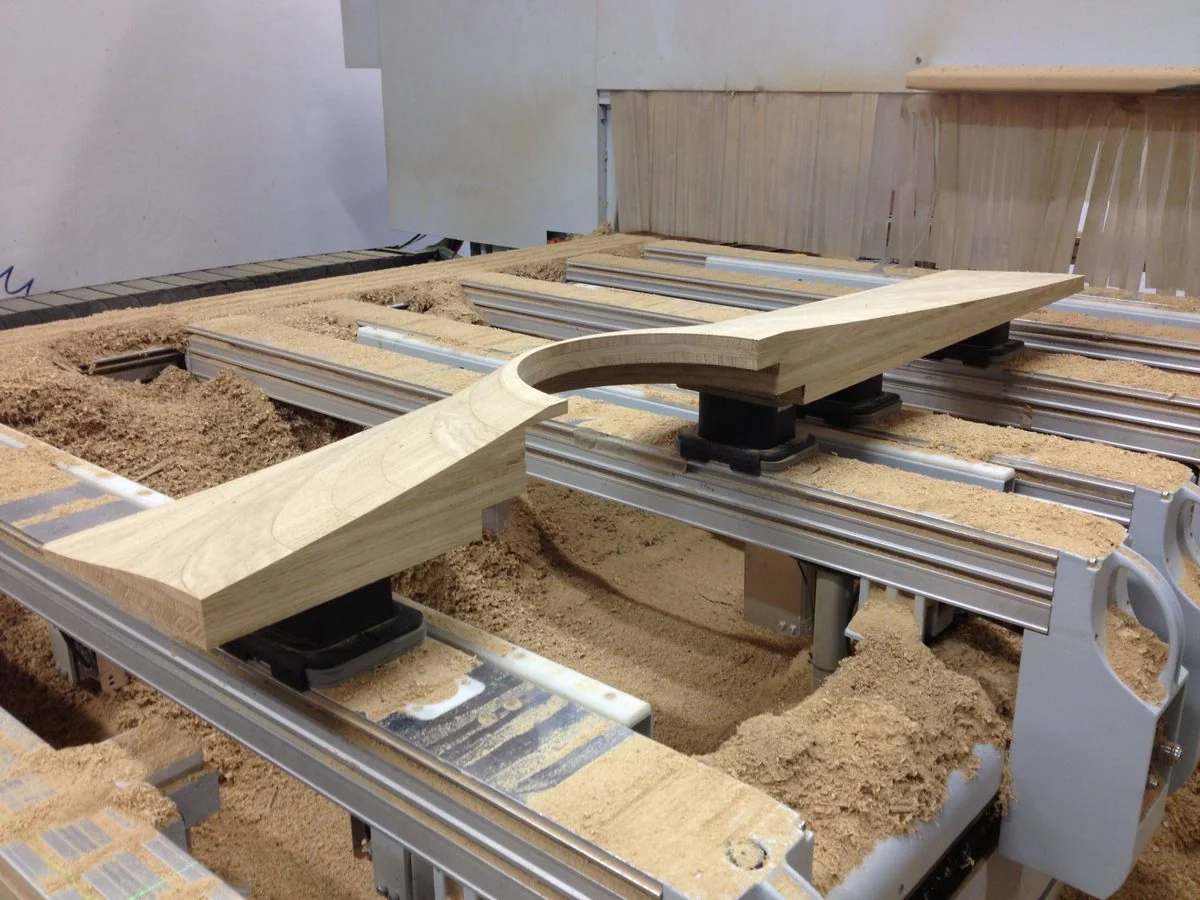
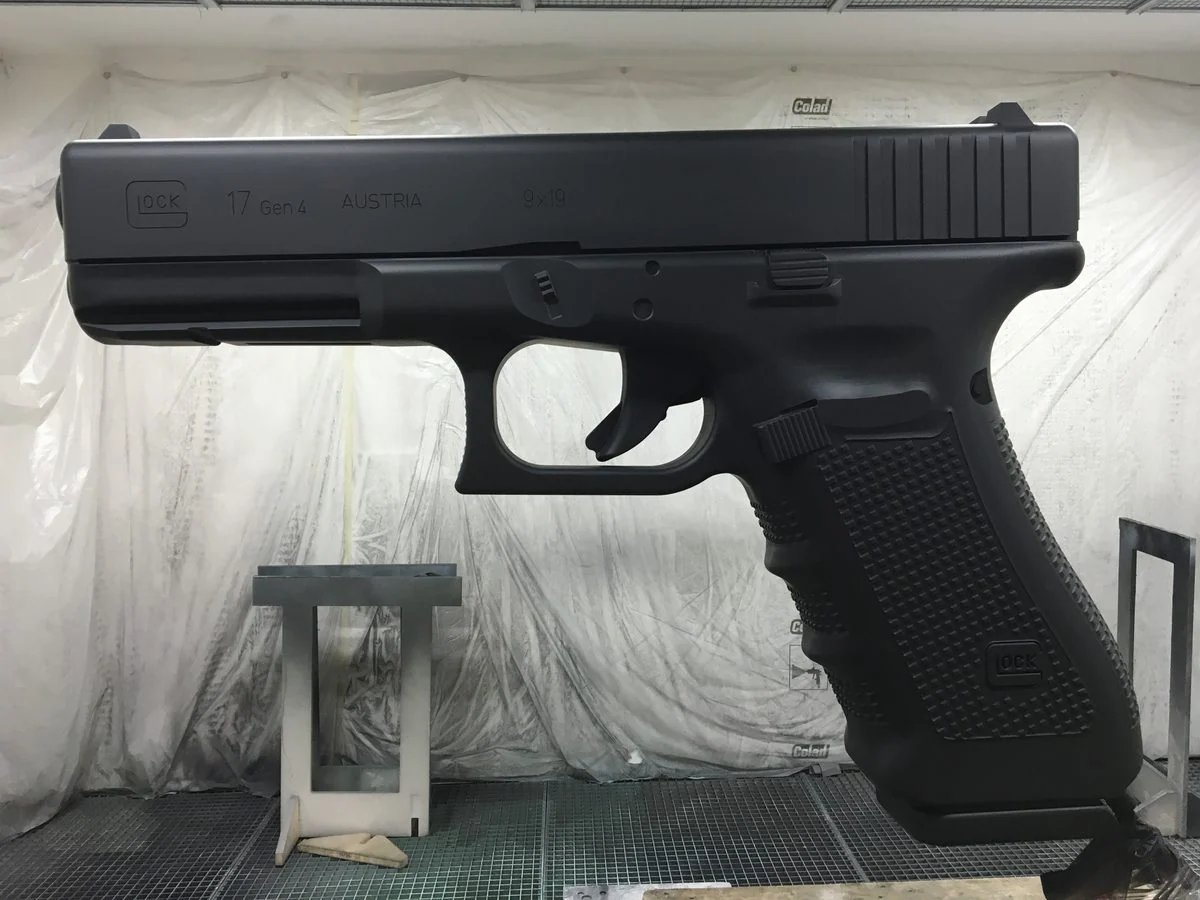
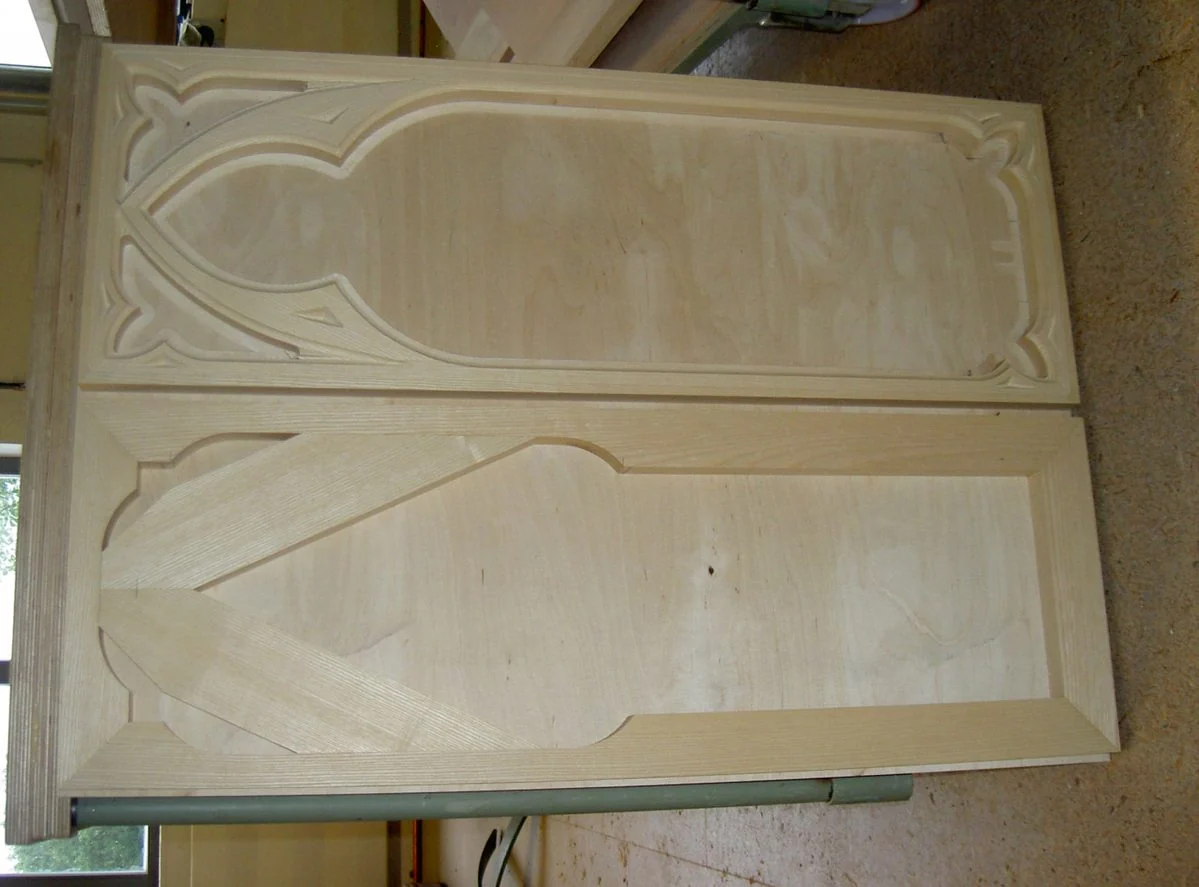
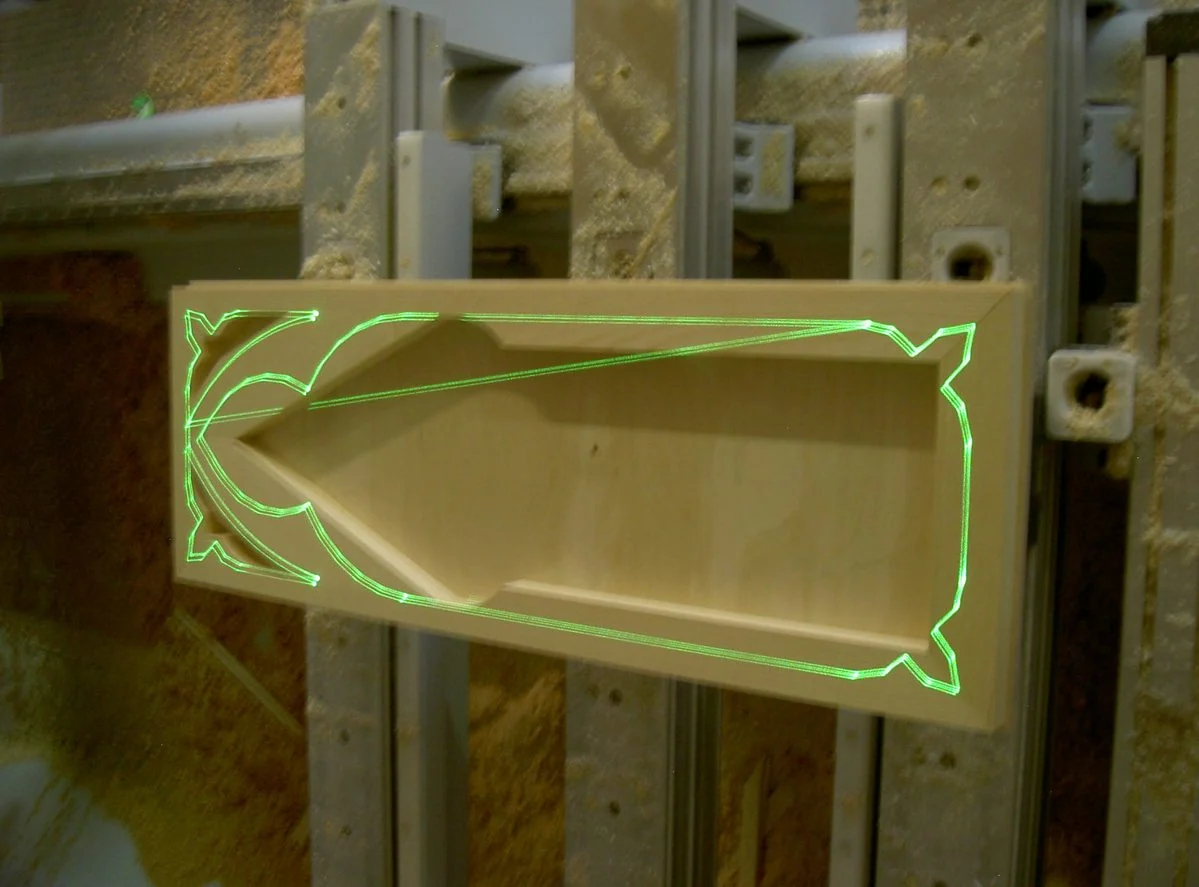
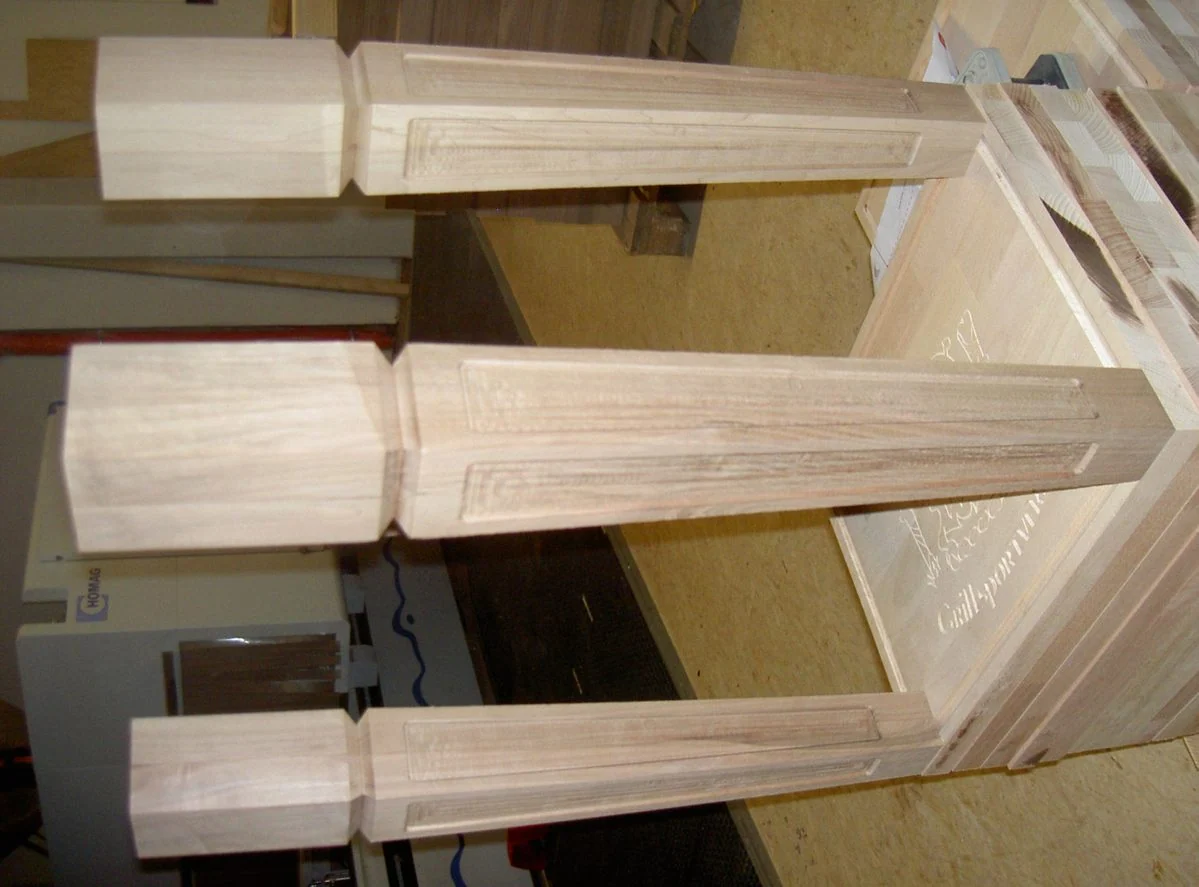
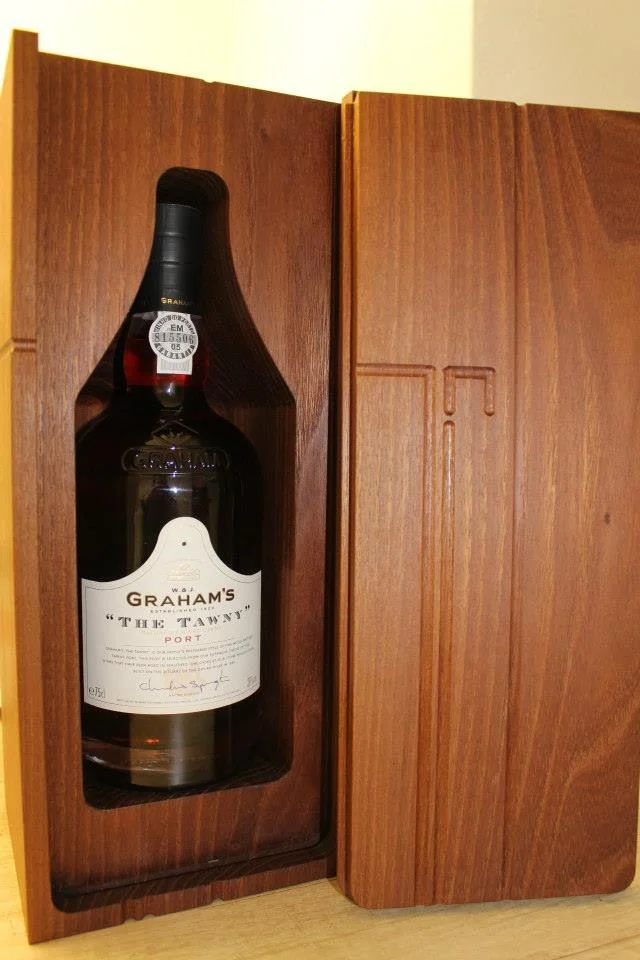
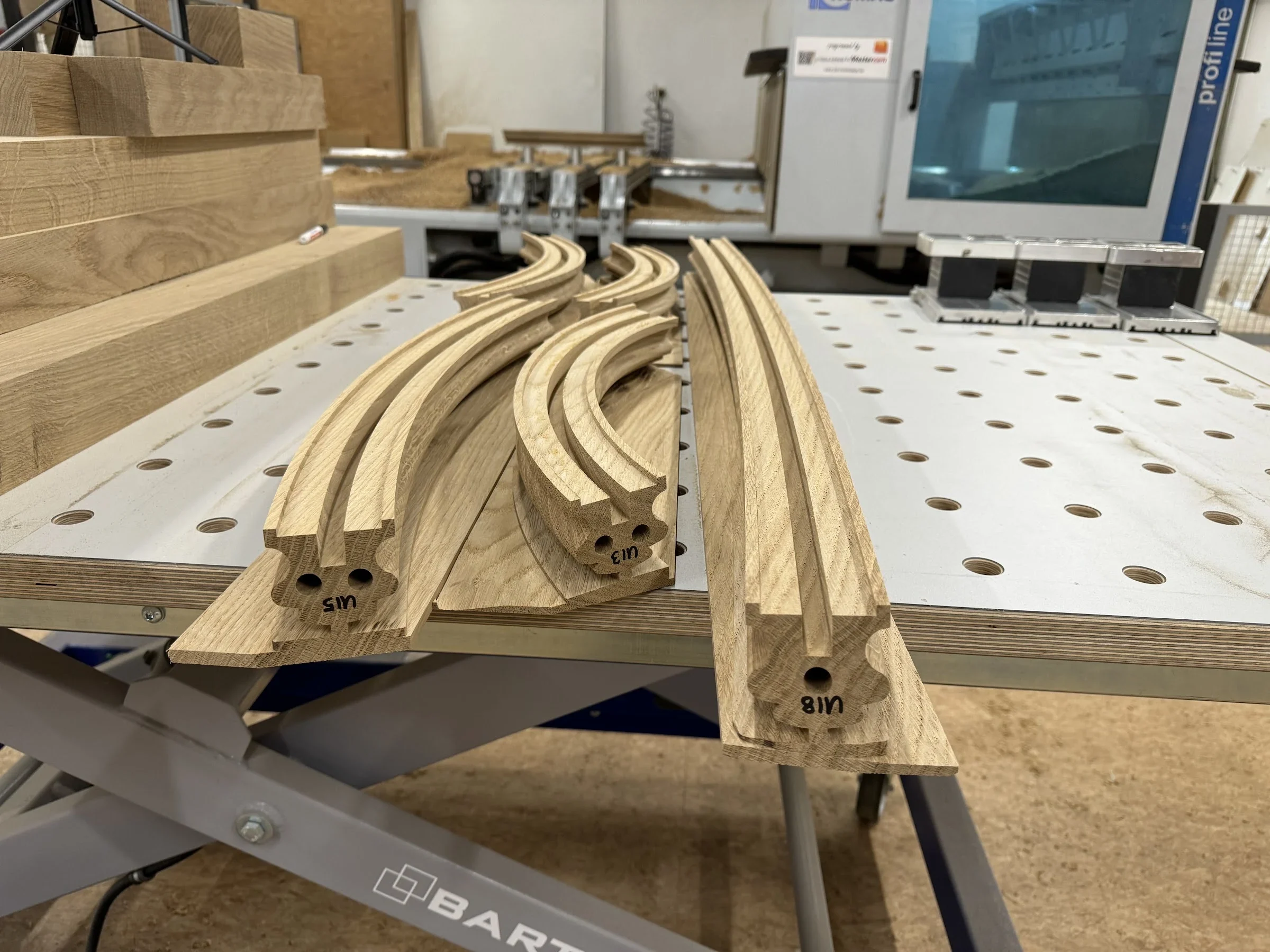
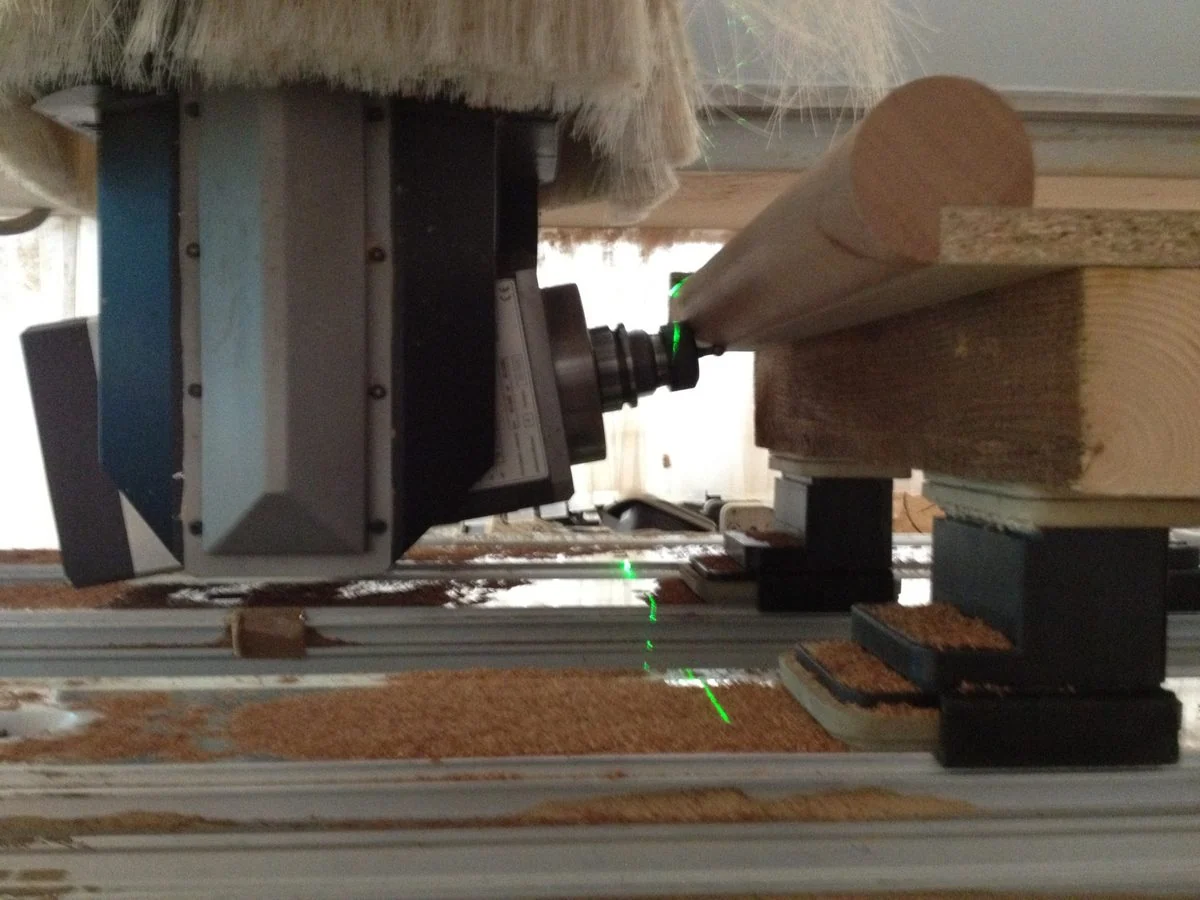
Custom profiles by surface milling – A selection of custom profile cross-sectionsThree-dimensional machining of an oval tabletop3D-milled inner contour of a curved staircase handrail componentFreialtar Fahrenberg · surface milling of the backFreialtar Fahrenberg · fine machining of the frontFreialtar Fahrenberg · Detail machiningWhere bright minds take shape …Three-dimensional curved wooden formCurved wooden component on the machine tableFinished surface-milled tabletop3D milling3D milling3D millingSurface milling of a complex frame profileMilling a tapered bed headboard3D milling of an MDF blockMilling an MDF ring with an elliptical profileOversized pistol. Produced using our CNC programming service!Tabletop with an integrated technical card slotMilling a loudspeaker enclosure in MDFMilling glazing beads for a Gothic front doorAligning the prepared workpiece with a laserTapered table legs with milled pocketsCustom profiles by surface milling – Custom longitudinal profile on the CNC machineFreialtar Fahrenberg · the assembled figure with its makers3D millingWhisky box with a sliding lid
4-axis machining
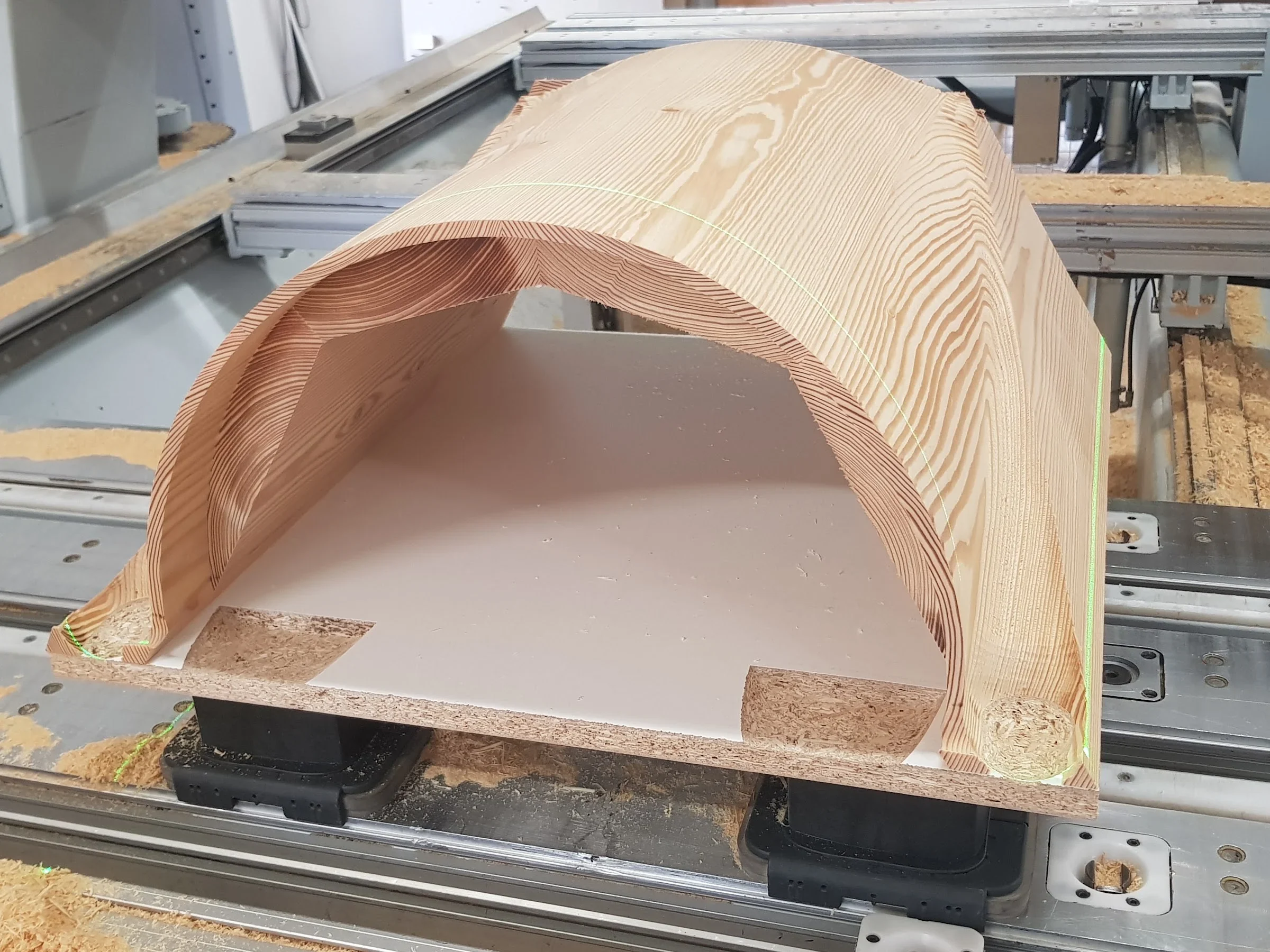
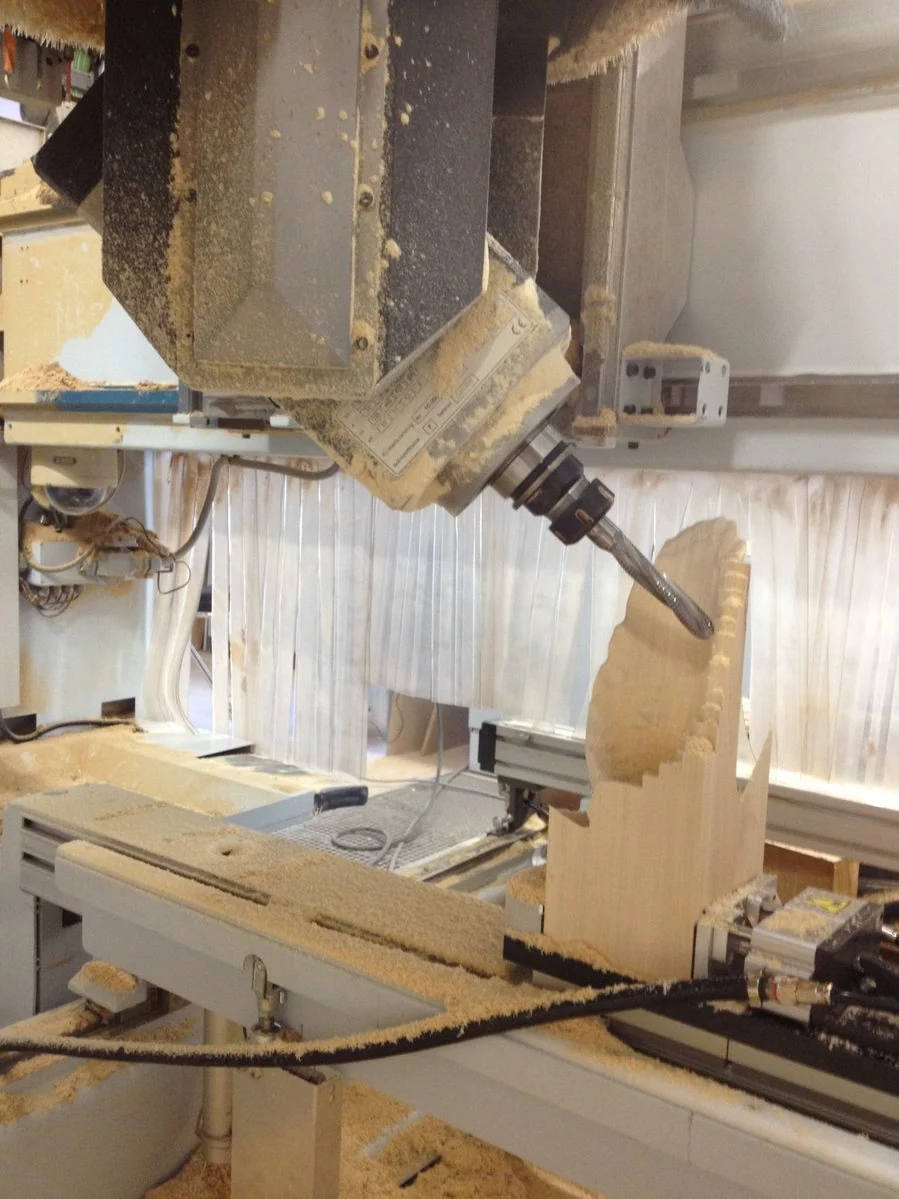
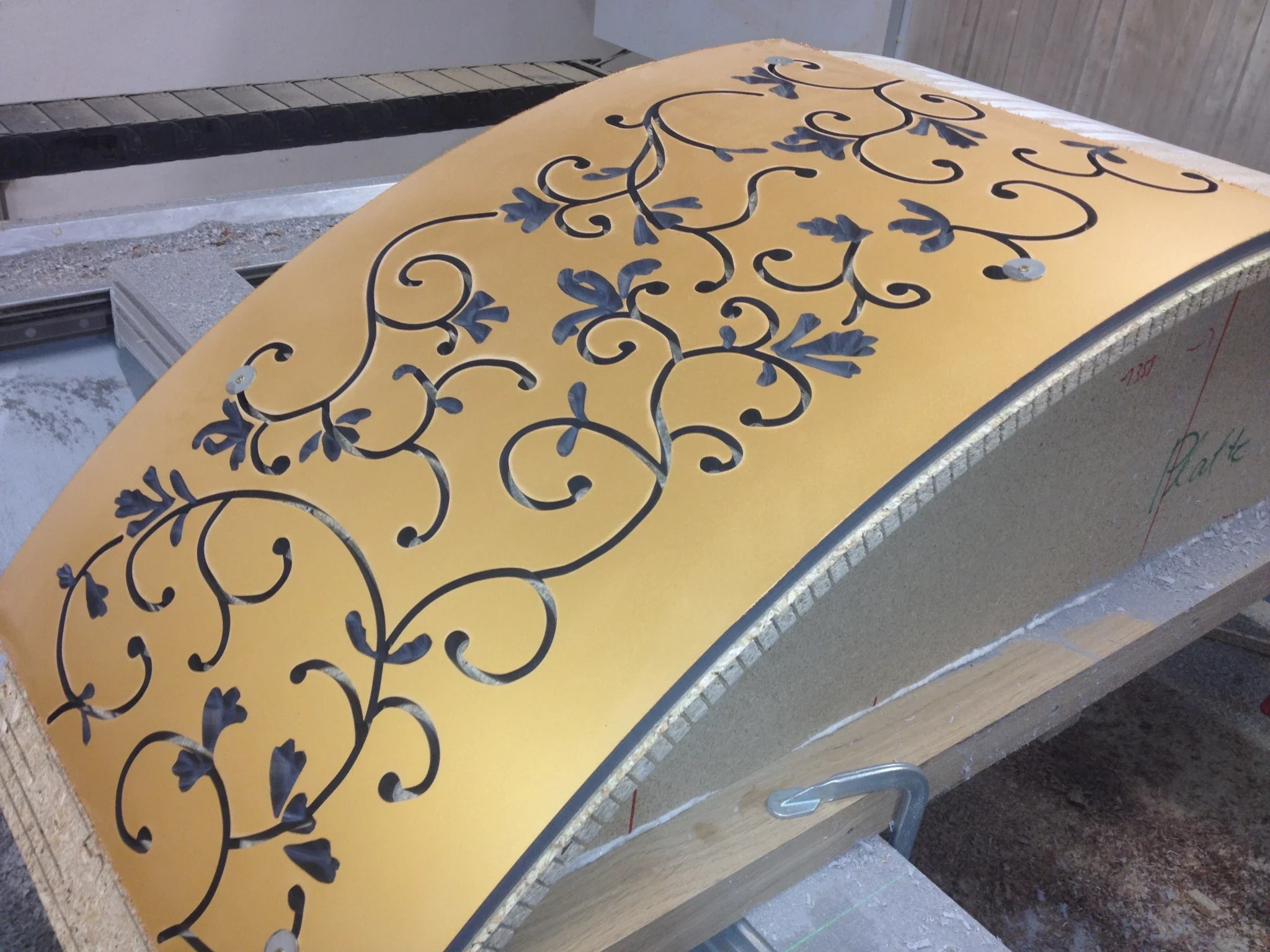
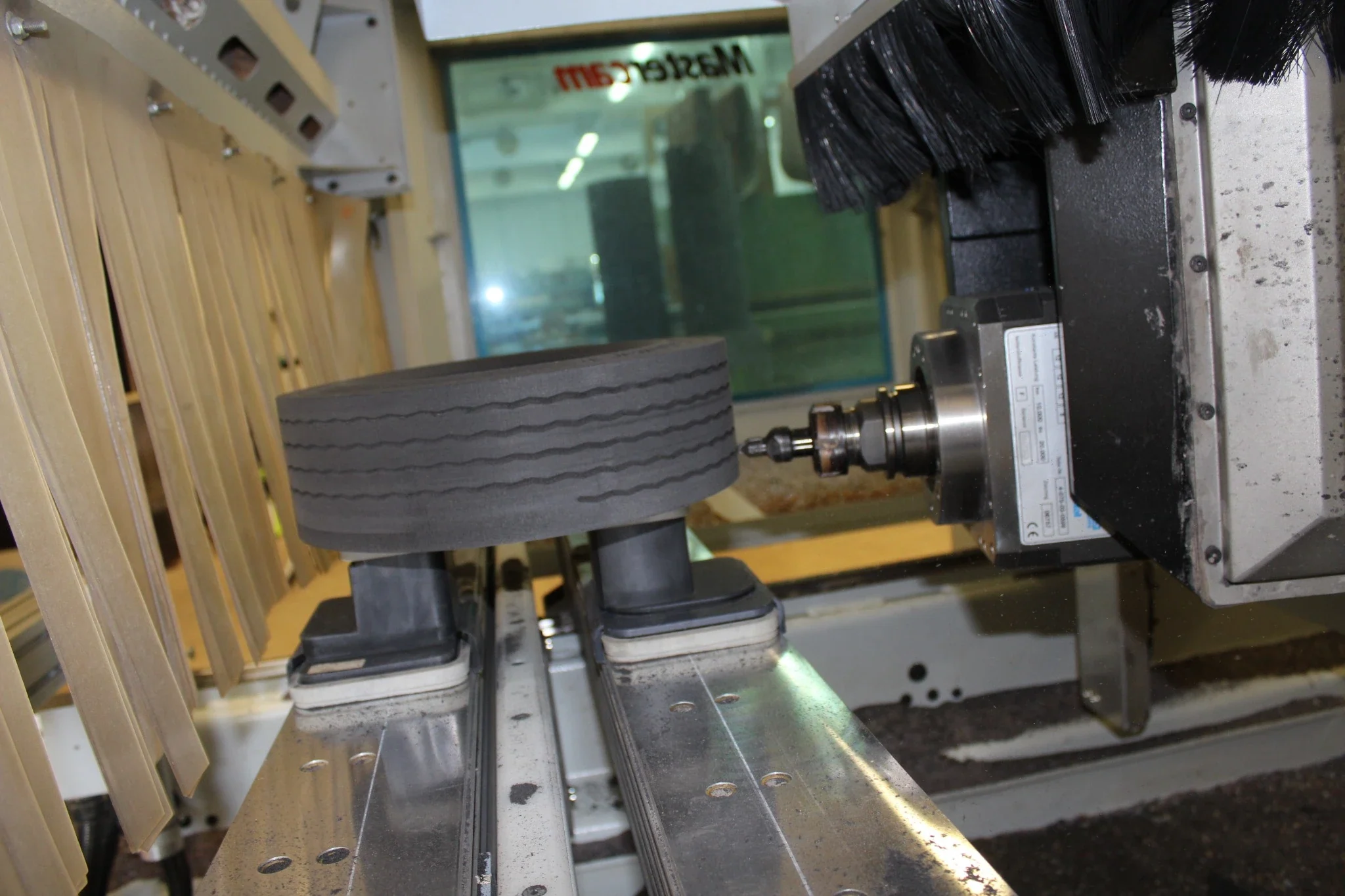
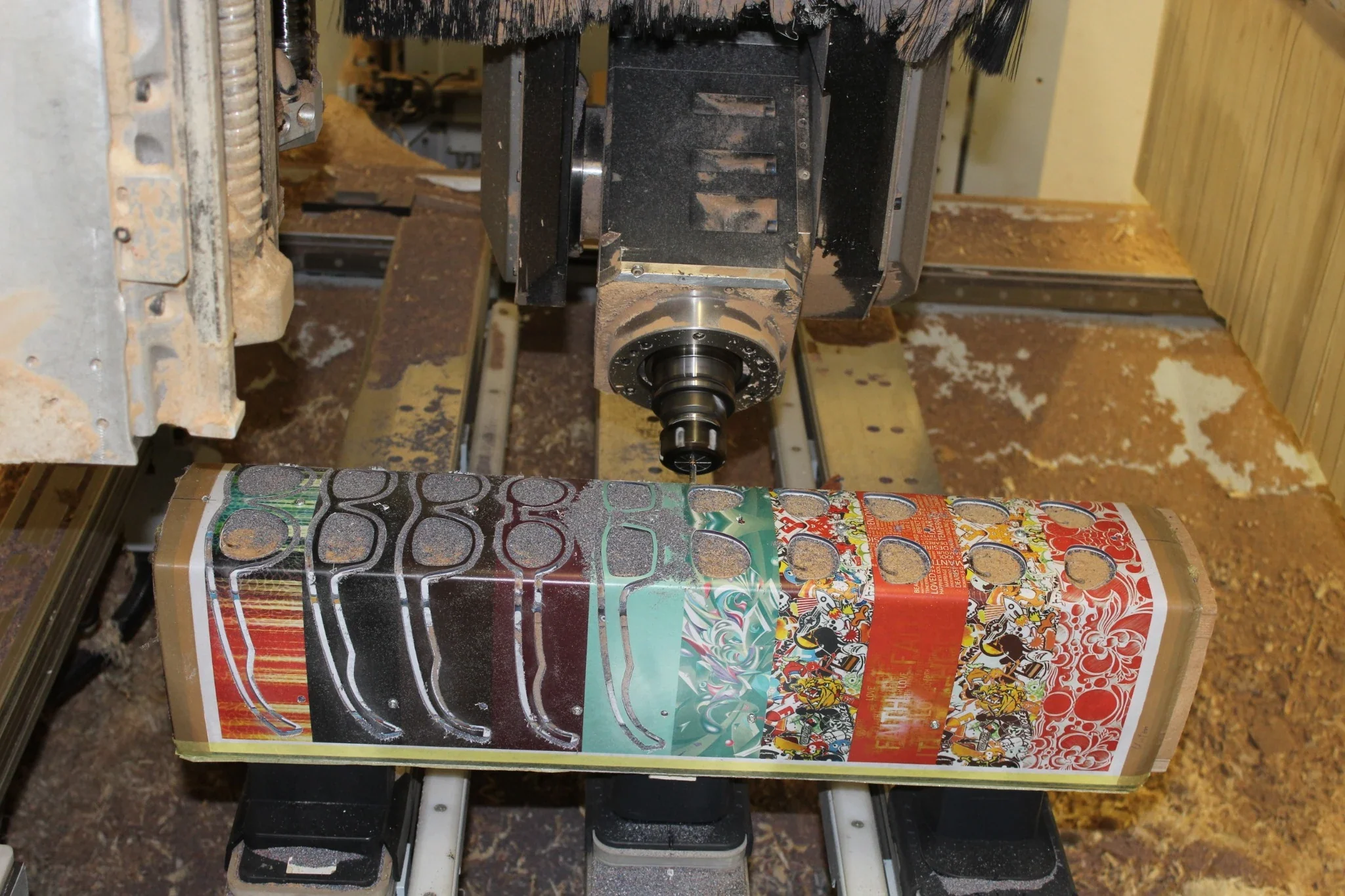
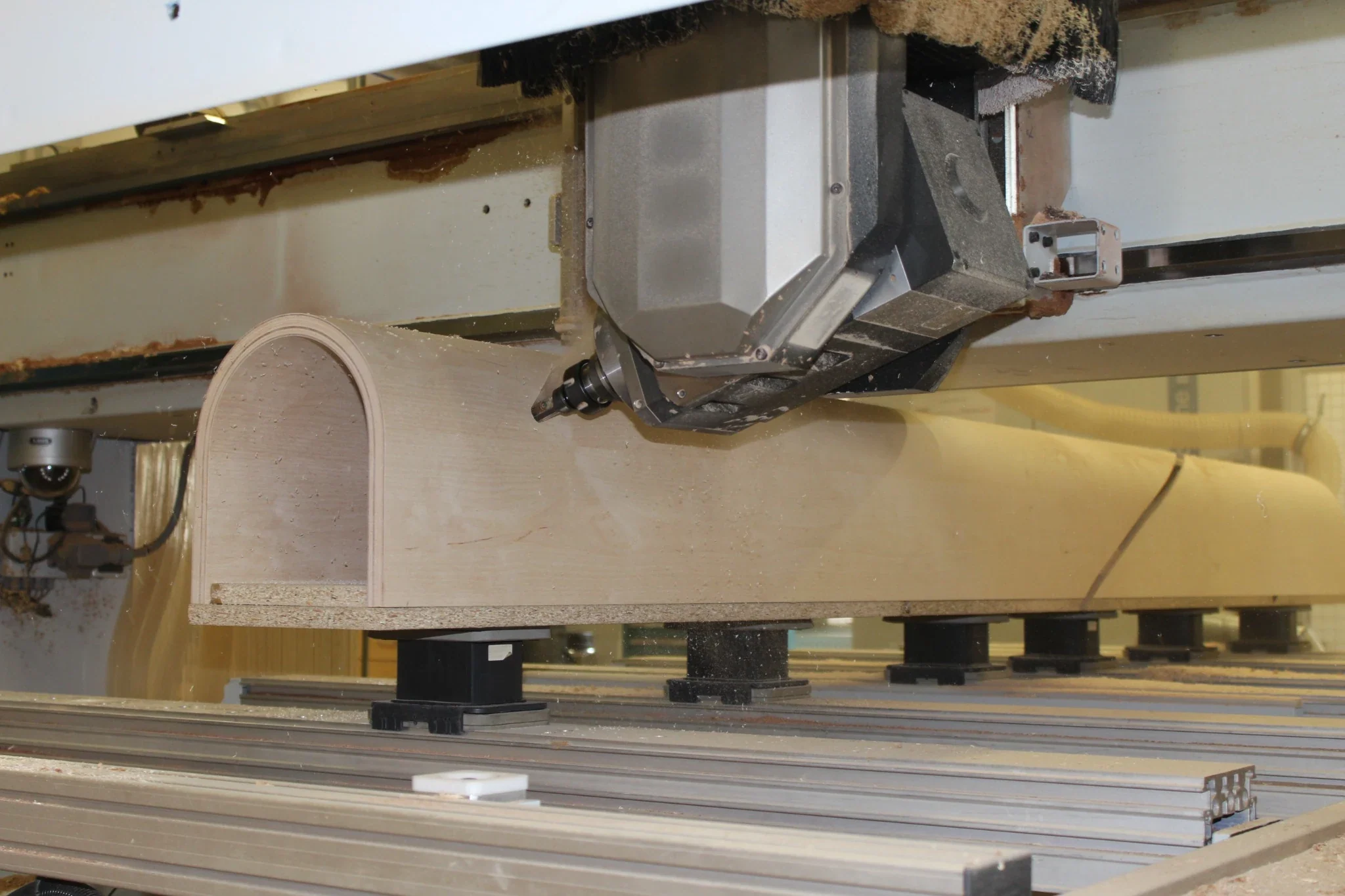
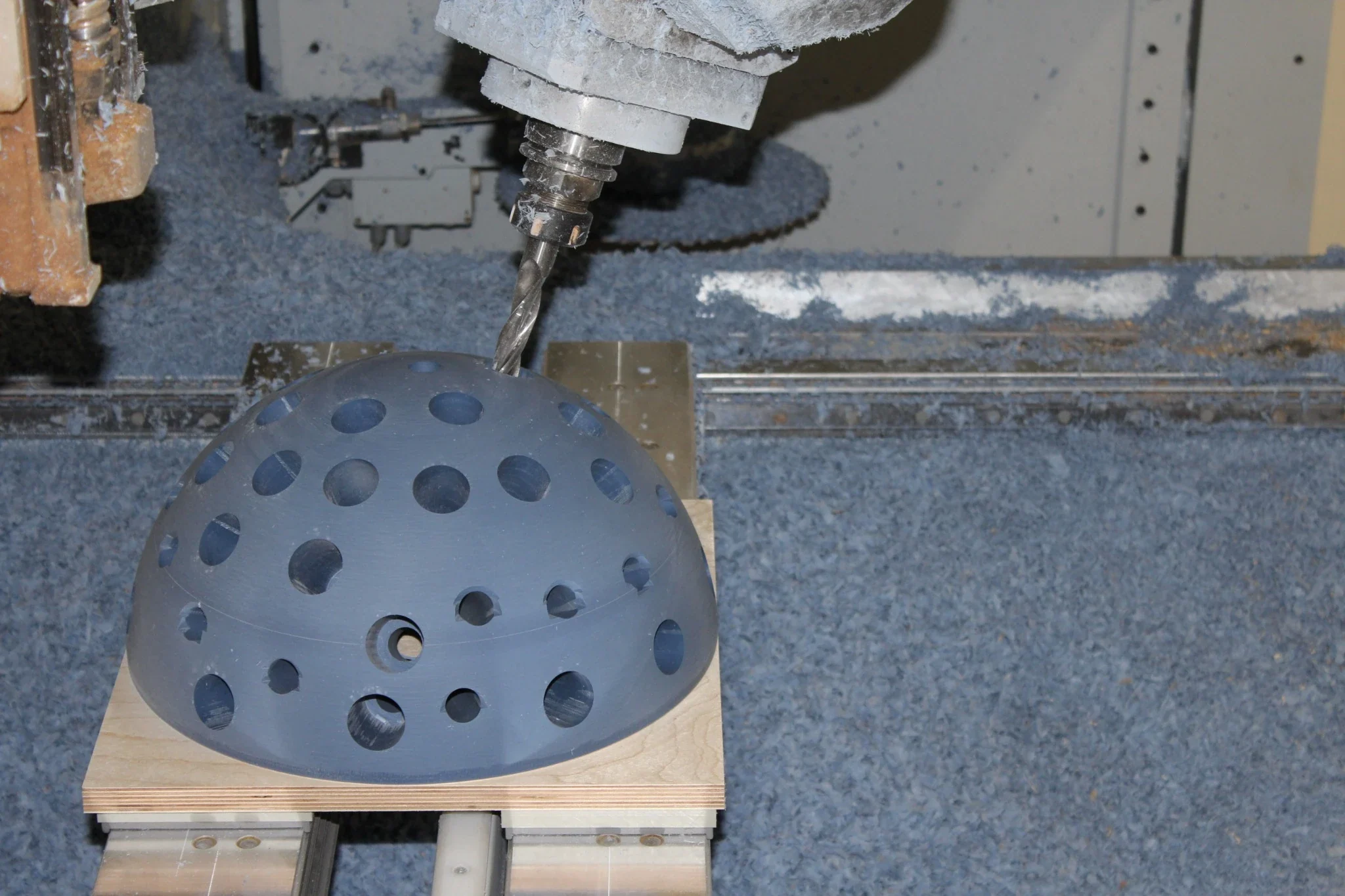
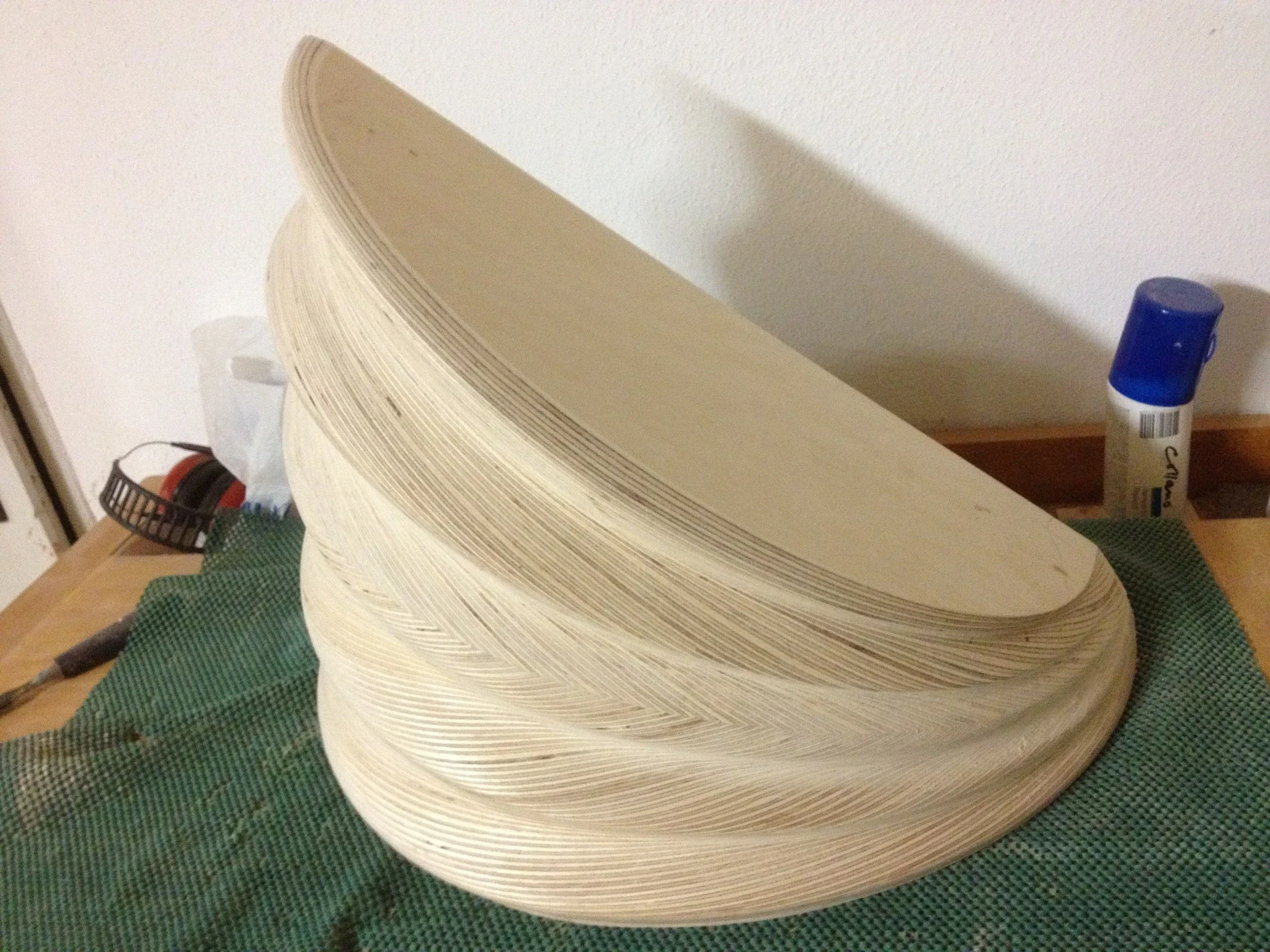
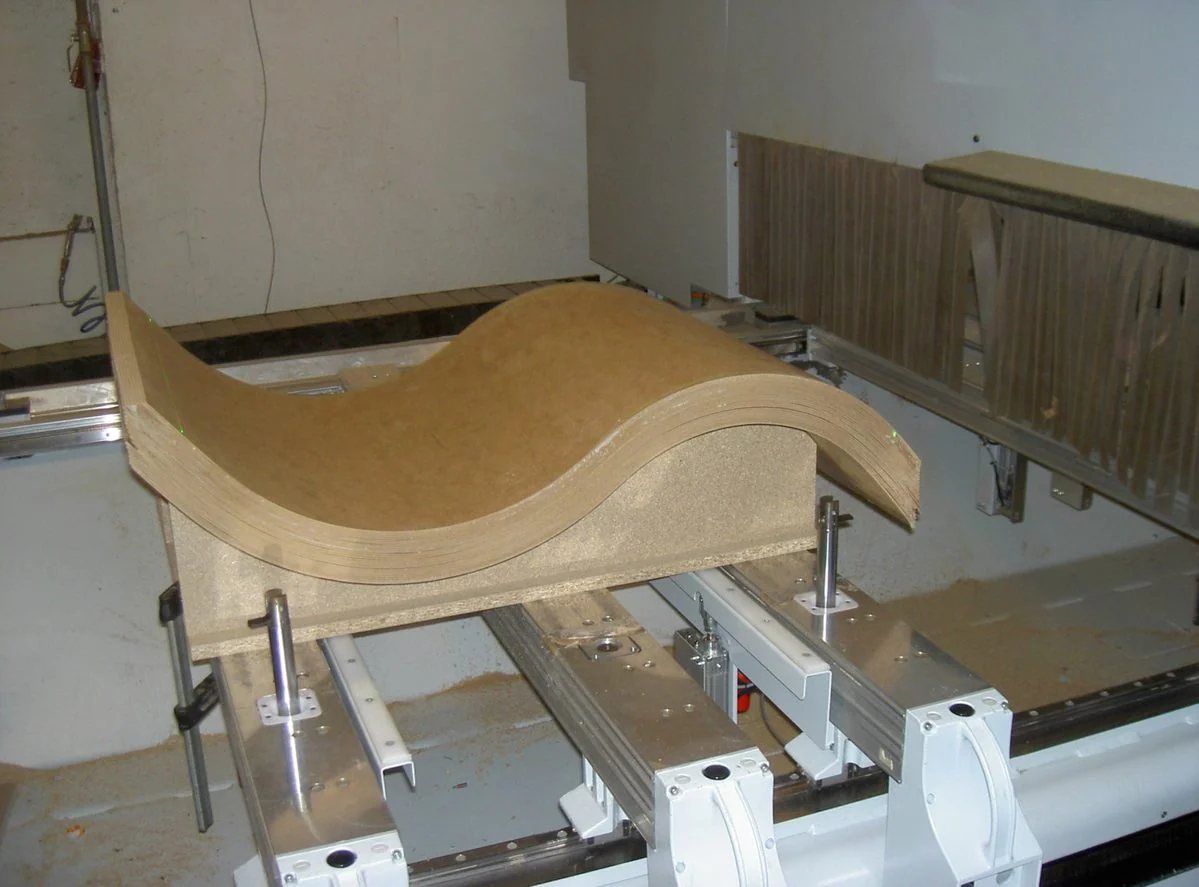
A rotary axis complements the three linear axes. Depending on the machine design, it orients the tool or the workpiece. It can be positioned or move during machining. These photographs show examples on curved workpieces.
4-axis milling: ornaments on a curved surface4-axis machining: contour milling on a curved wooden workpiece4-axis milling: machining a continuous tyre tread profile
Show 3 more imagesCollapse image gallery
4-axis machining: glasses contours on a curved workpiece4-axis machining of a curved form with an inclined toolOne-piece MDF door trim with a basket-handle arch
Indexed milling
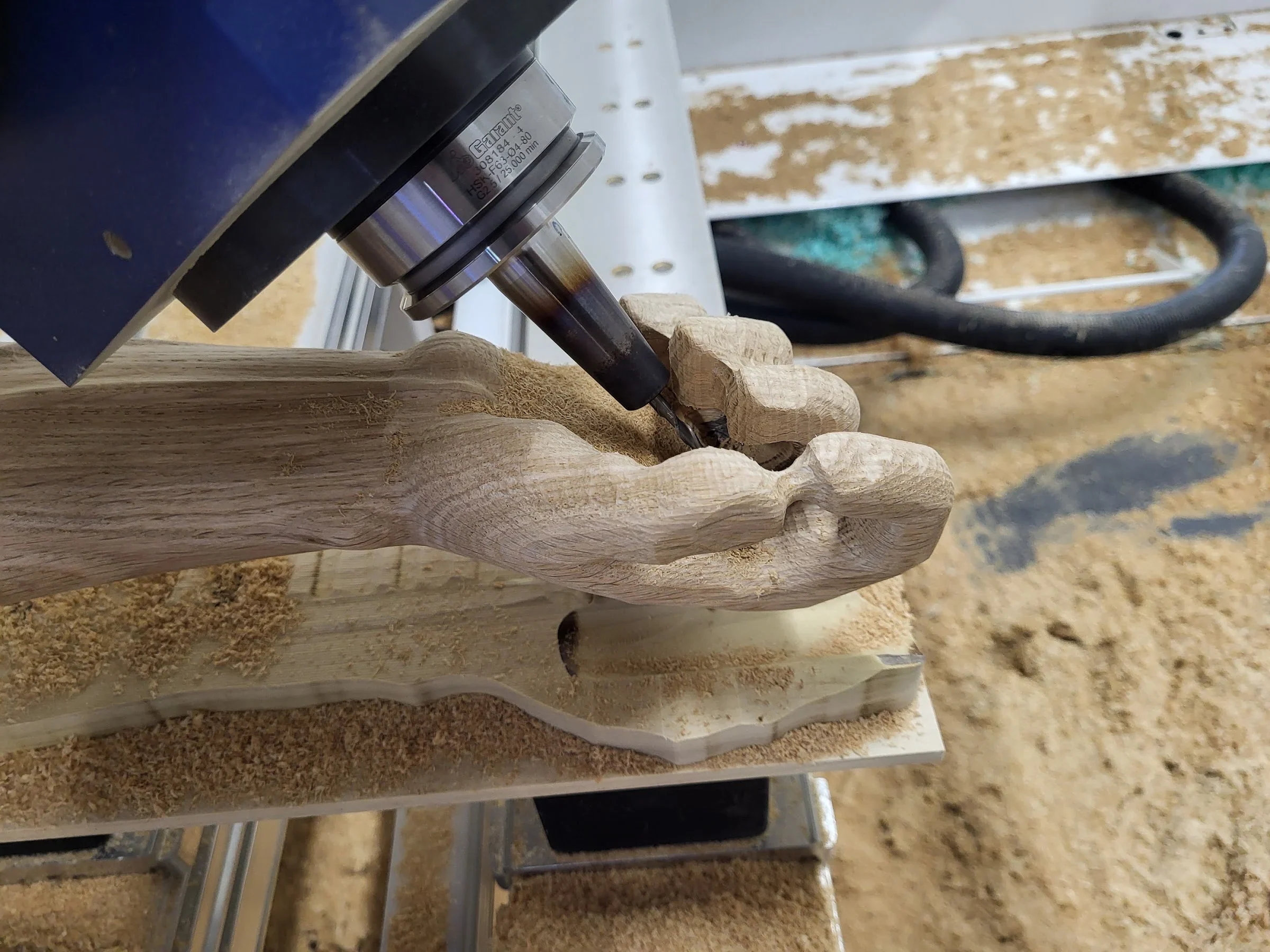
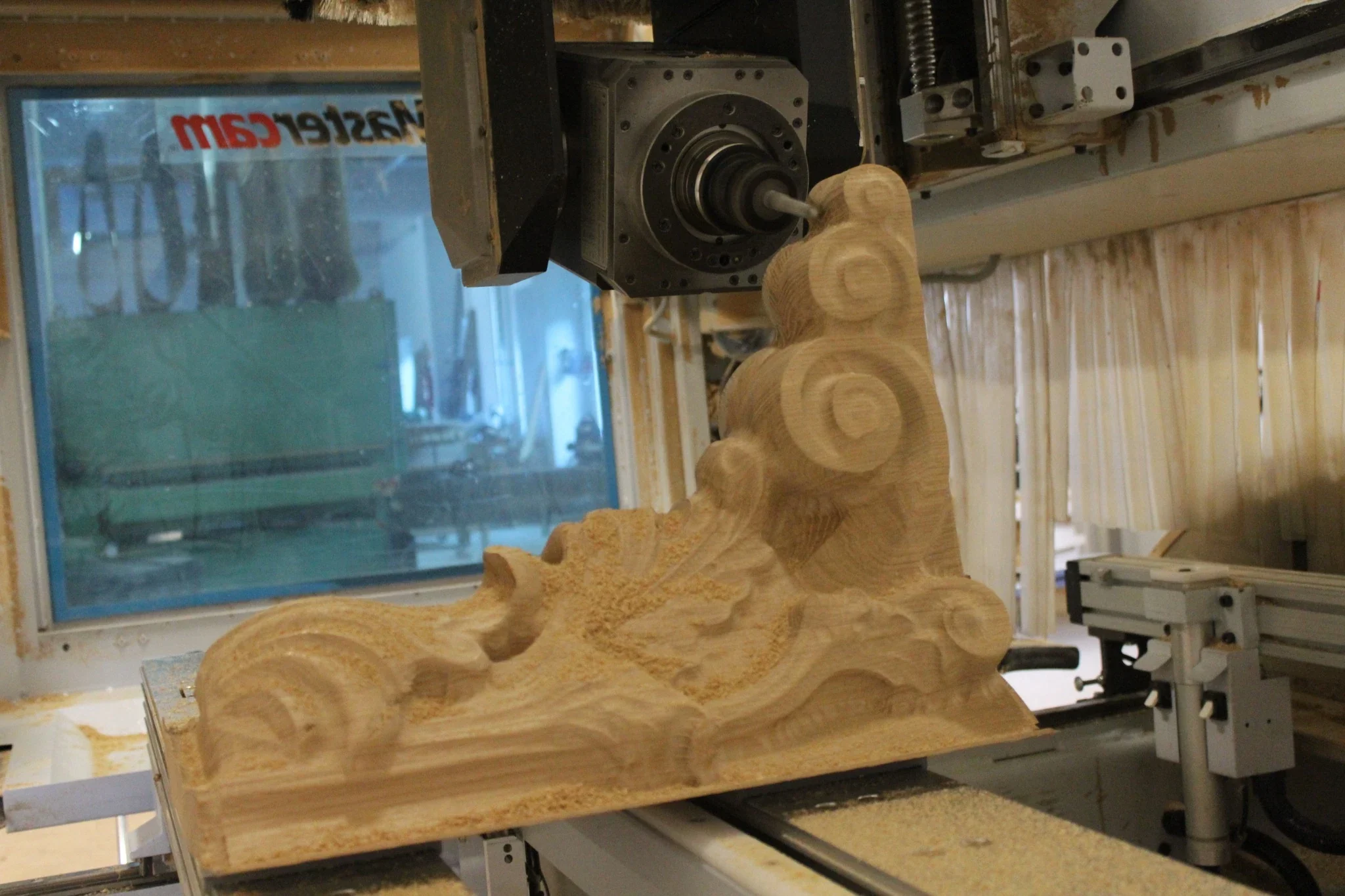
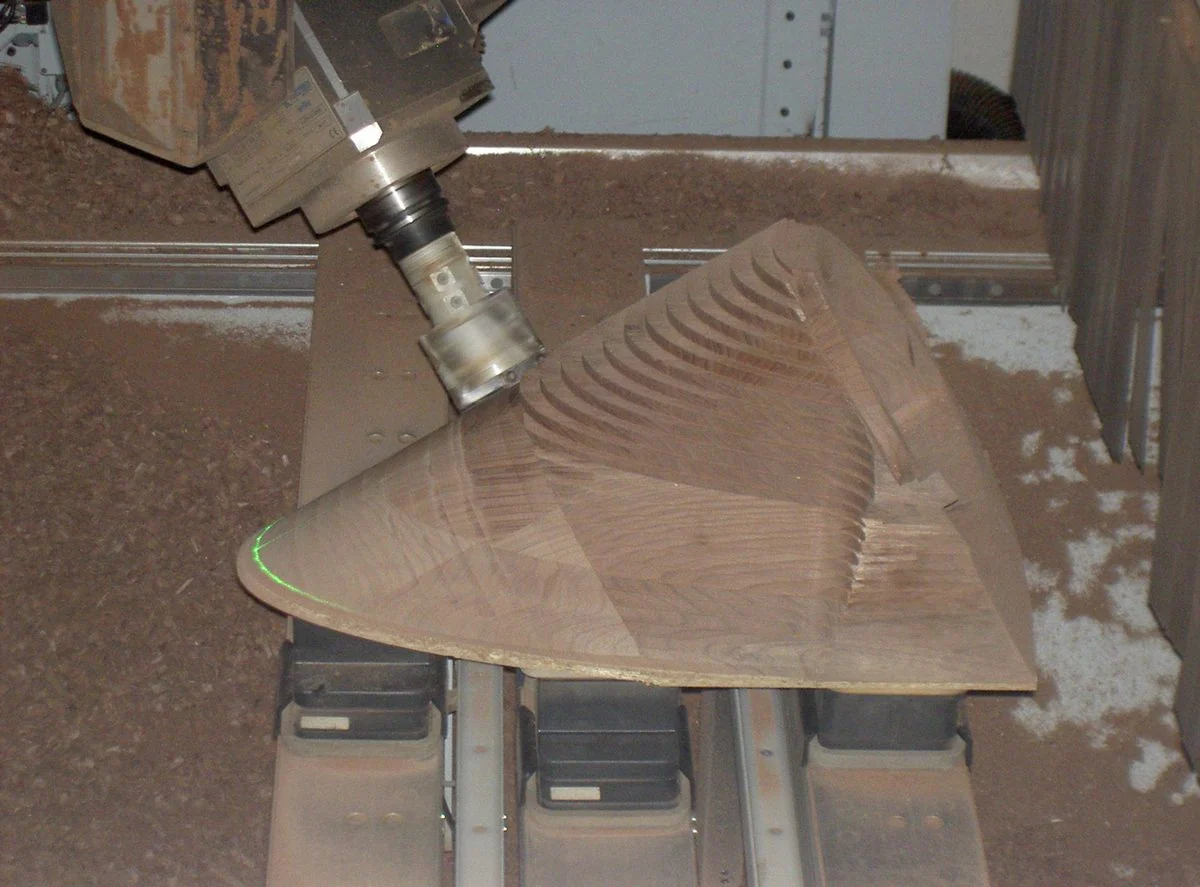
The tool is tilted to the required angle before a machining operation. Its orientation stays fixed during that operation and can then be indexed to another position. This allows openings and surfaces to be machined from different directions without reclamping the workpiece each time.
Corinthian oak capital during indexed machiningIndexed milling: machining with an inclined toolIndexed-axis machining of a freeform shape with curved surfaces
2 more photographs
Indexed-axis machining of a profiled timber componentIndexed-axis milling
5-axis machining & swarf milling
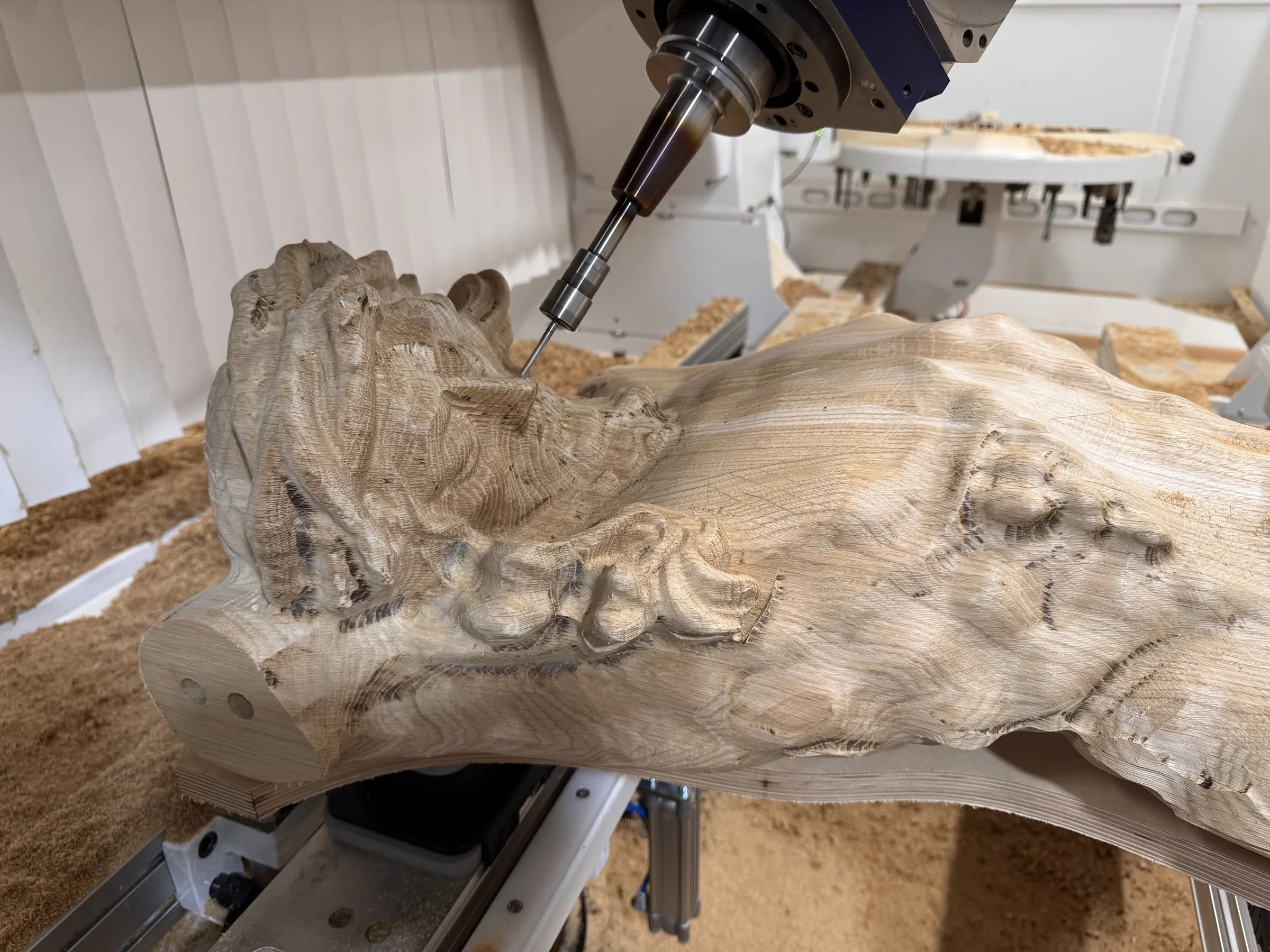
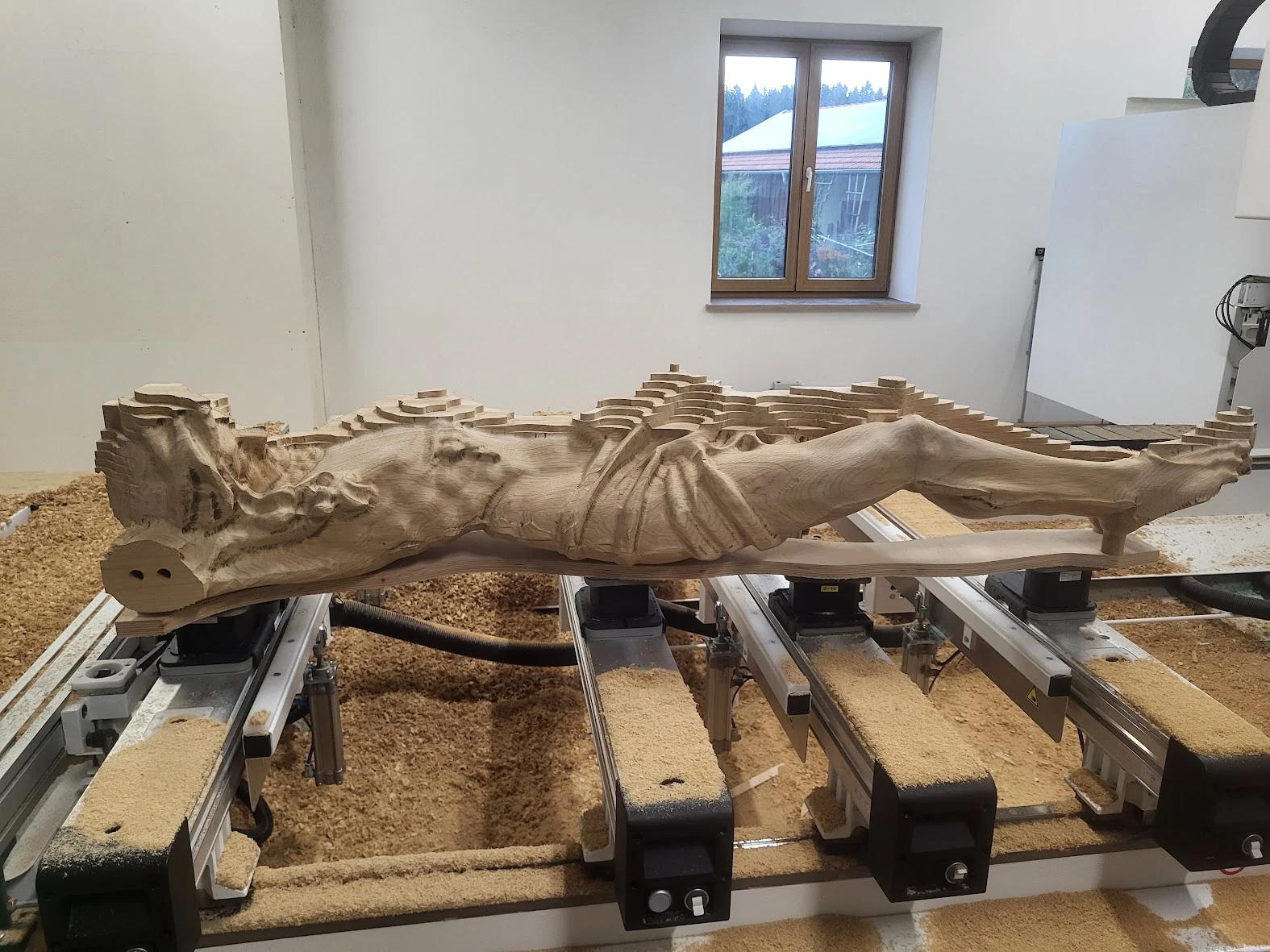
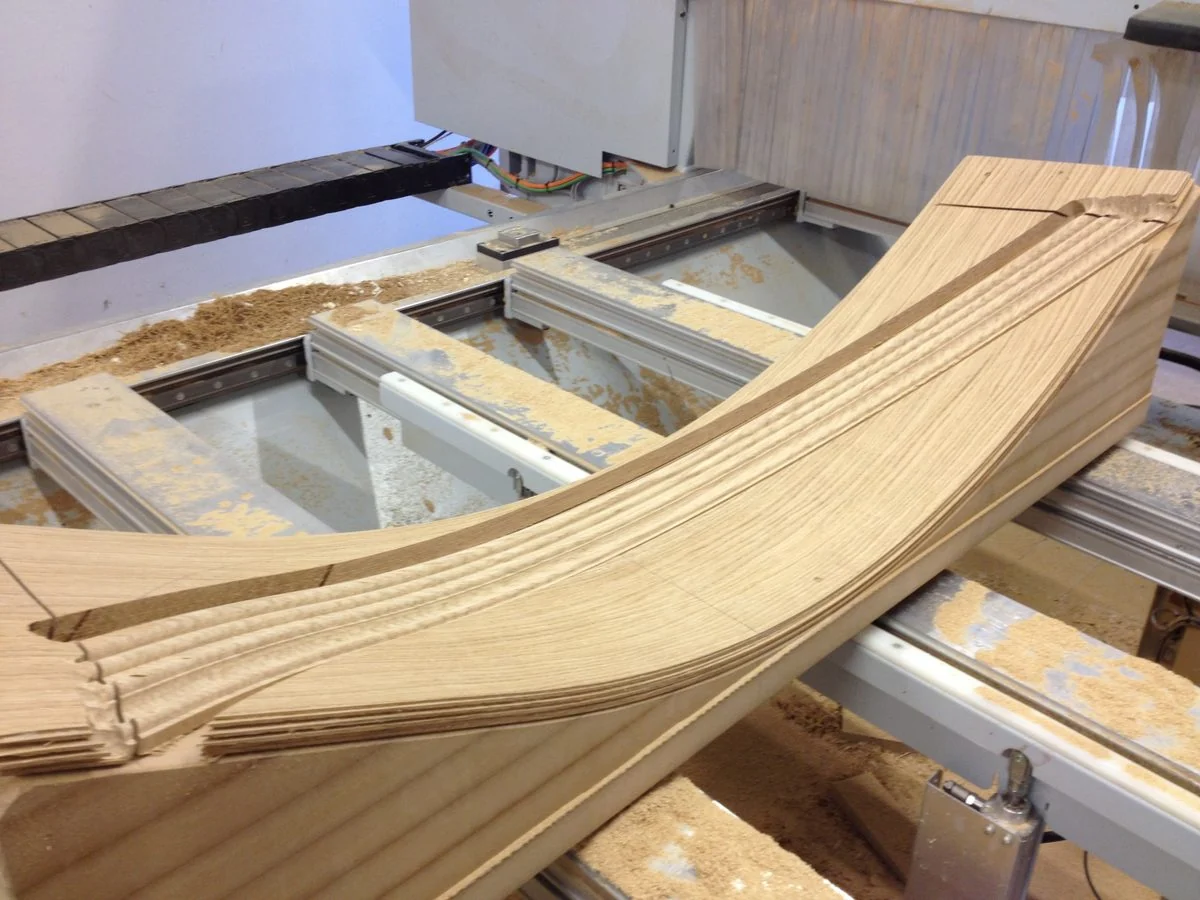
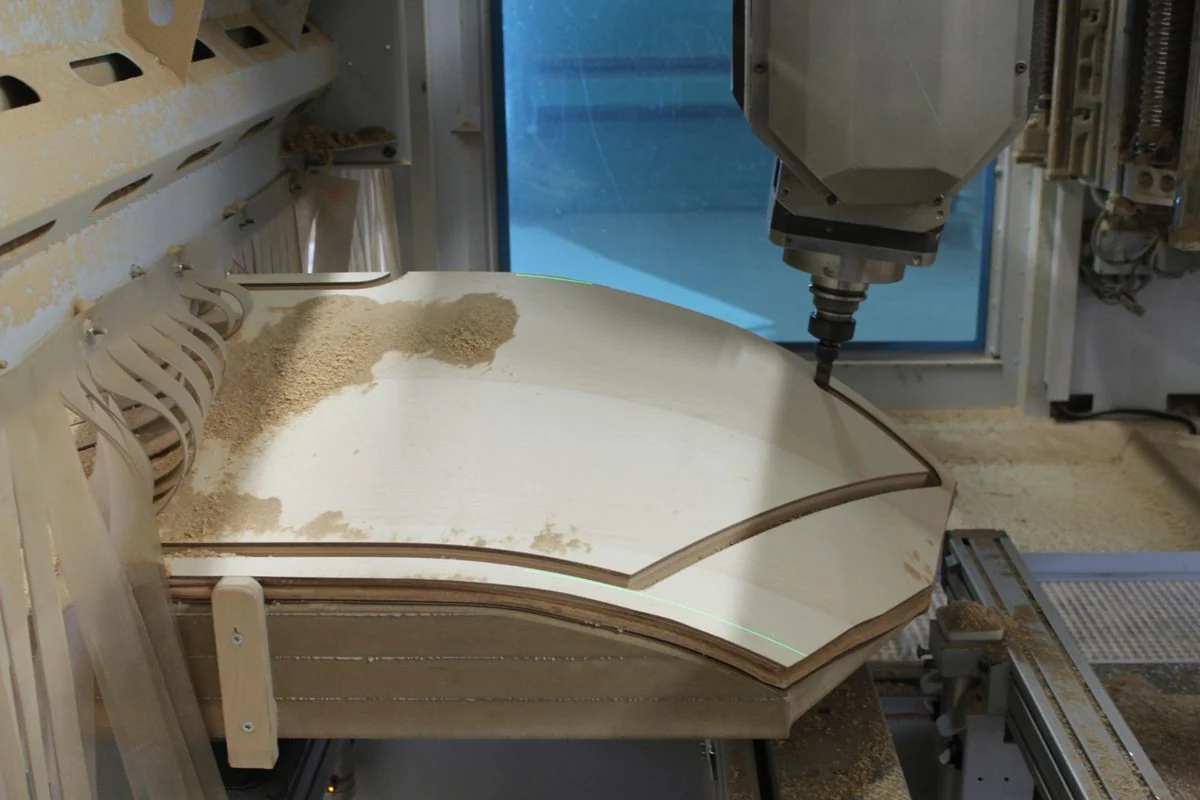
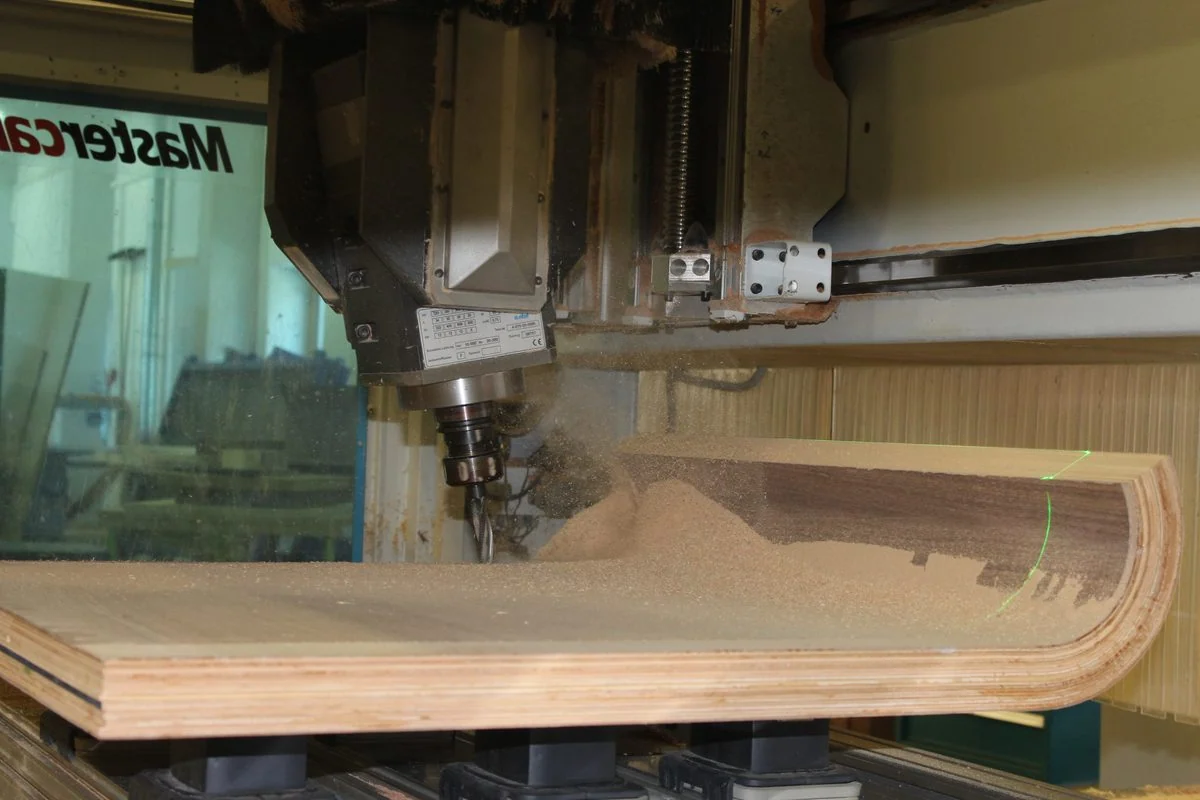
Two additional rotary or tilting axes allow different tool orientations. In indexed machining the orientation stays fixed during cutting; simultaneous machining allows it to change along the toolpath. Swarf milling uses the side of the cutter to machine a suitable surface, with tool orientation following the geometry.
More about the application
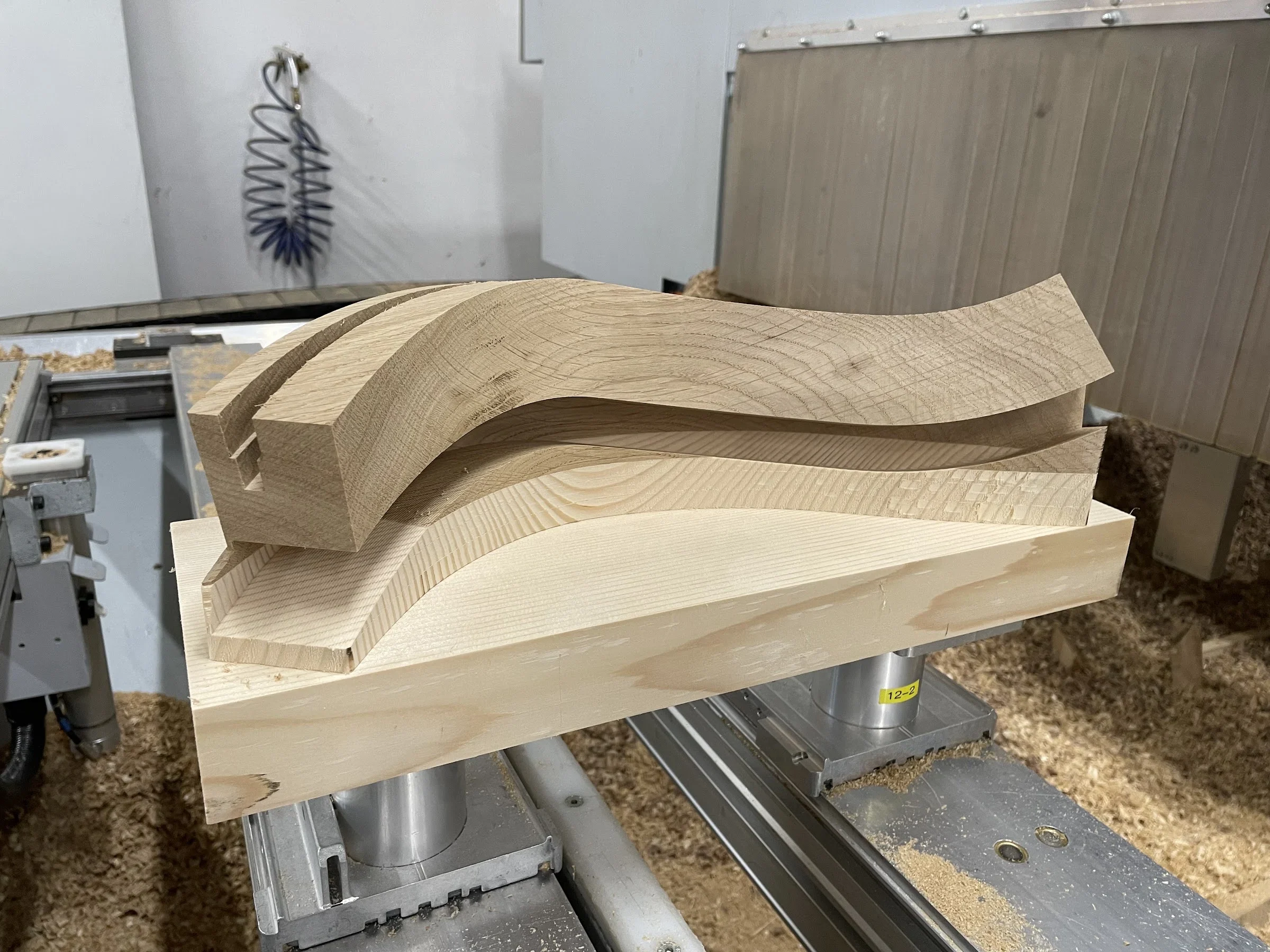
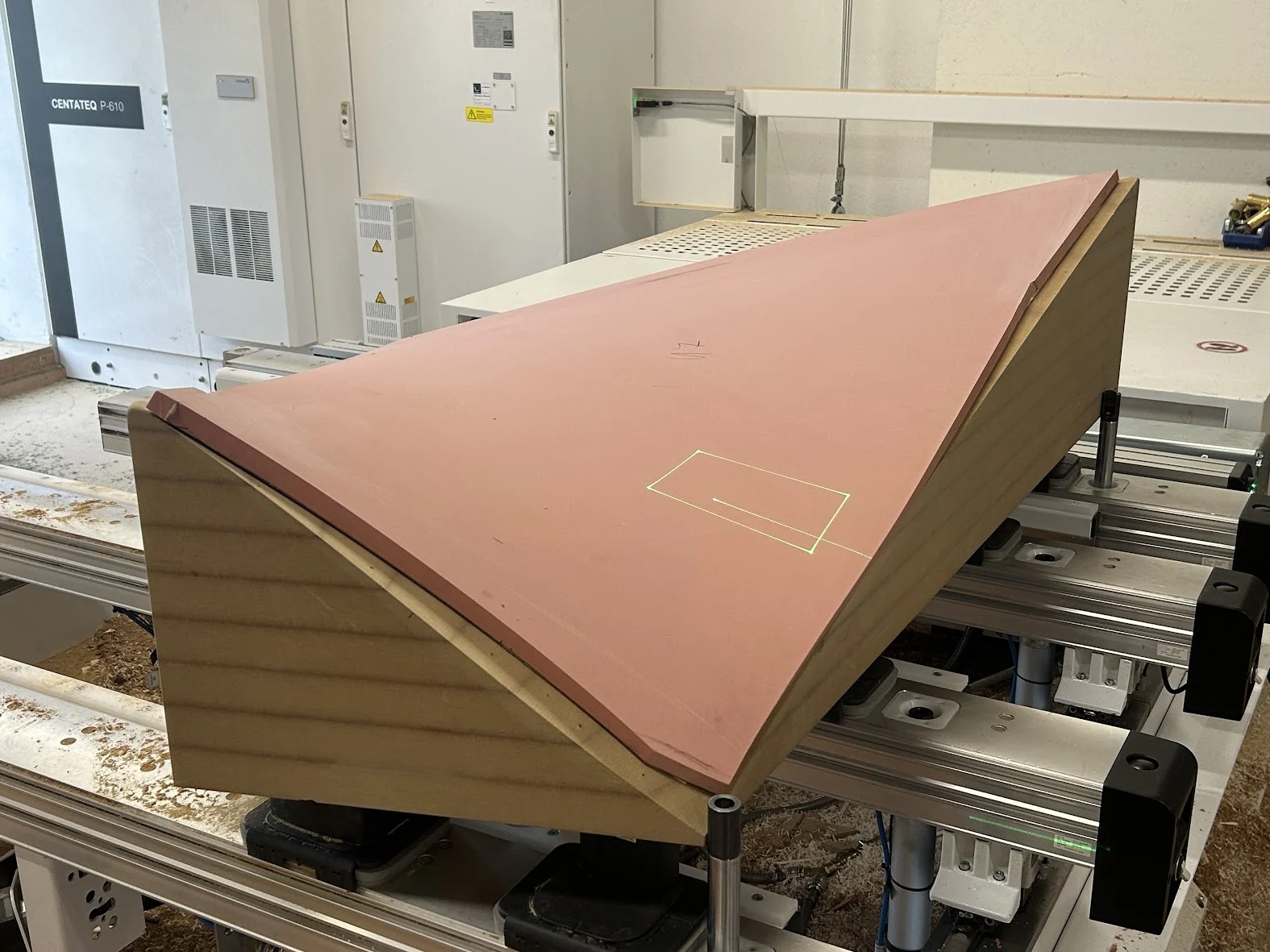
One application is a plywood pressing form: its machined geometry guides the component during subsequent pressing. Contour, counter-form and workholding are coordinated with the component.
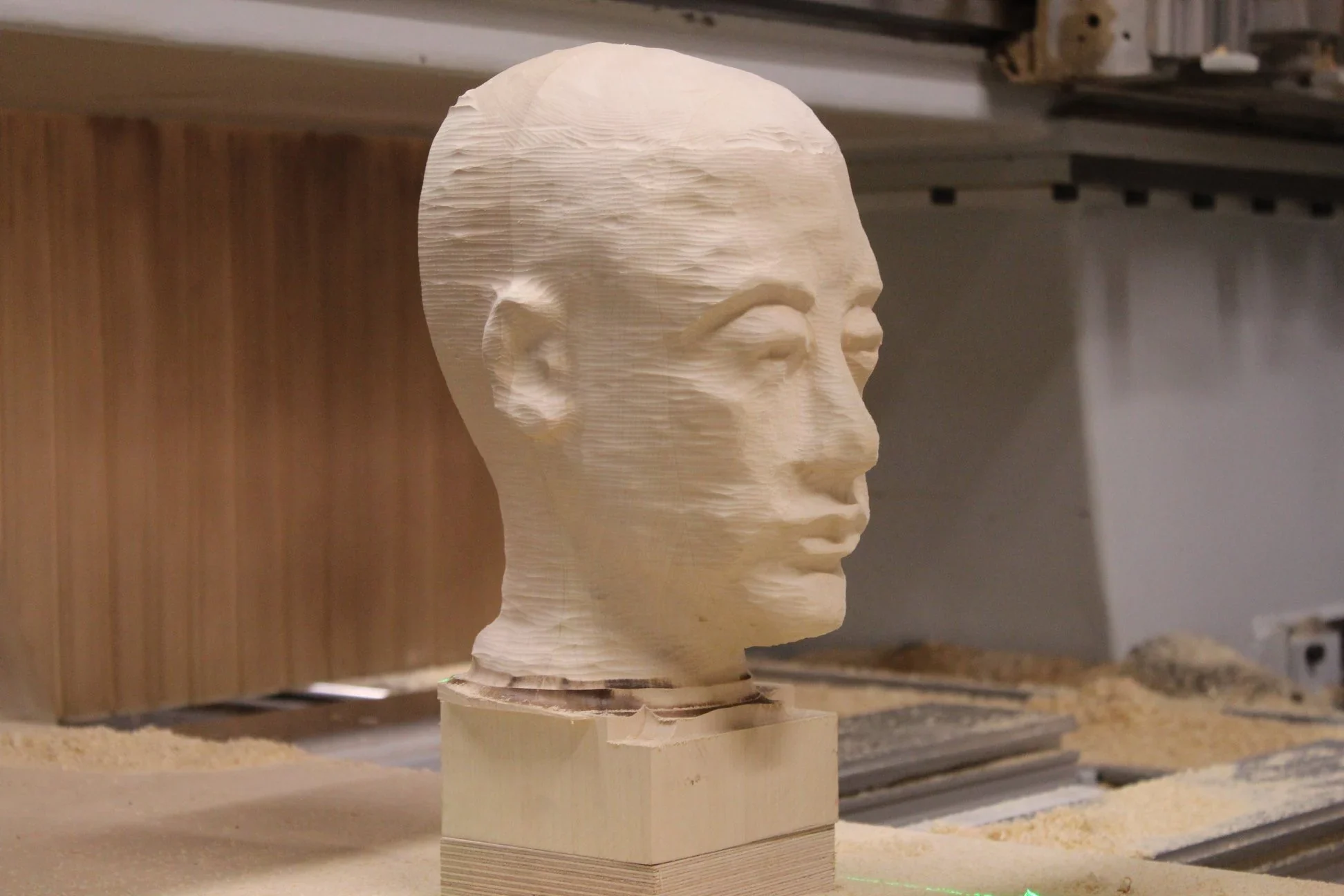
Free-form profiling with undercut machiningFive-axis machining of a figure of Christ – work in progress on the CNC machineMachining a Swiss stone pine bust on the CNC machine
Show 11 more imagesCollapse image gallery
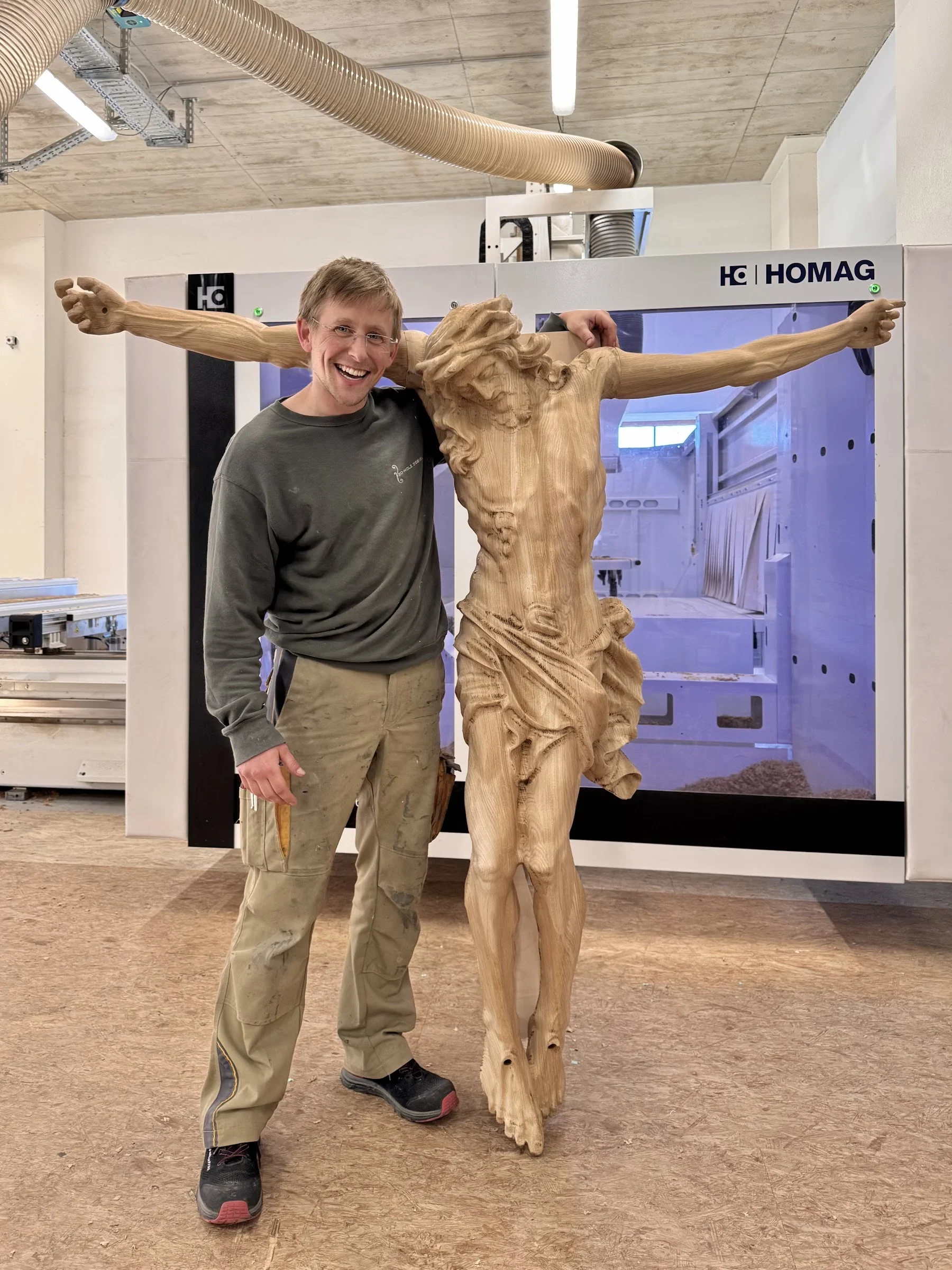
Five-axis milling – a three-dimensional shaped component on the CNC machinePlywood pressing form5-axis machining of a staircase stringer, including milled pocketsCNC machining of a three-dimensional wooden formMachining a tapered profile on a concave surface… will WE become world champions?!5-axis contour milling of a laminated component5-axis contour milling of a laminated componentWave-shaped contour trimmingUrinal in American walnut5-axis milling of a circular glazing bead with cross muntins
Nesting & transformations
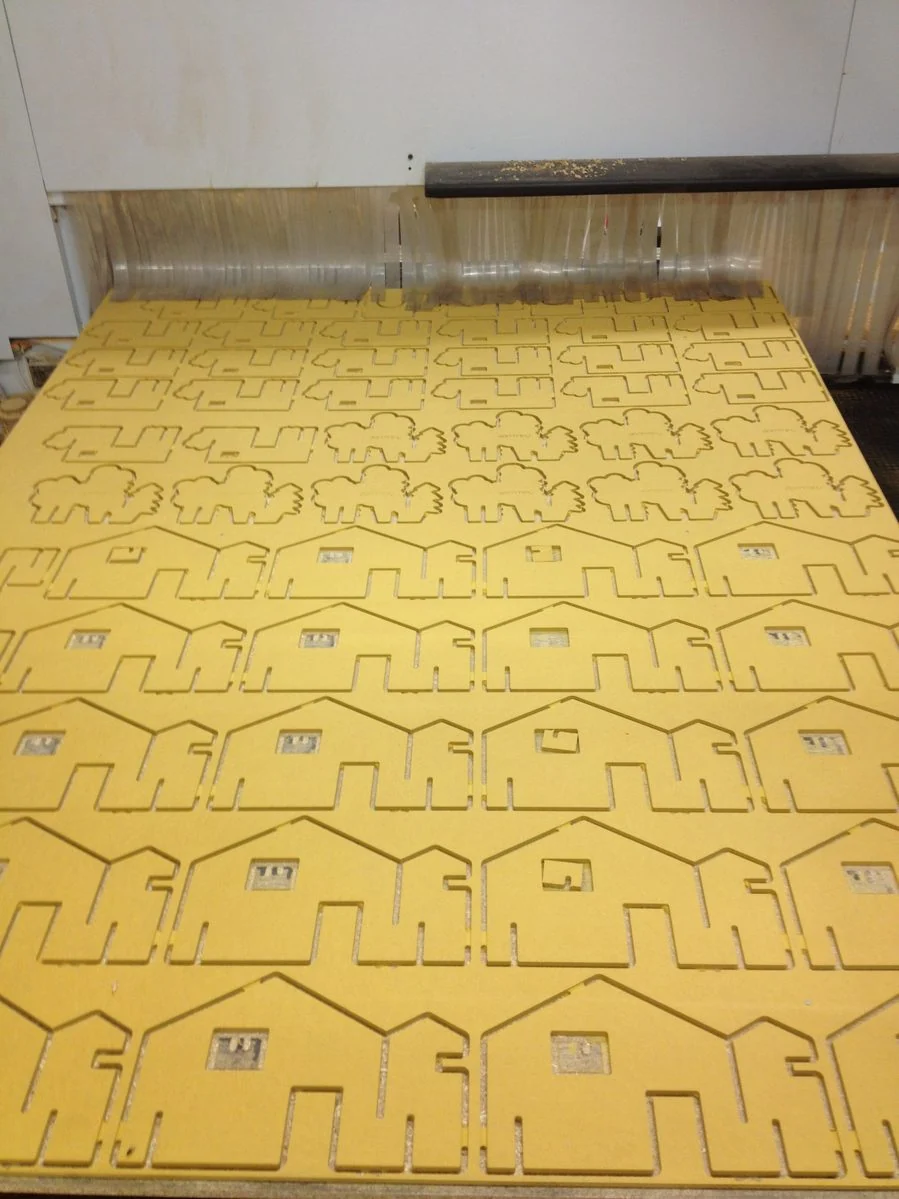
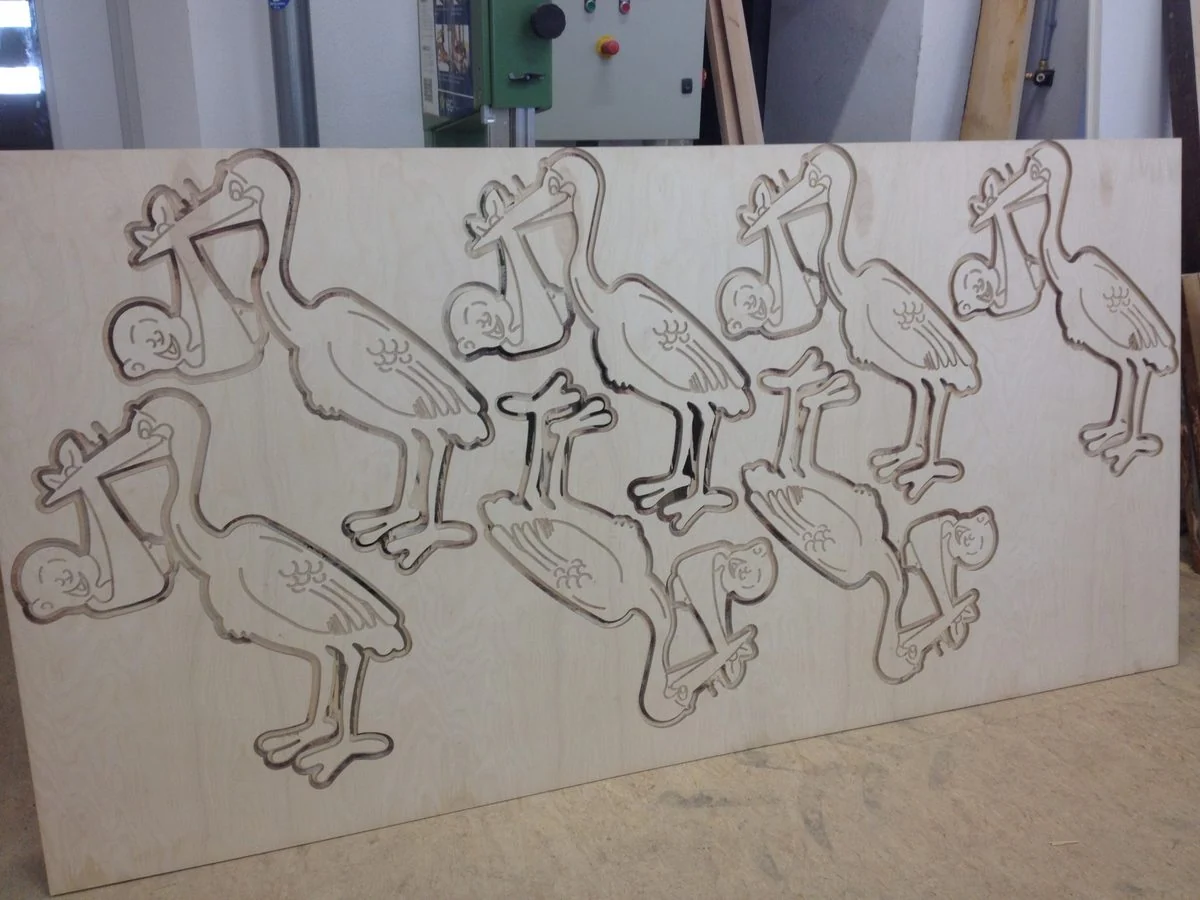
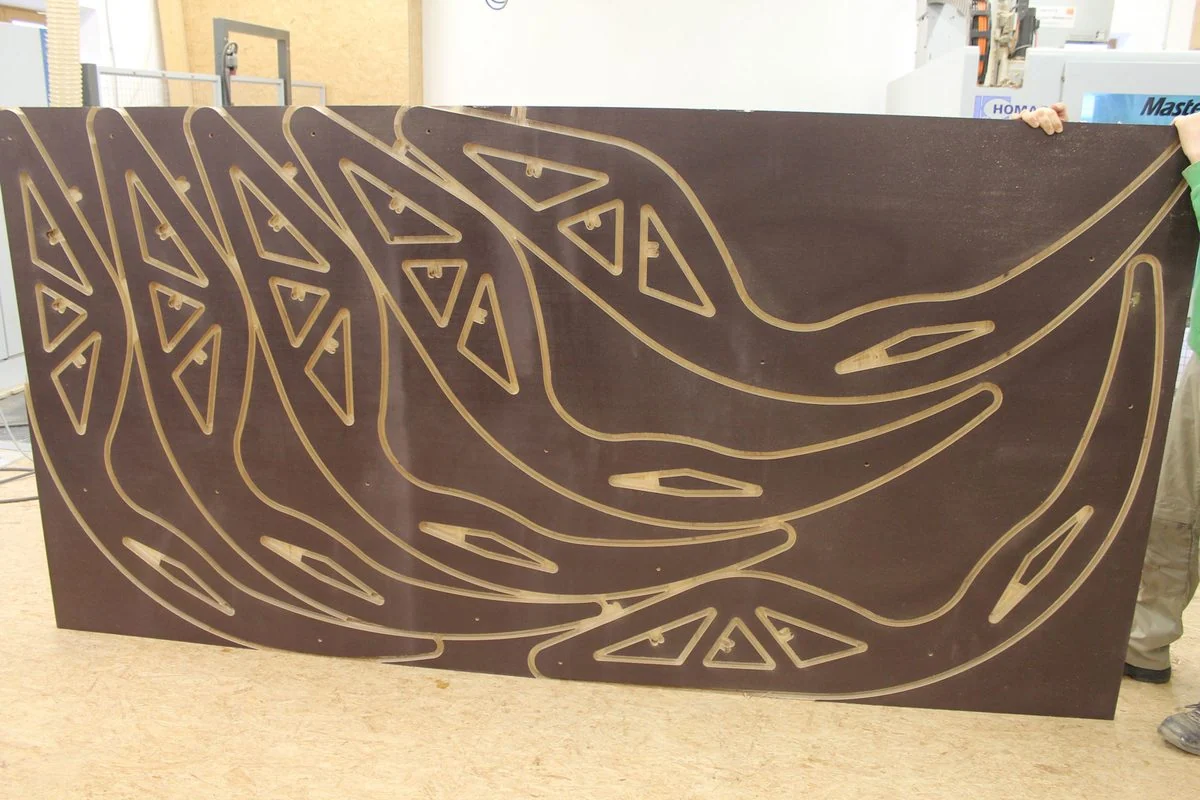
Nesting arranges parts on a sheet to reduce waste while respecting grain direction, clearances and workholding. Transformations repeat a machining operation at defined offsets or angles.
More about the application
Nesting arranges different contours on the stock to minimise waste. Transforming repeats a source operation at a defined offset. Grain direction, tool clearance and holding points also influence the best arrangement.
Nesting & transformationsSeries production with minimal material wasteNesting & transformations
Show 4 more imagesCollapse image gallery
Nesting and transform operations, including retaining tabsLow-waste contour trimming of outdoor loungersNesting with holding tabsNesting · efficiently arranged components
Engraving & V-carving
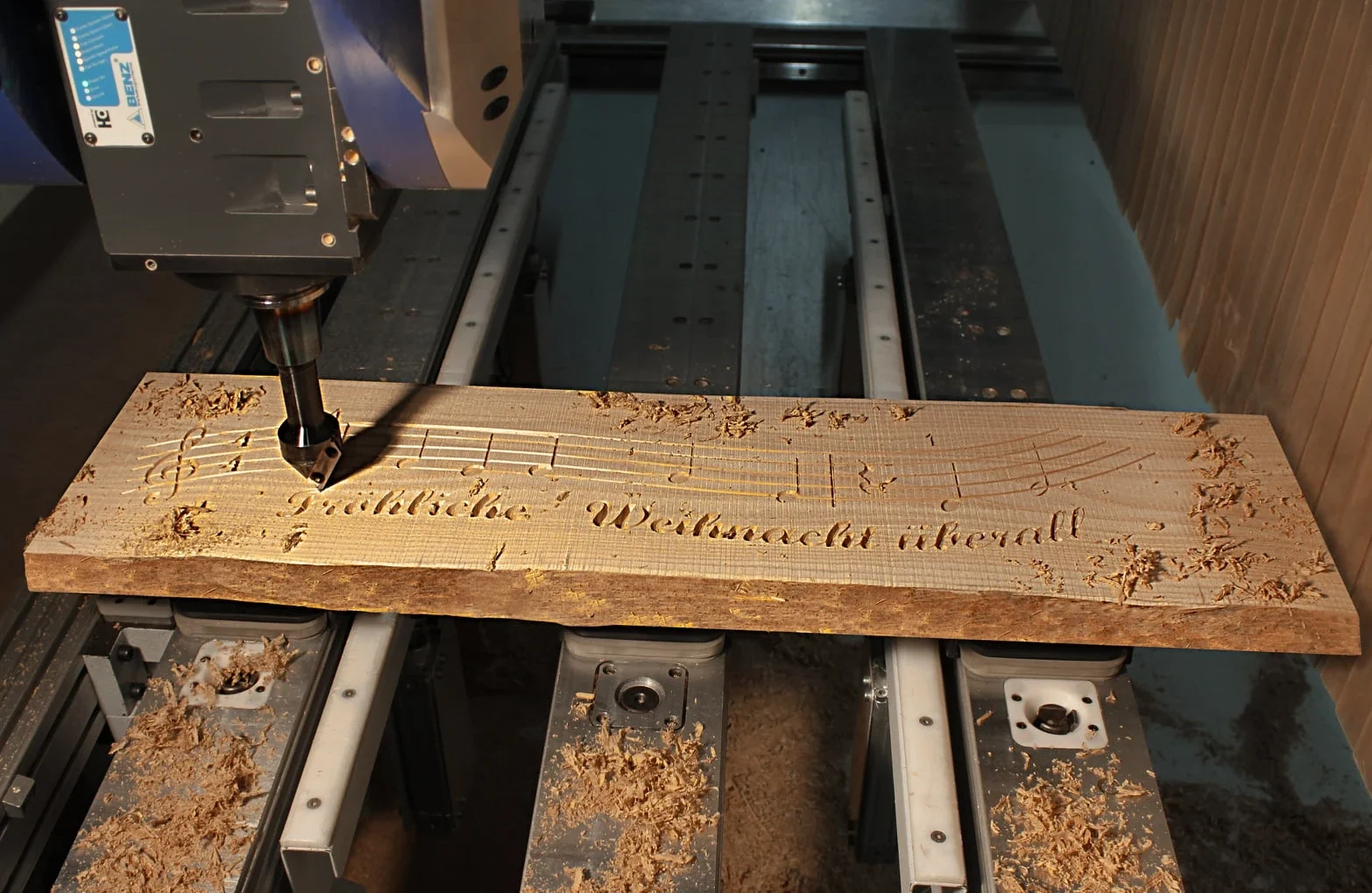
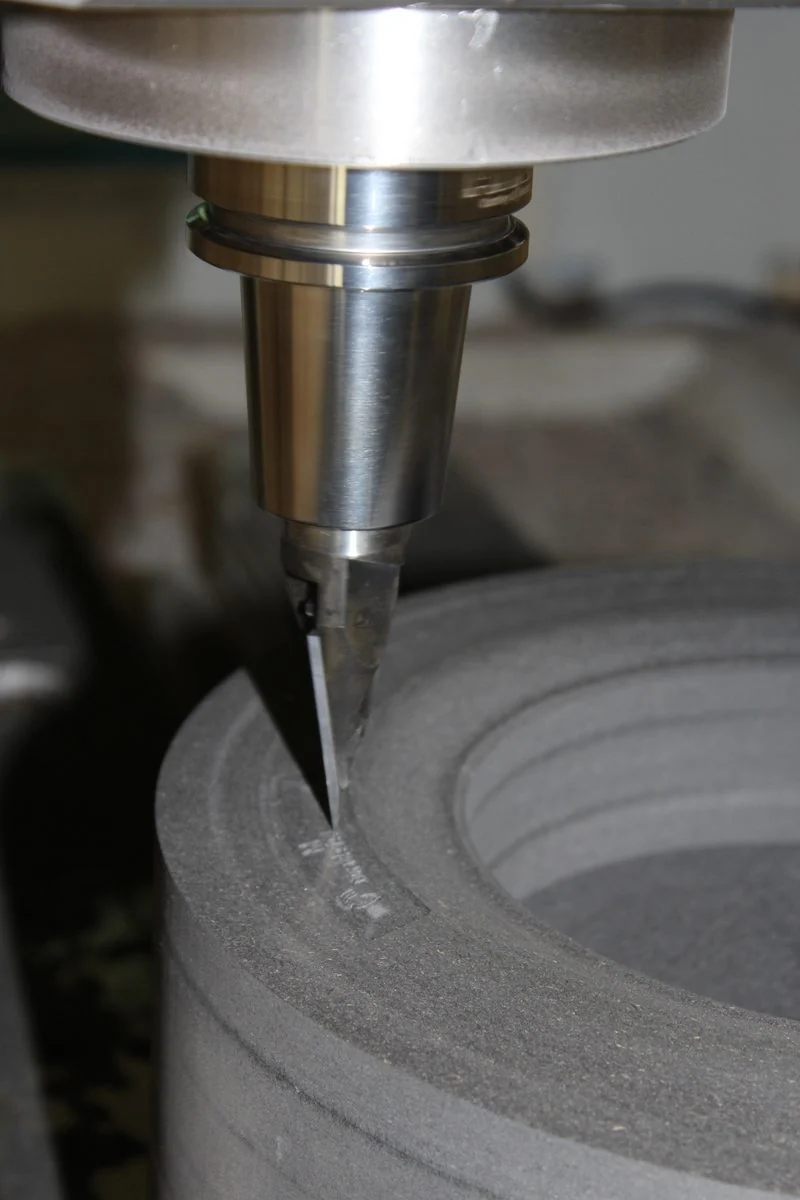
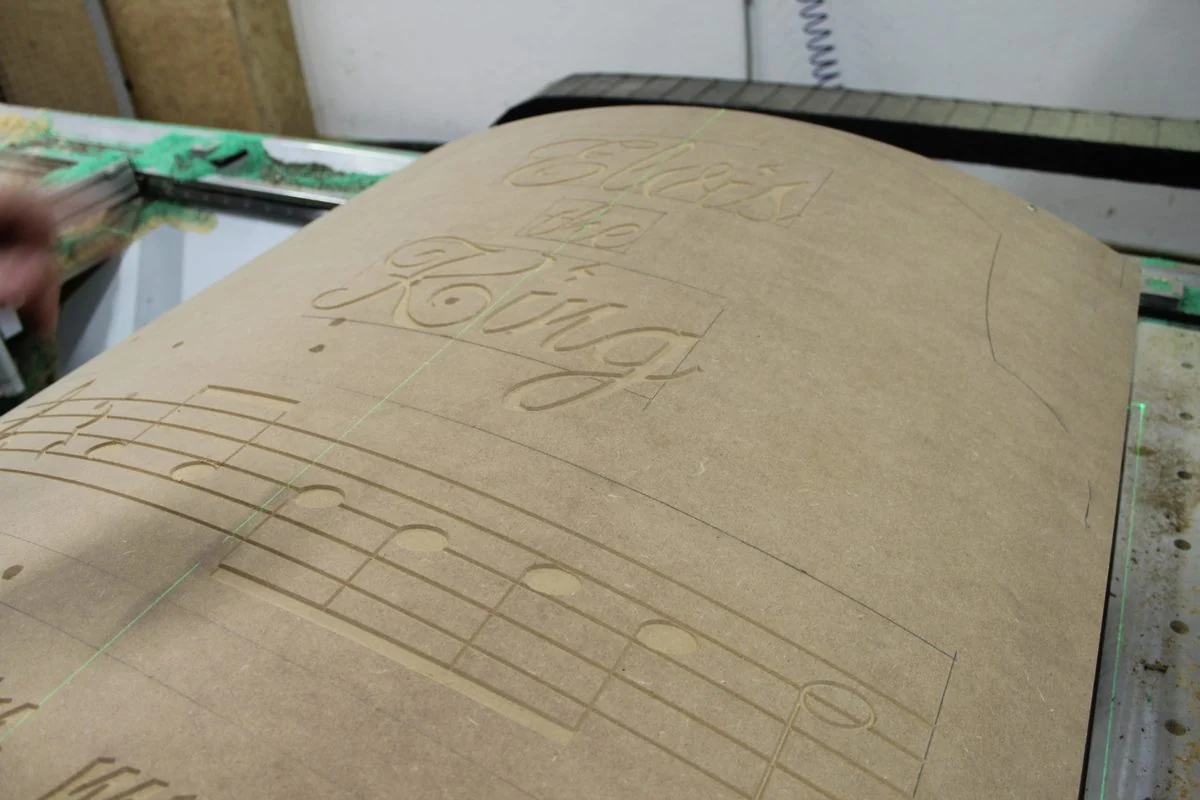
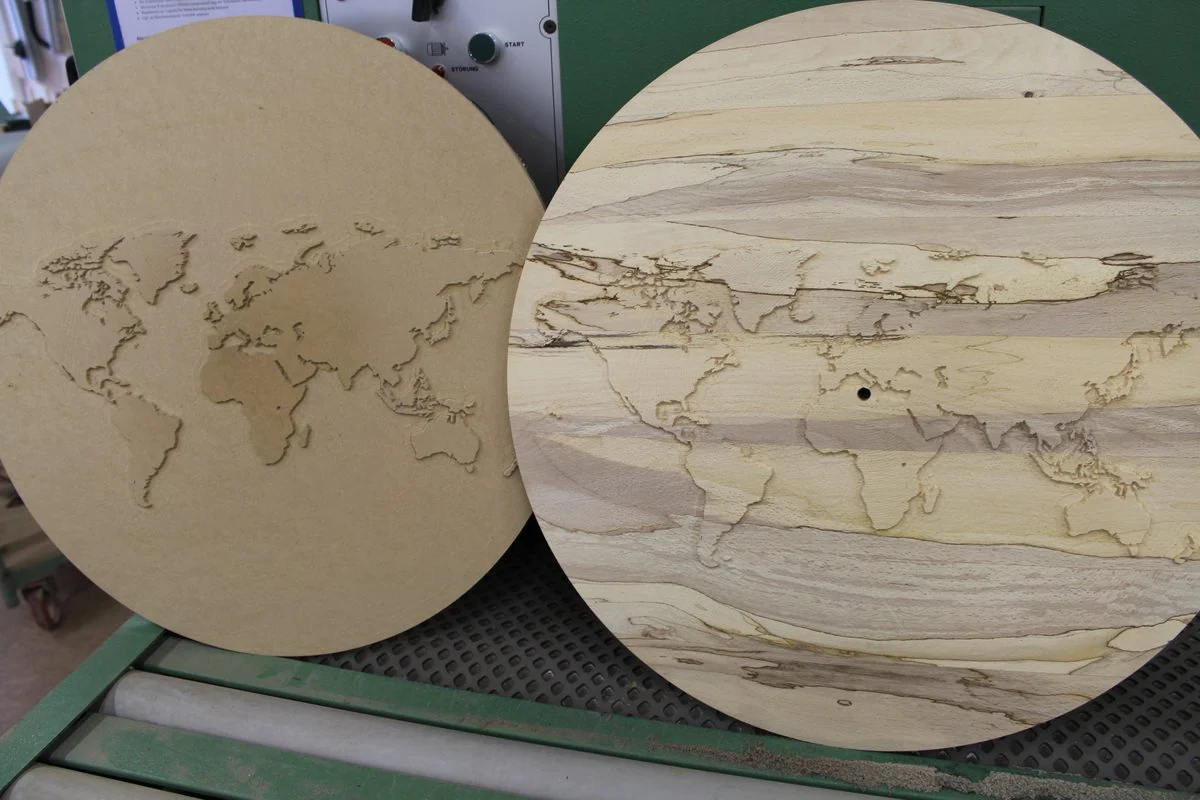
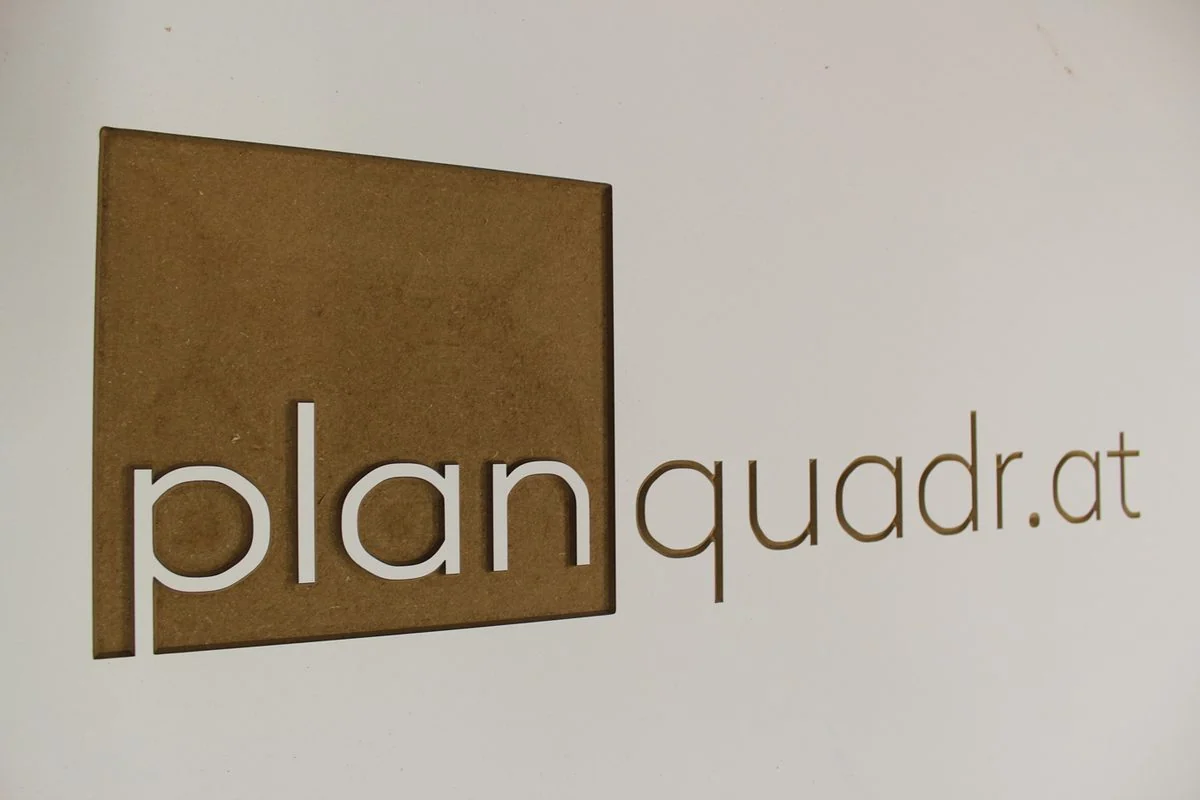
V-shaped tools produce lettering and ornaments of varying width by changing cutting depth. Lifting the tool creates pointed surface details. Vertical inside corners in through-cut parts remain limited by the cutter radius.
More about the application
Engraving can also be applied to curved free-form surfaces. The pointed corners typical of V-carving result from the sloped cut in depth. This differs from a through-cut contour with vertical walls, where the rotating tool limits the internal corner radius.
Engraving & V-carvingEngraving and V-carving on a curved surfaceEngraving and V-carving on a sliding door panel
Show 4 more imagesCollapse image gallery
Engraving and V-carving on a curved surfaceDetail: engraving and V-carvingThe world is flat – at least on this wall clock.Engraving and V-carving: milling a logo
Fluting & profiles
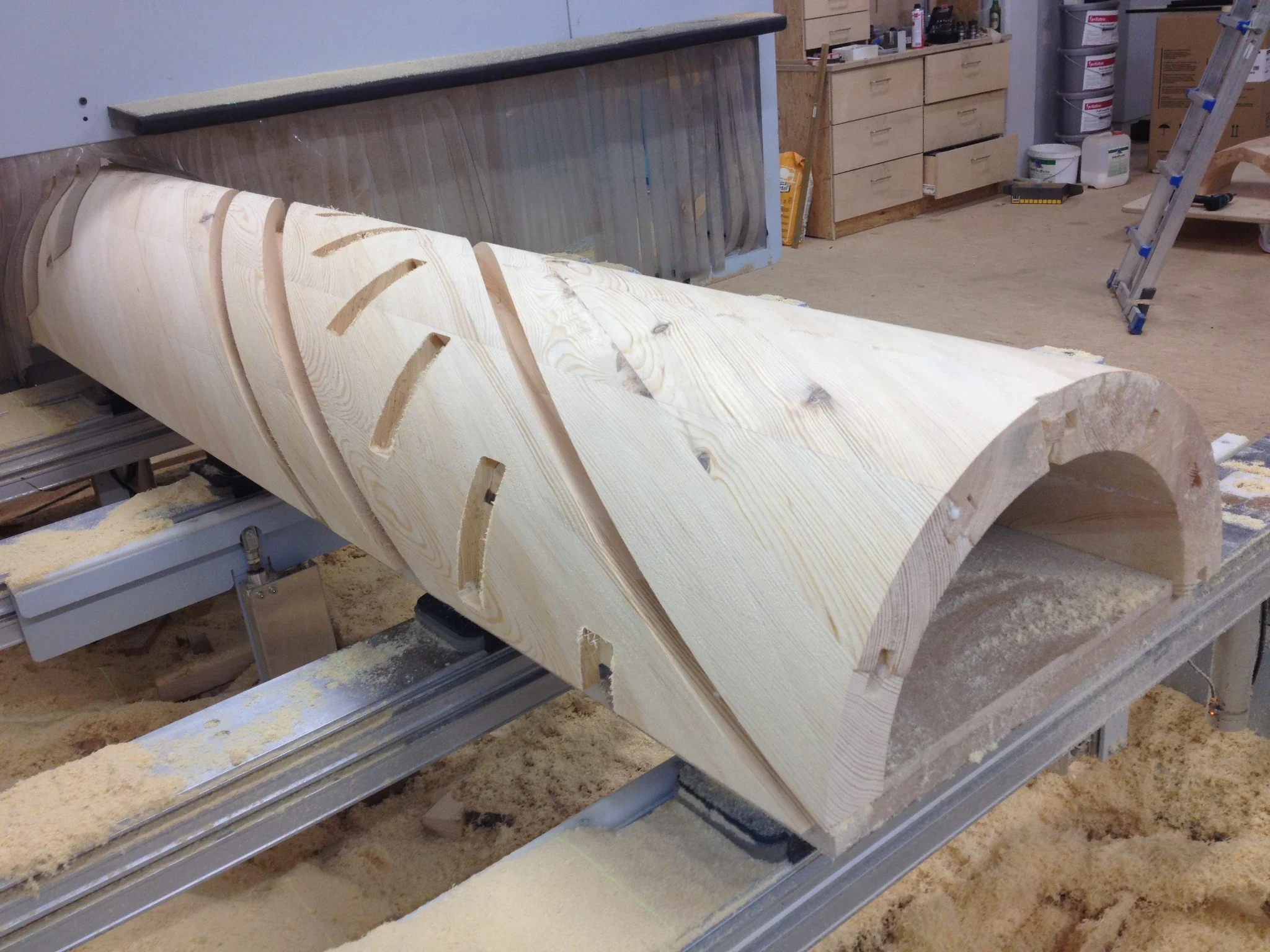
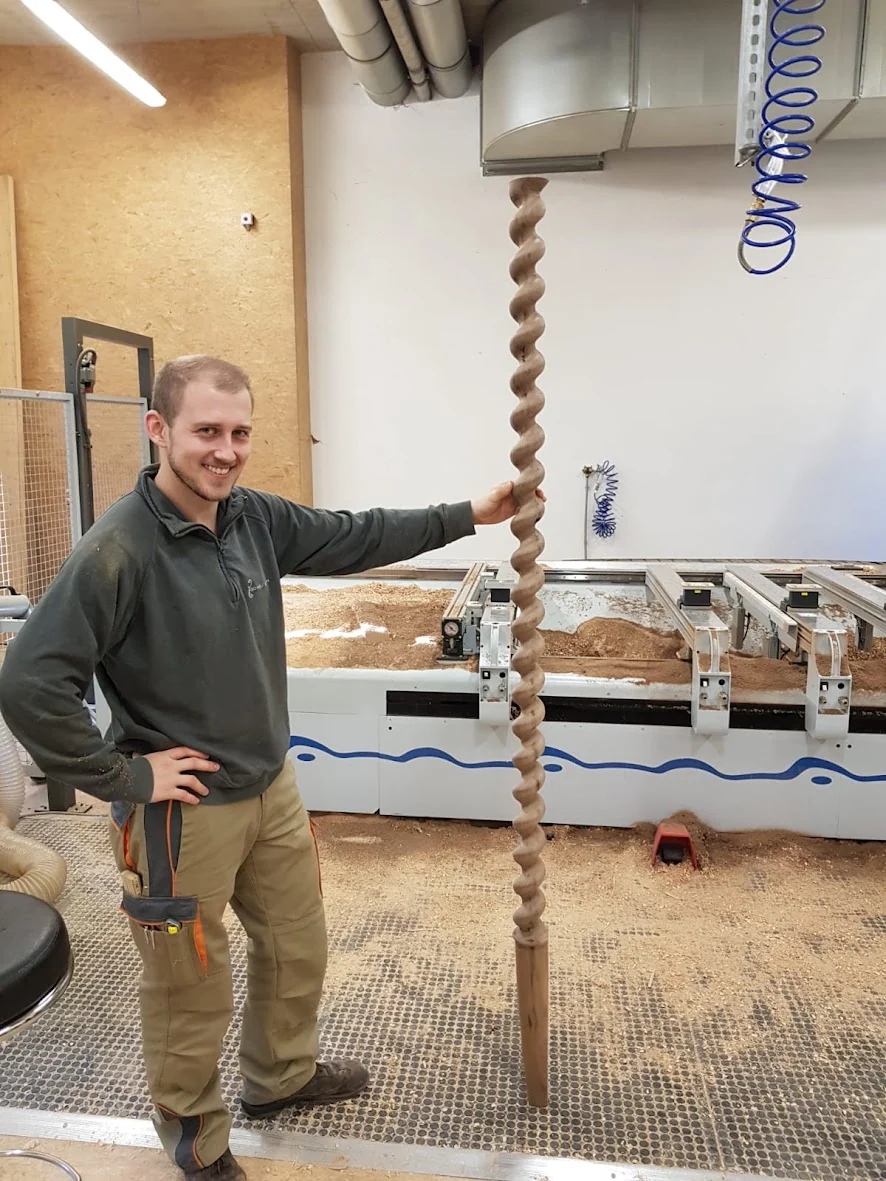
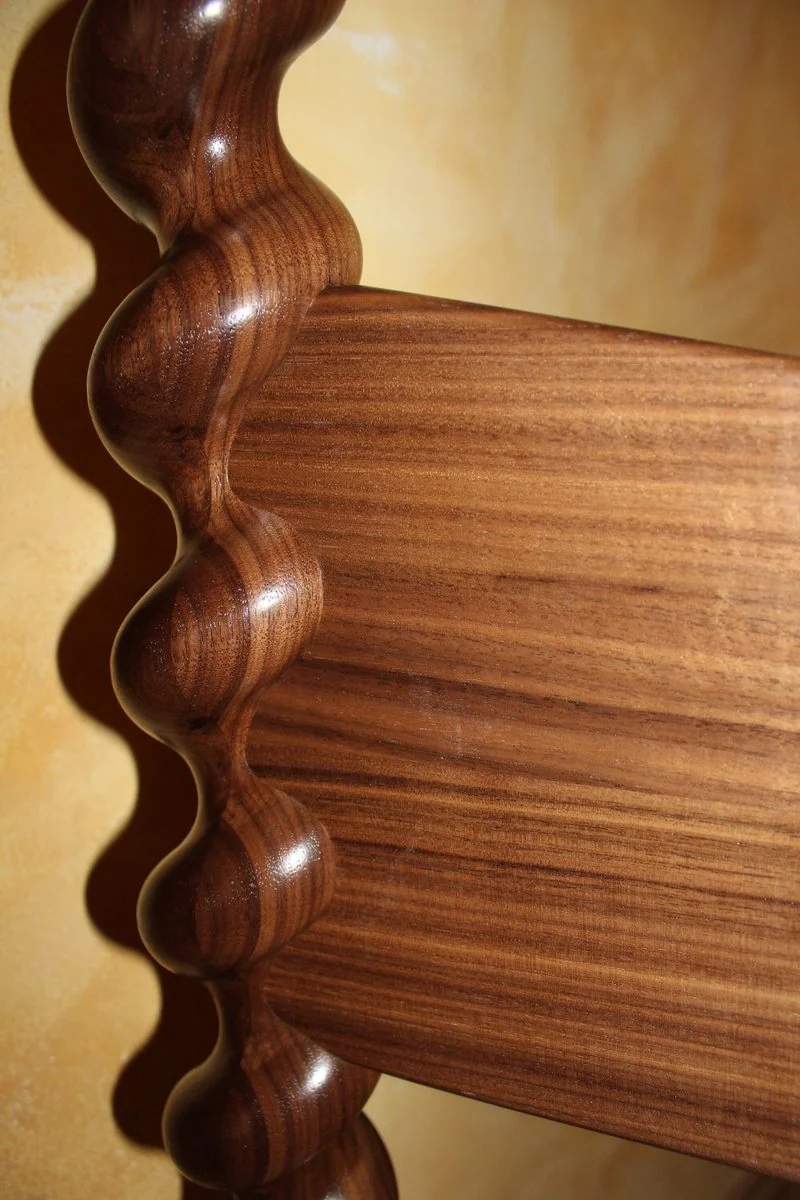
Fluting consists of lengthwise concave grooves, for example on columns. CNC machining also supports twisting paths and individual profiles, subject to tool access and workholding.
More about the application
Fluting structures columns and other components with lengthwise grooves. Alongside straight grooves, twisted forms can be machined. Individual profiles can also be made, for example to complement historic components in restoration work. Profile shape, mitres and connectors are considered together.
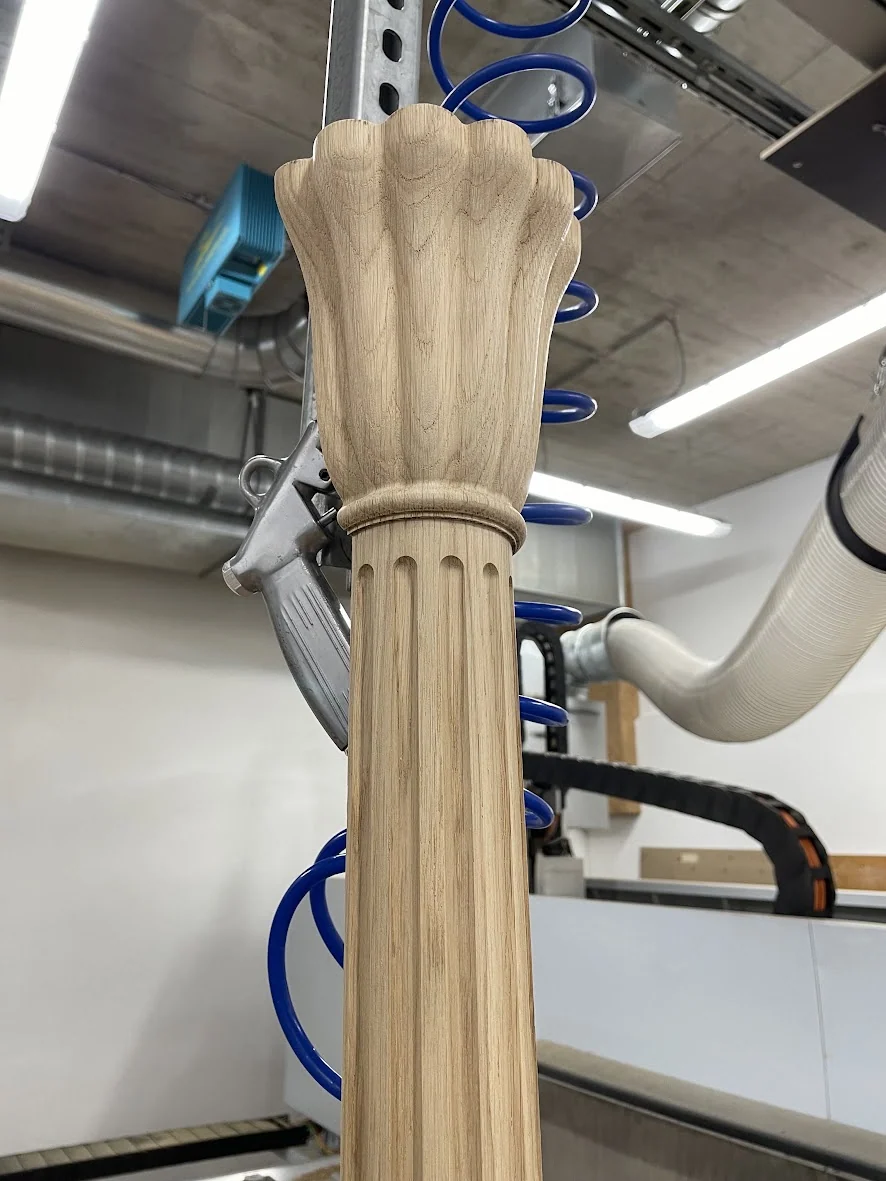
Fluted column with a capitalFour-poster bed column with an asymmetrically tapering baseFluted, tapered wooden form
Show 5 more imagesCollapse image gallery
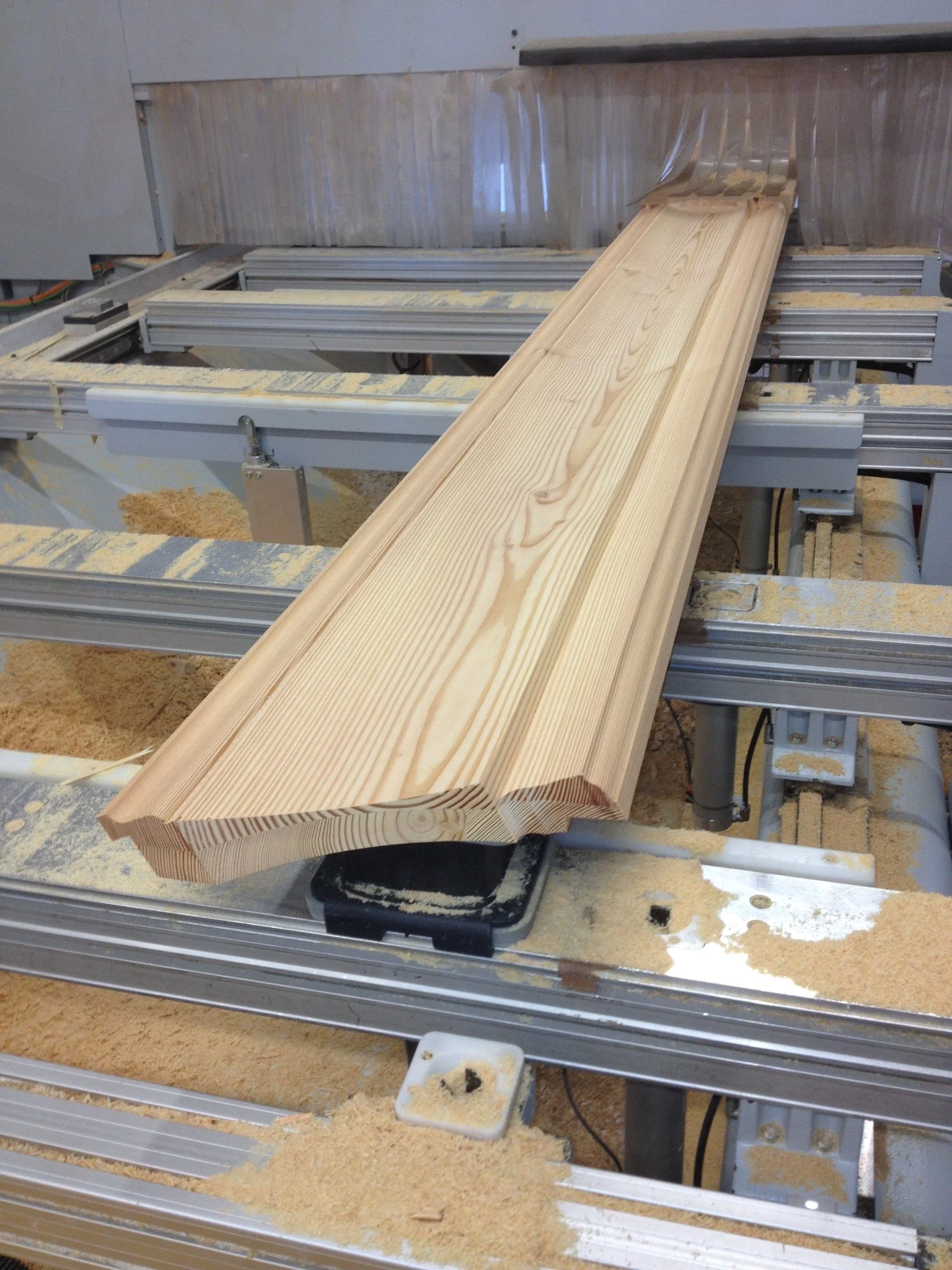
Machined curved wooden profilesFree-form profiling through surface millingProfilesFluting around the entire component using a ball cutterFluting
Thread milling
Internal and external threads can be made in suitable woods and plastics. Dimensions, loading and material determine whether a threaded connection is appropriate.
More about the application
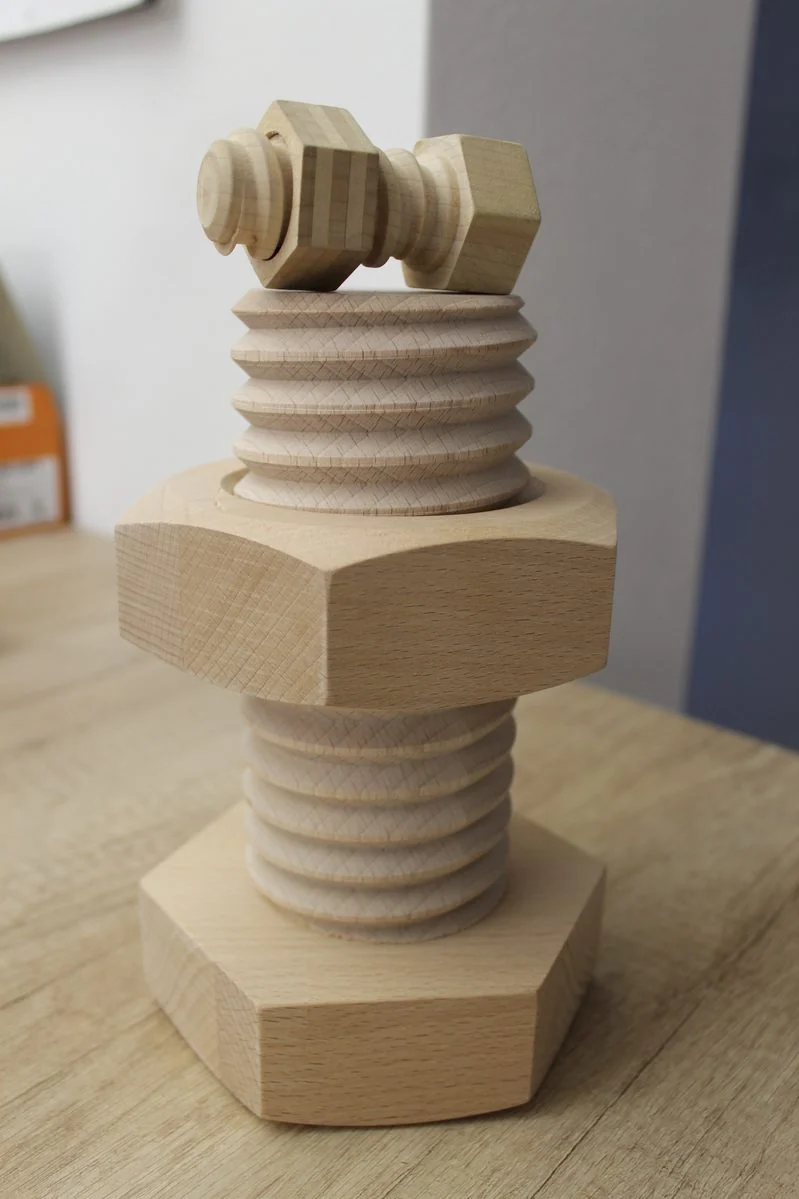
Internal and external threads, left- and right-hand threads and different pitches can be milled depending on material and dimensions. Metal-free connections in wooden furniture are one application. Strength and fit must suit the intended use.
Thread millingThread milling
CNC sanding
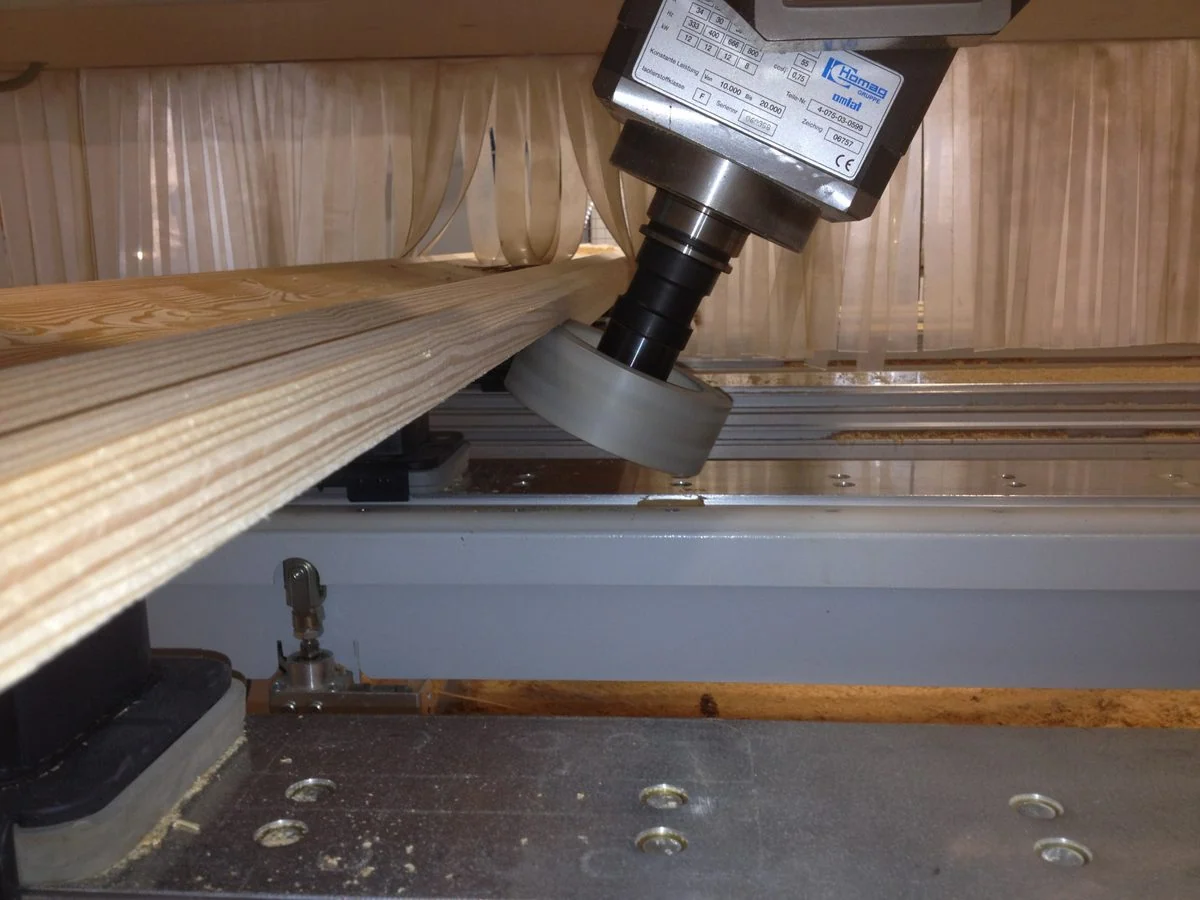
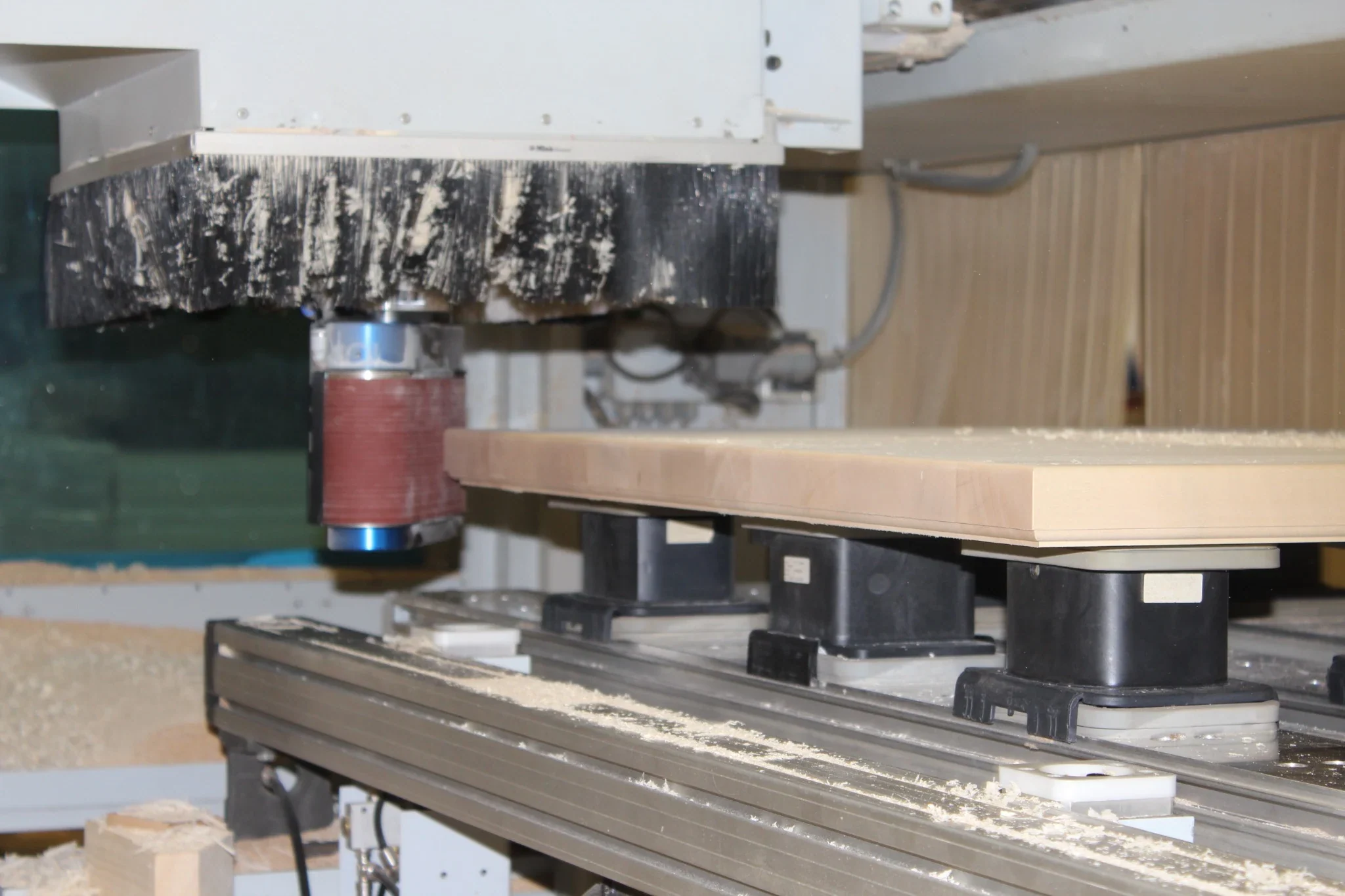
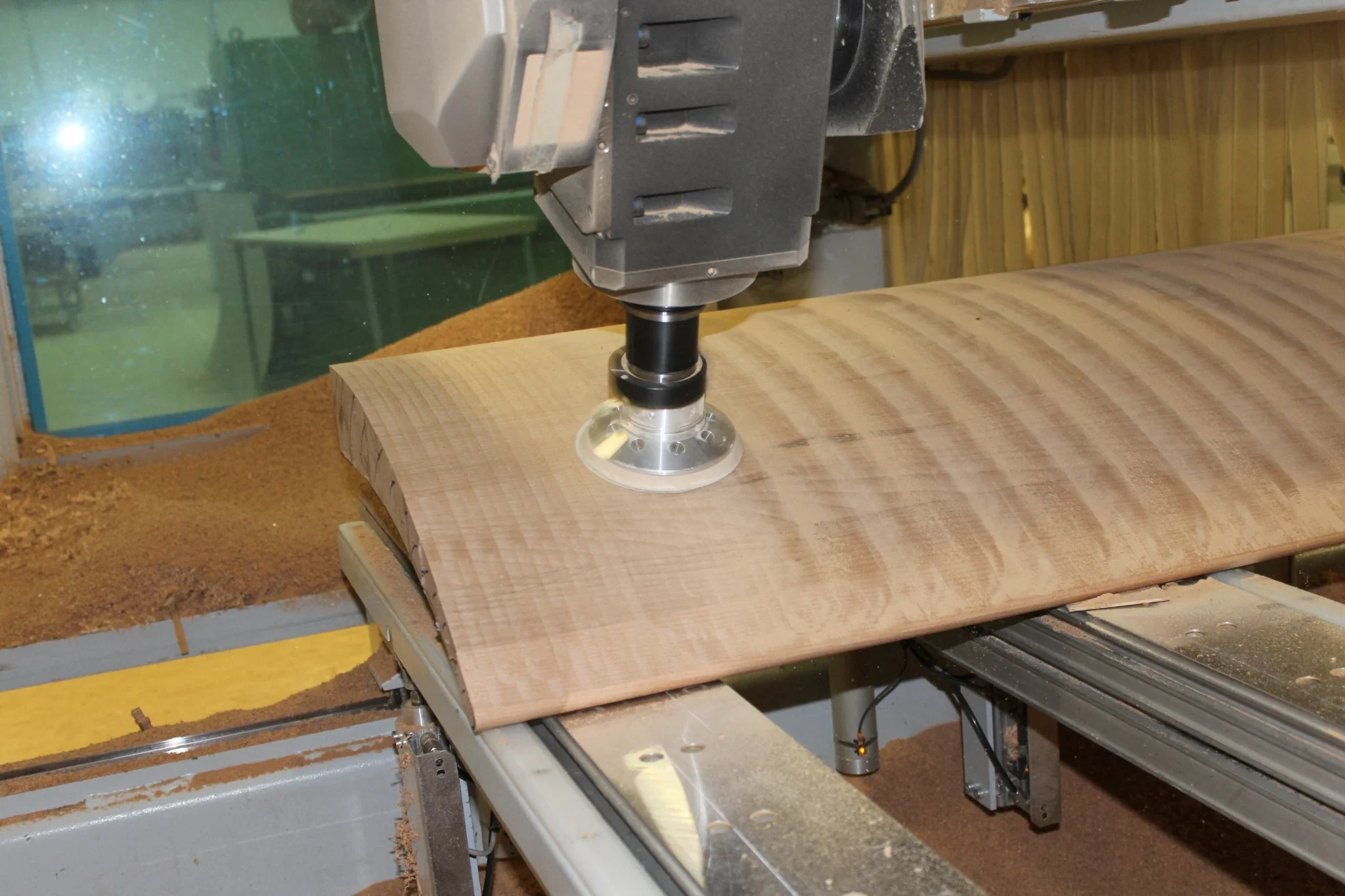
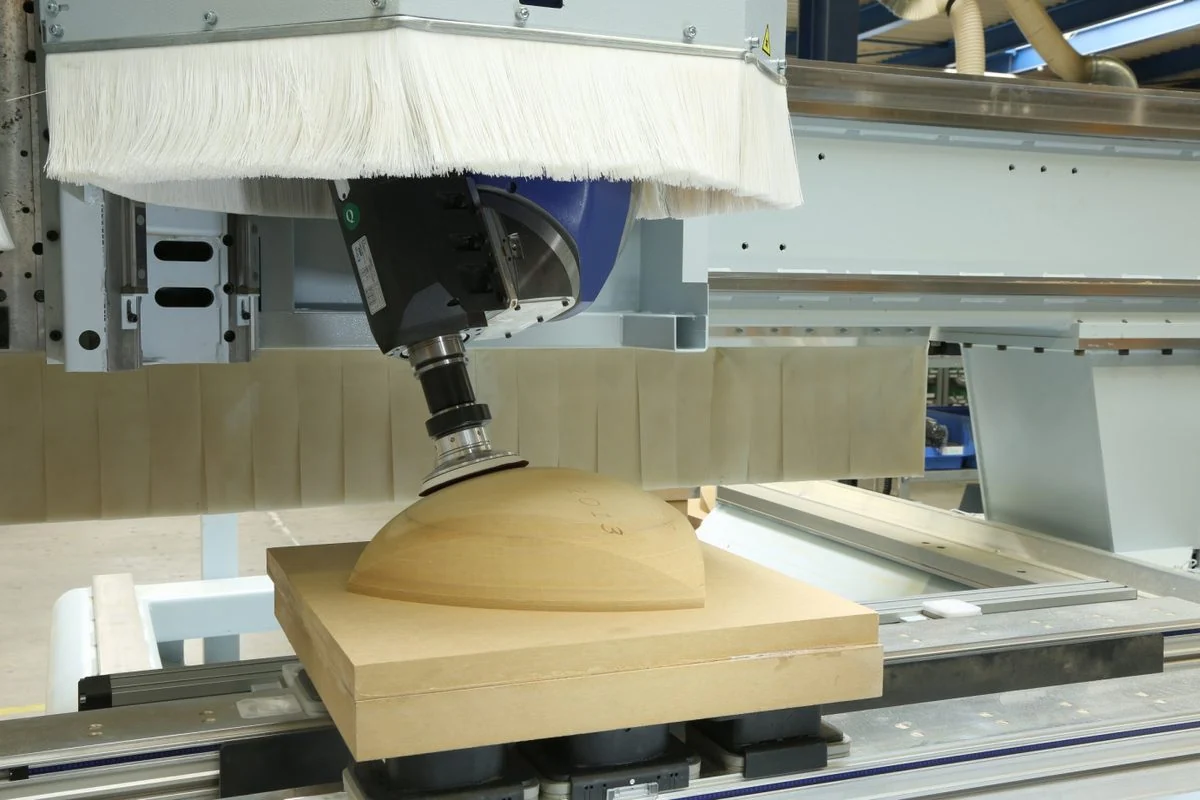
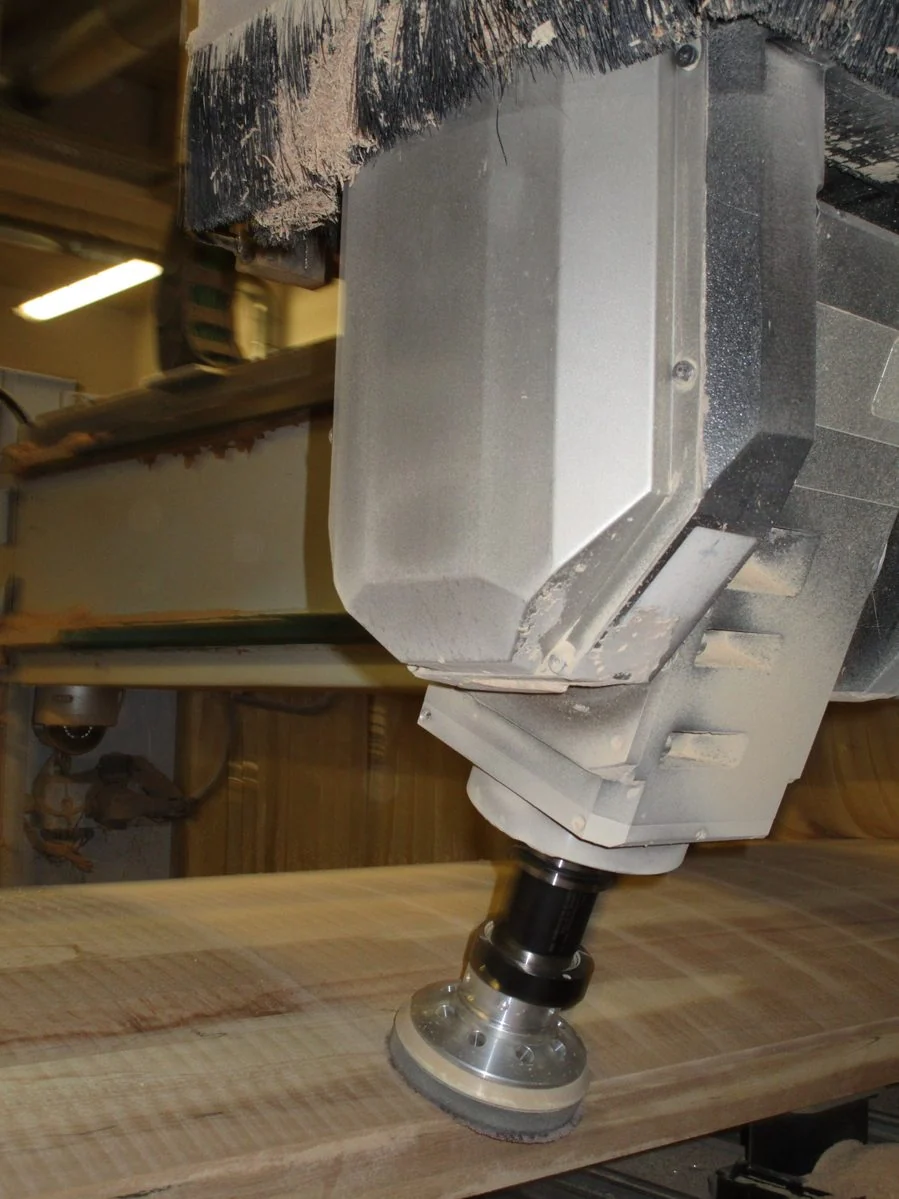
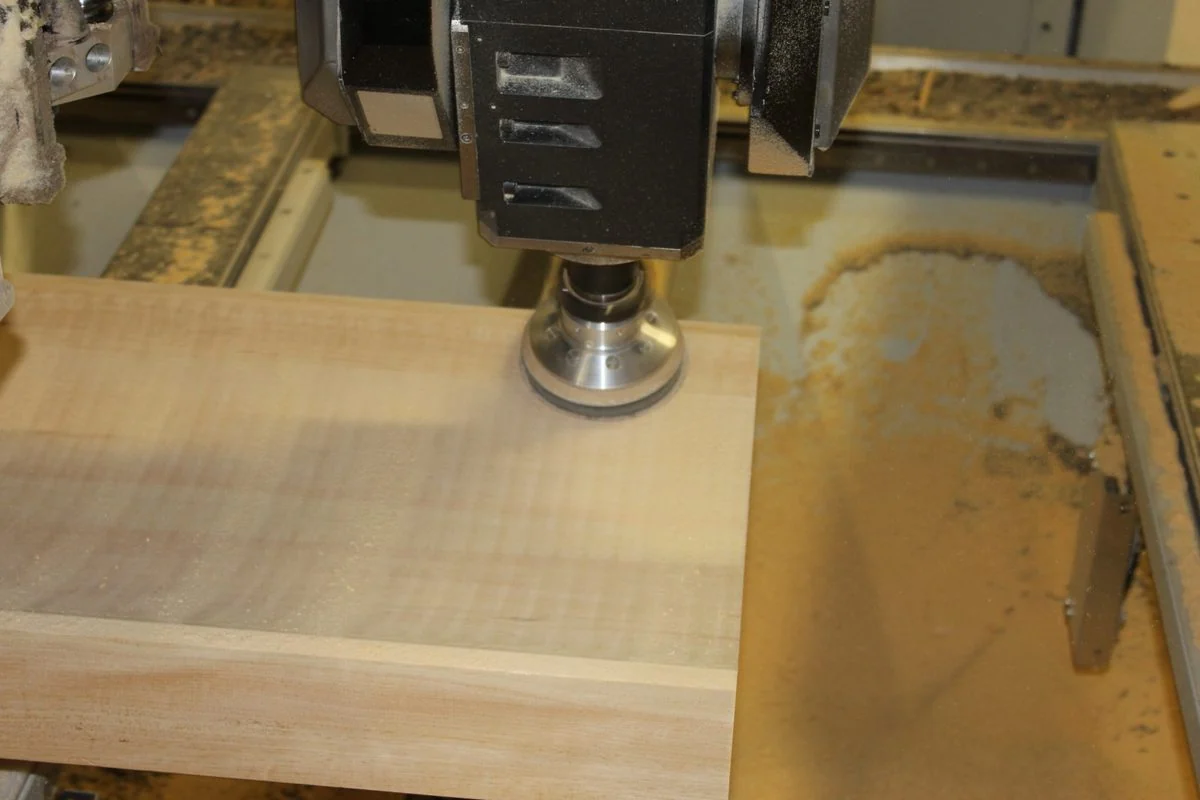
Suitable sanding tools allow workpiece edges and curved free-form surfaces to be machined under CNC control. The images show sanding drums and discs in use in our workshop. Further finishing depends on the shape, material and required surface quality.
CNC sanding of a workpiece edge using a sanding aggregateCNC sanding of a curved wooden surface using an orbital sanding aggregateSanding
Show 2 more imagesCollapse image gallery
SandingOrbital sanding with CNC technology
CNC sawing
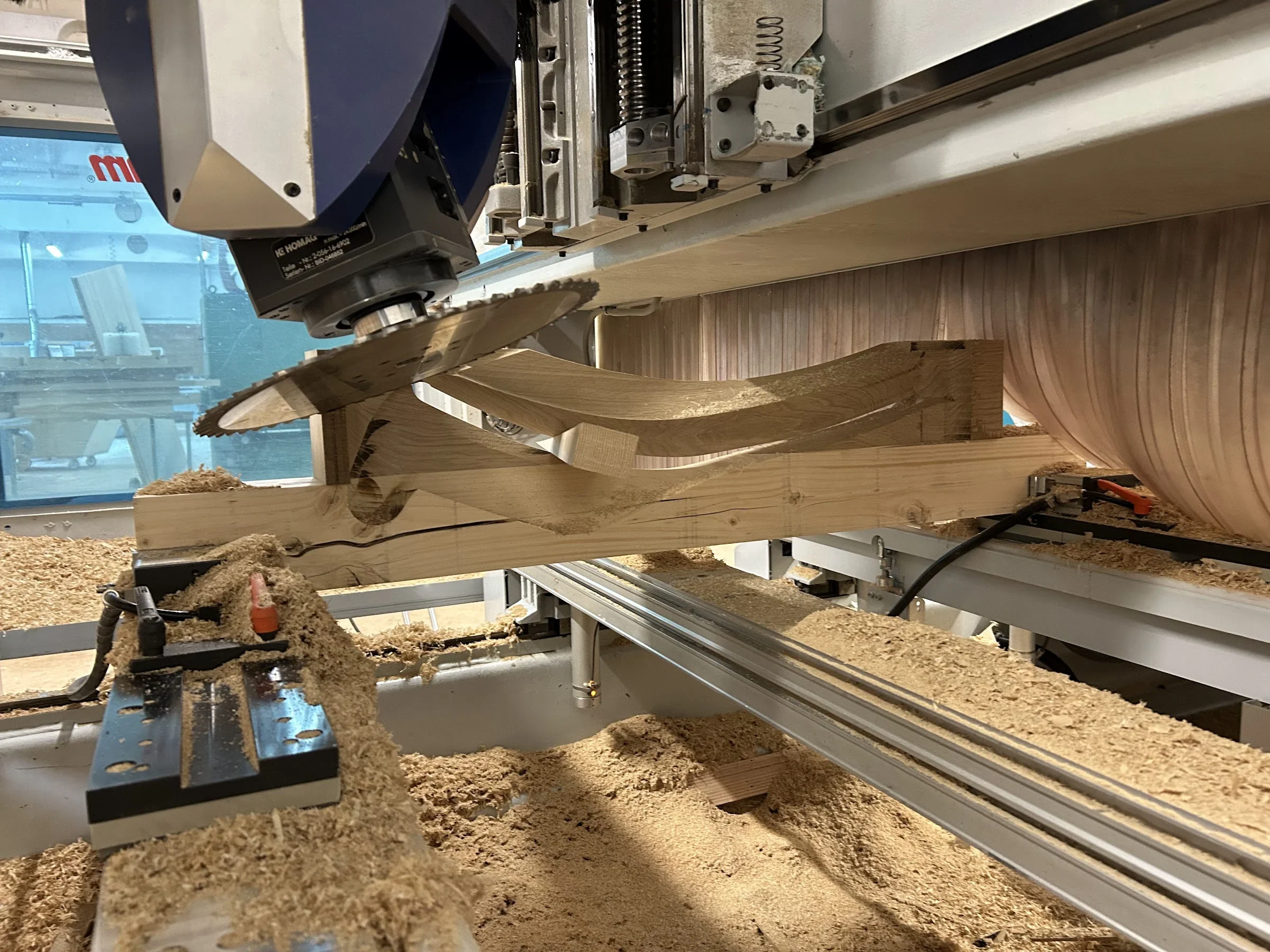
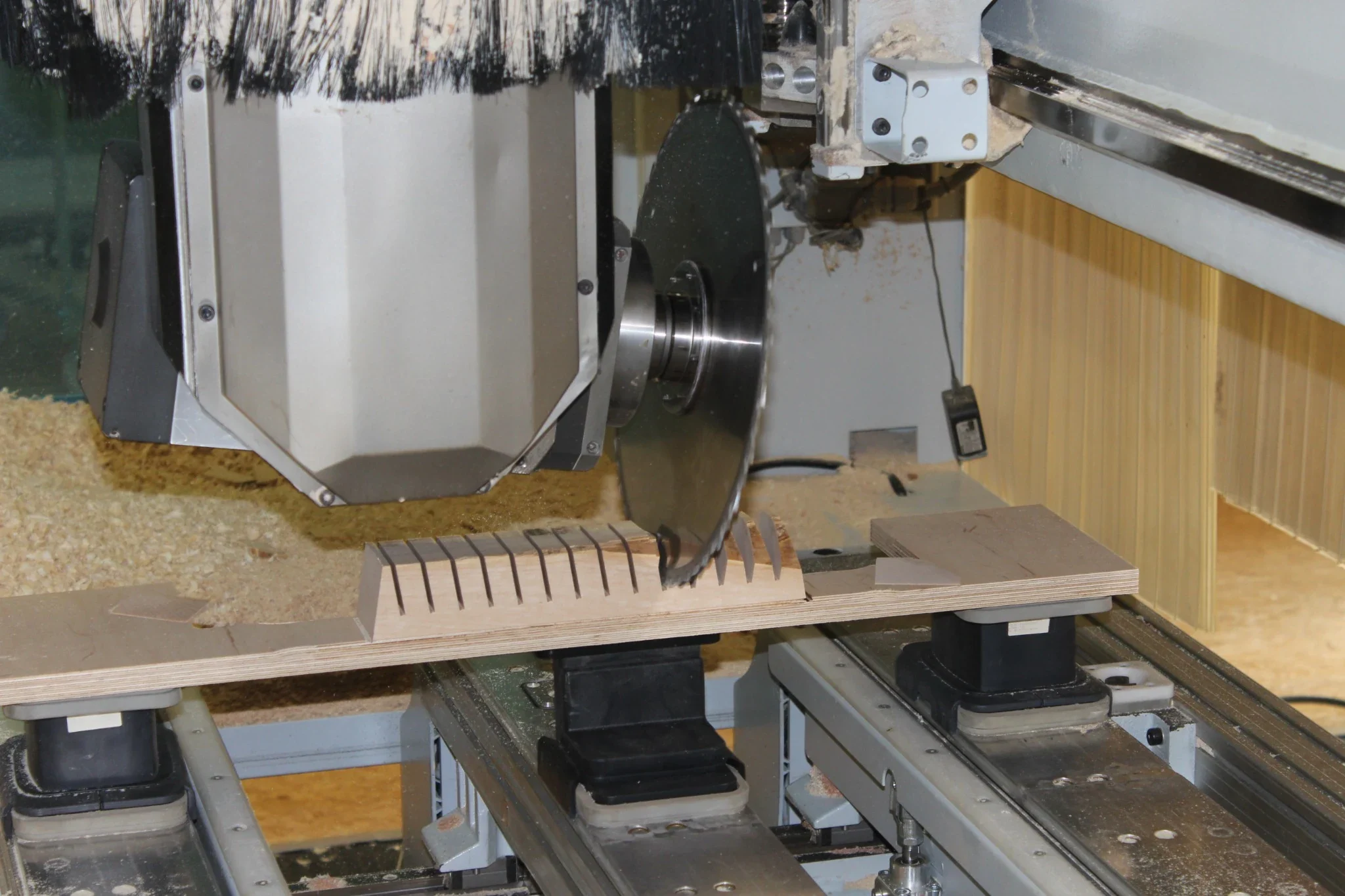
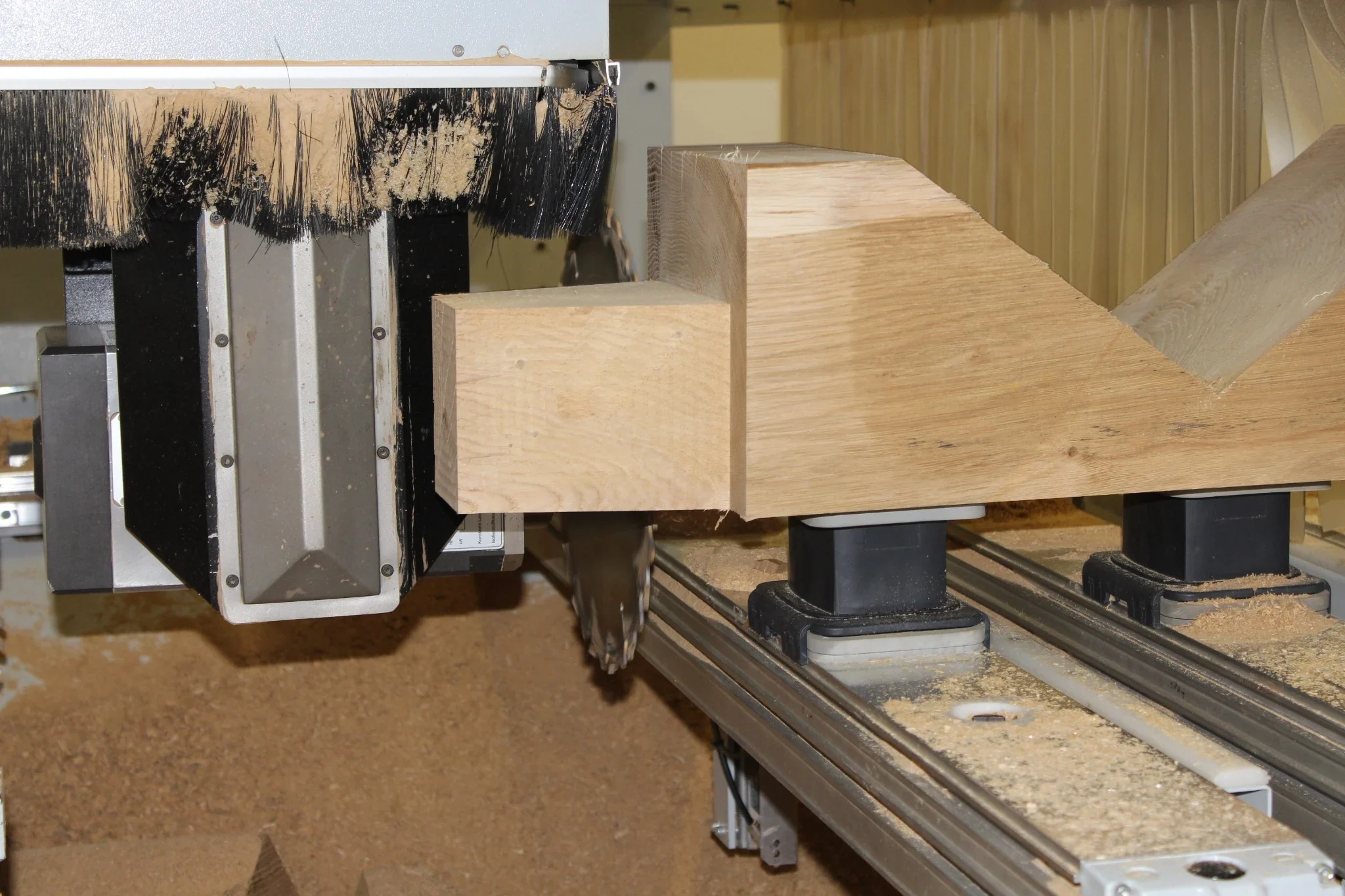
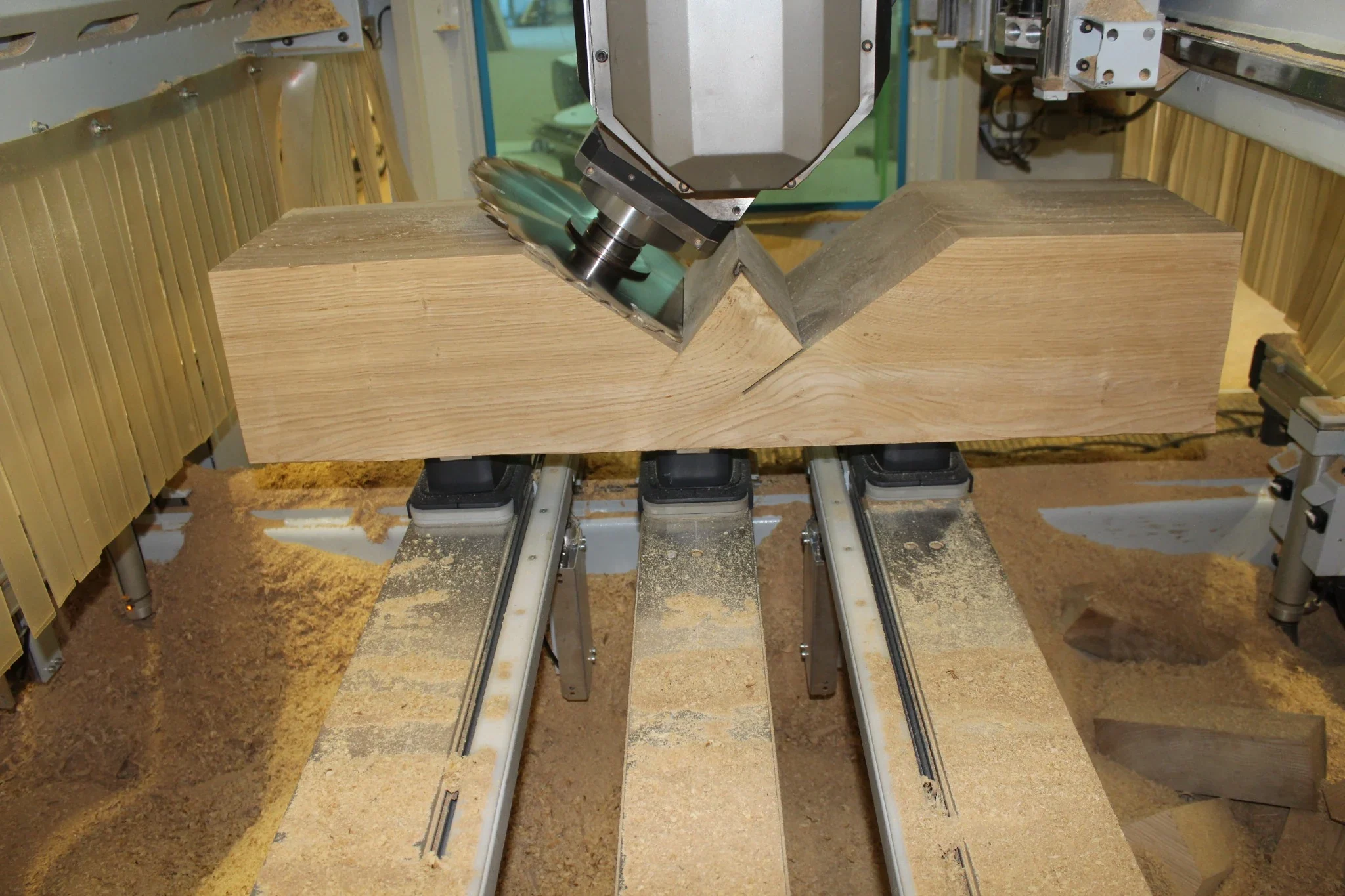
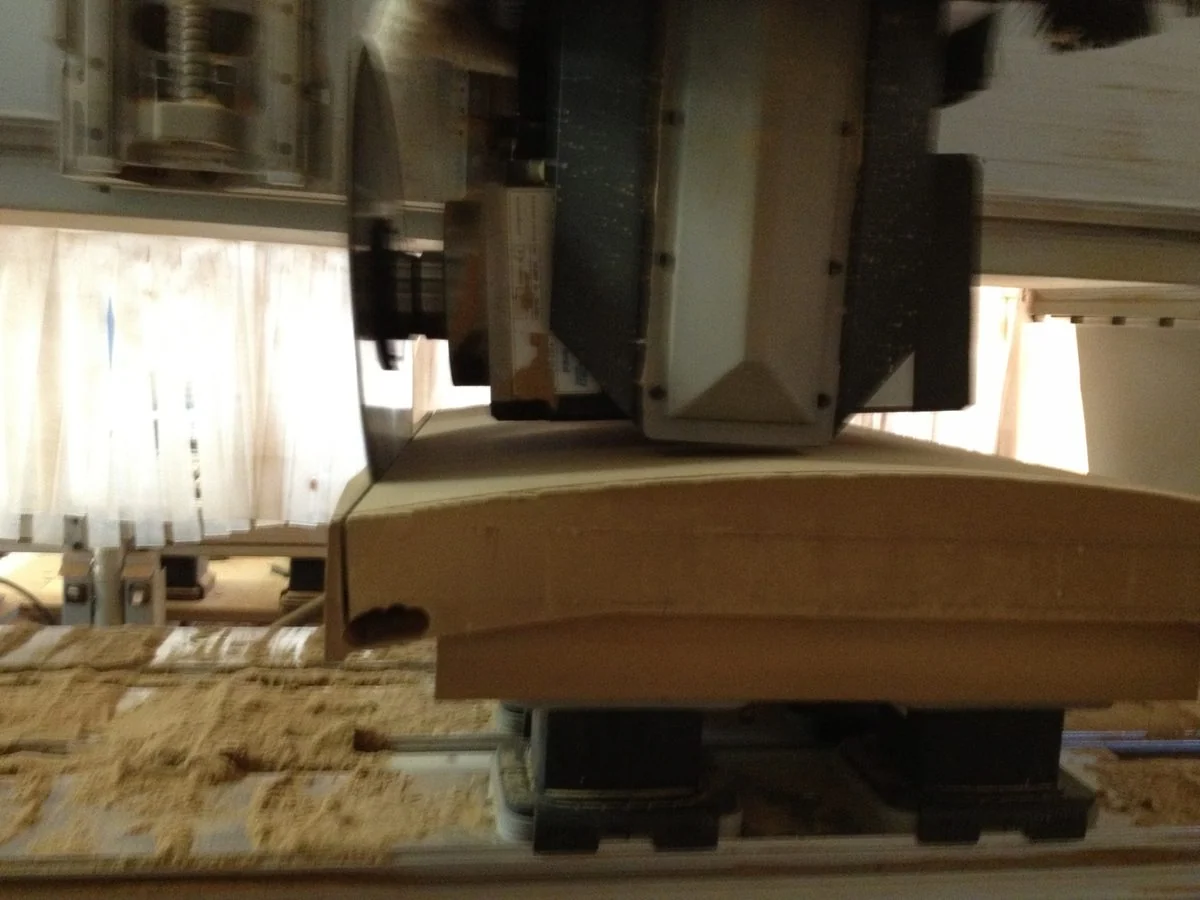
CNC-controlled sawing enables precisely positioned incisions and separating cuts. The saw blade can also be used for shaping. The examples show parallel cuts, notching, cutting tenon shoulders and shaping bases for an artwork. Notching removes a defined section of the workpiece; shoulder cuts define the transition to the tenon.
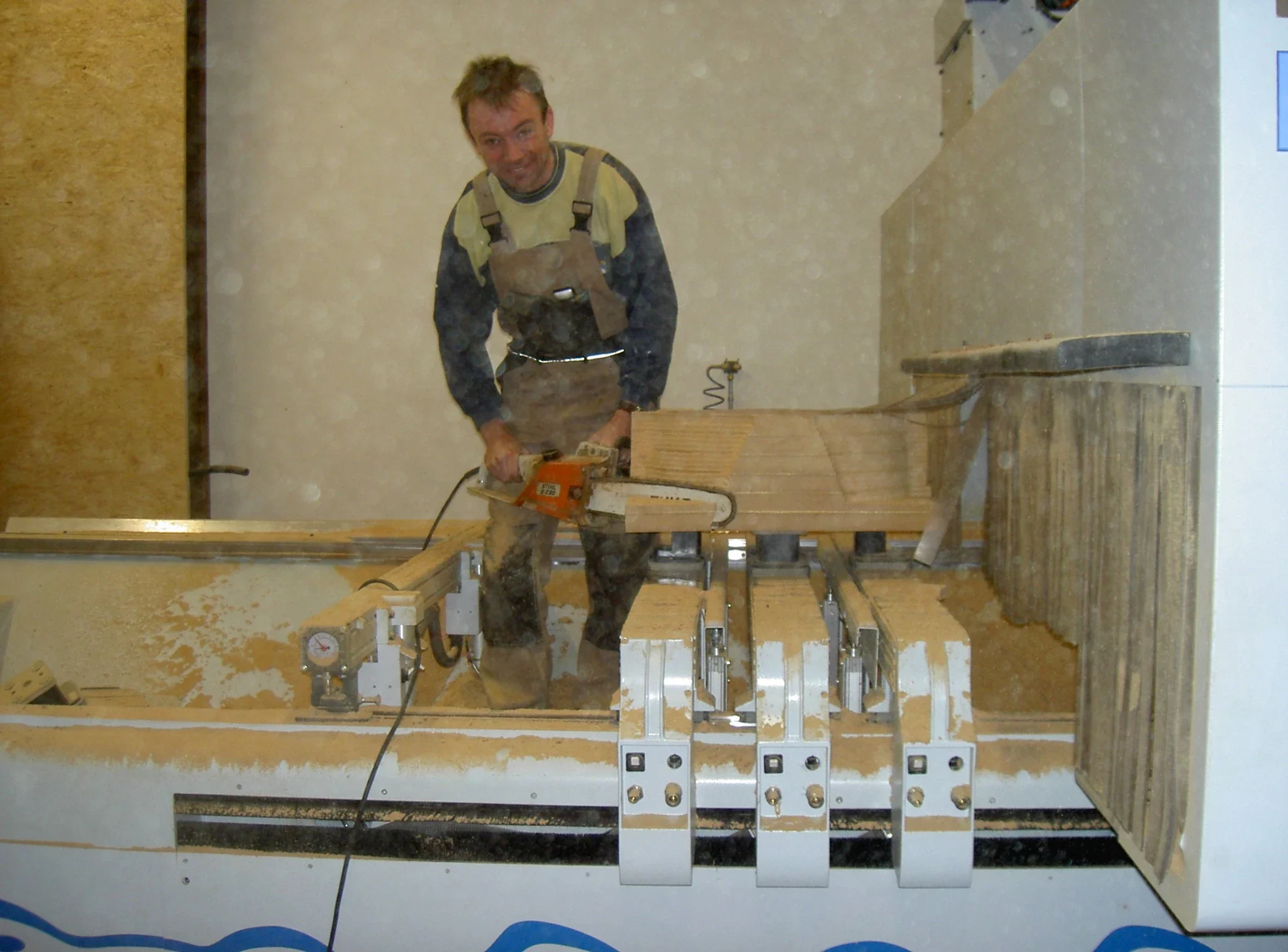
This happens too: the expanded gallery includes manual rough cutting with a chainsaw directly on a workpiece clamped on the CNC machine. Hands-on craft and digital manufacturing complement each other.
CNC sawing: parallel cuts in a wooden workpieceCutting a tenon shoulder with a CNC-controlled saw bladeNotching a wooden workpiece with a CNC-controlled saw blade
Show 3 more imagesCollapse image gallery
This happens too: manual rough cutting with a chainsaw at the CNC machineShaping with a saw bladeContour machining using only a saw blade in a zigzag toolpath.
Your idea does not fit a category?
Send a drawing, sketch or photo with dimensions, material, quantity and your full postal address.